

Welcome to the Crystal Cave library!Here is our little corner of curiosity where we discover and explore different crystals, gems, and fossils.
Inspired by the quiet beauty of a cave of crystals, this library holds small, shining bits of knowledge.
Each link below offers a glimpse into the character, history, elemental, and metaphyical properties.
1,000-Layer Lodolite — Mineral & Scientific Information
1,000-layer lodolite is one of those stones that feels like a world trapped inside quartz — visually complex and symbolically deep.What it is
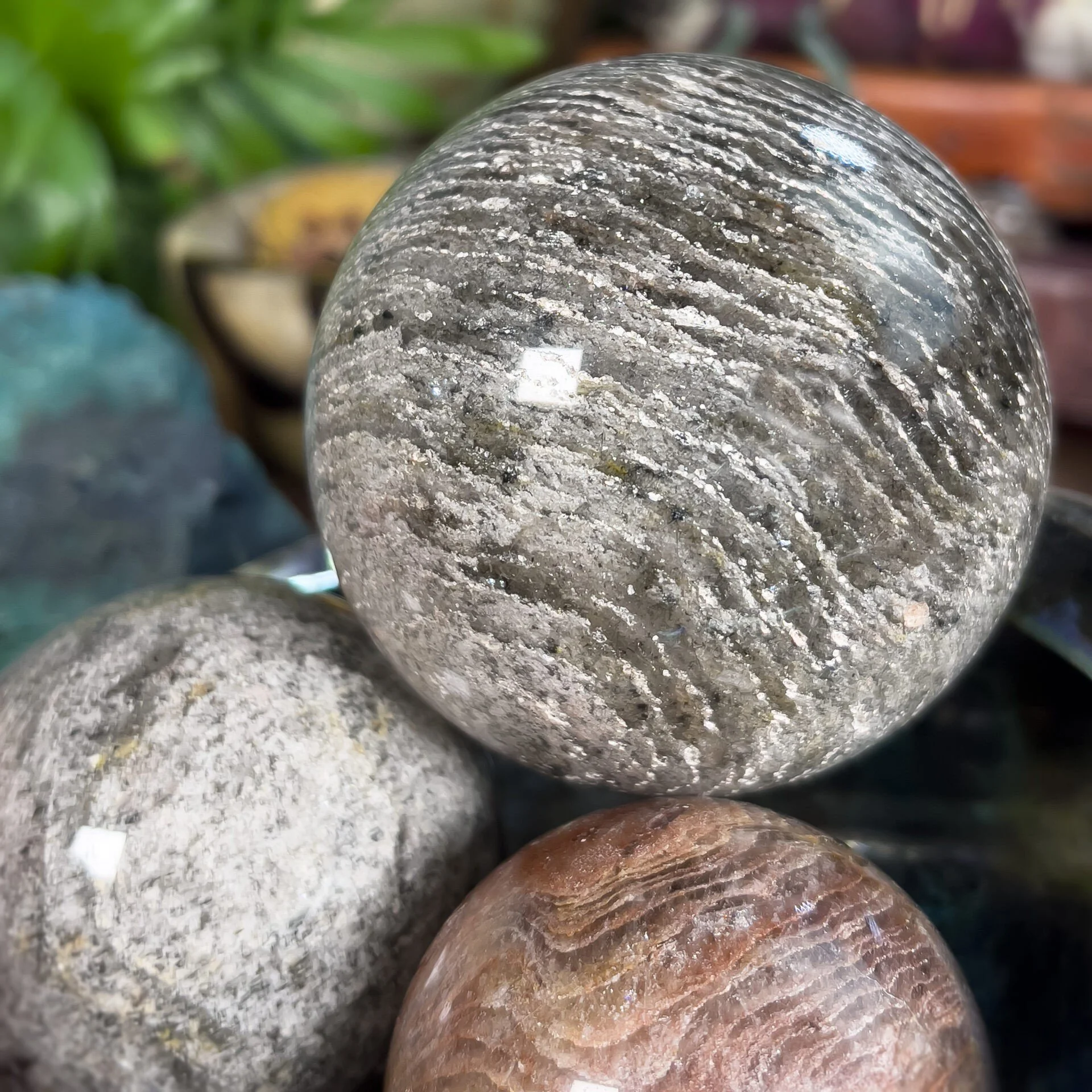
1,000-layer lodolite is a variety of quartz containing mineral inclusions, often referred to as included quartz, garden quartz, or landscape quartz. “Lodolite” is a trade name, not an official mineral species.
Chemical composition
Base mineral: Quartz (SiO₂)
Inclusions may include chlorite, feldspar, hematite, iron oxides, manganese, or clay minerals
Crystal structure
Quartz crystal system: trigonal
Typically forms well-defined hexagonal prismatic crystals
Appearance and structure
Transparent quartz with layered, scenic inclusions
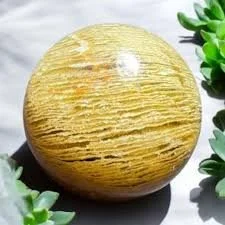
“1,000-layer” refers to the stacked, stratified appearance of inclusions, resembling sedimentary layers, misty landscapes, or underwater scenes.
Colors may include green, brown, red, cream, gray, or black depending on inclusions
Transparent to translucent overall
Luster: vitreous
Physical properties
Hardness: 7 on the Mohs scale
No cleavage
Fracture: conchoidal
Specific gravity: ~2.65 (varies slightly due to inclusions)
Formation
Lodolite forms when other minerals become trapped inside quartz during crystal growth. Changes in temperature, pressure, and chemistry cause episodic growth, creating visible layers and internal “scenes.”
Geographic sources
Brazil (primary source)
Madagascar
India
Uses and applications
Collector crystals
Jewelry (especially pendants and cabochons)
Decorative and metaphysical specimens
1,000-Layer Lodolite — Metaphysical Properties & Fun Facts
🌍✨ Core Energy
1,000-layer lodolite is known as a stone of deep journeying, inner landscapes, and layered consciousness. Its energy feels expansive, introspective, and quietly powerful
🧠 Multidimensional Awareness
Encourages exploration of inner worlds 🌀
Said to support shamanic or vision-based meditation 🔮
Helps access subconscious patterns 🧠
⏳ Time, Memory & Growth
Symbolizes accumulated experiences and soul memory 📜
Encourages patience and trust in long-term growth 🌱
Helps integrate past lessons into present awareness 🔗
🌿 Grounding + Expansion
Combines grounding earth energy 🌍
With the amplifying clarity of quartz ✨
Supports spiritual growth without losing stability ⚖️
🧘♀️ Meditation & Insight
Often used for deep meditation or trance work 🧘♀️
Encourages observation without judgment 👁️
Helps quiet the mind while opening awareness 🌫️➡️🌟
🧿 How People Work With 1,000-Layer Lodolite
Gaze into the inclusions during meditation 👀
Journal insights afterward ✍️
Pair with grounding stones for balance 🪨
Use in intentional or ceremonial work 🔺
✨ Fun Facts
Each piece is completely unique — no two landscapes are the same 🏞️
Often called “garden quartz” because inclusions resemble moss or forests 🌲
Some pieces look like underwater worlds 🌊
The “1,000-layer” name emphasizes depth, not a literal count 🔢❌
🔮 Overall Vibe
1,000-layer lodolite is about depth, awareness, and inner exploration ✨
It doesn’t rush — it reveals itself layer by layer.
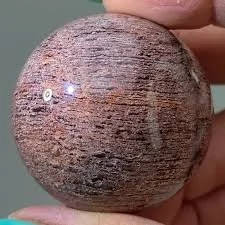
Abalone — Scientific & Material Information
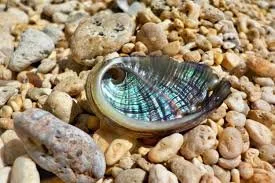
Abalone is ocean-born, iridescent, and technically not a gemstone at all—but it’s one of the most mesmerizing materials used in jewelry and spiritual traditions.
What it is
Abalone is not a mineral or crystal. It is the inner shell (nacre/mother-of-pearl) of marine mollusks in the genus Haliotis.
Material composition
Primarily calcium carbonate (aragonite)
Bound together with organic proteins (conchiolin)
Structure
Layered microstructure called nacre
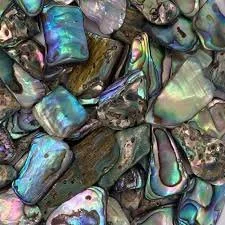
The layers diffract light, creating iridescence
Color and appearance
Blue, green, pink, purple, silver, and gold iridescence
Thin, layered, and curved
Pearly to vitreous luster
Physical properties
Hardness: ~2.5–4.5 on the Mohs scale
Lightweight and somewhat fragile
Not a true gemstone; classified as an organic material like pearl or coral
Formation
Abalone shells are built layer by layer by the animal as it grows, using calcium carbonate from seawater.
Geographic sources
Pacific Ocean (California, Mexico)
New Zealand (pāua)
Australia
Japan
South Africa
Uses and applications
Jewelry inlays and cabochons
Buttons, carvings, and instruments
Decorative art and indigenous crafts
Name origin
From the Spanish abulón, derived from the Rumsen Ohlone word aulón.
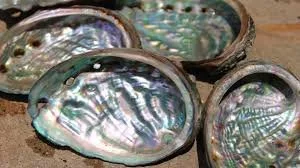
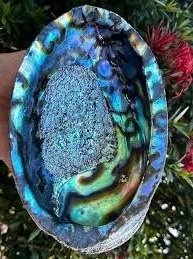
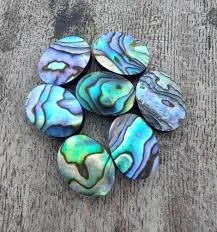
Abalone — Metaphysical Properties & Fun Facts
🌊 Core Energy
Abalone is known as a stone of emotional flow, intuition, and oceanic calm — fluid, soothing, and deeply feminine 🌙
💙 Emotional Healing
Encourages gentle emotional release 🌊
Helps soothe grief, stress, and emotional turbulence 💧
Promotes peace and emotional resilience 🕊️
🧠 Intuition & Sensitivity
Enhances intuition and psychic sensitivity 🔮
Encourages listening to inner wisdom 🧭
Supports emotional empathy and understanding 🤍
🌙 Feminine & Lunar Energy
Often linked to moon energy and tides 🌕
Associated with nurturing, cycles, and flow 🌊
Used in goddess and ocean-based spiritual traditions 🐚
🧘 Chakra Associations
Heart chakra 💚
Third eye chakra 👁️
Crown chakra ✨
🧿 How People Work With Abalone
Wear to calm emotional overwhelm 💍
Use in meditation for intuition and emotional flow 🧘♀️
Place near water altars or ocean-themed sacred spaces 🌊
Pair with moonstone or pearl for lunar energy 🌙
✨ Fun Facts
Pāua shell (New Zealand abalone) is especially vivid 🌈
Some pieces show every color of the rainbow 🌟
Used by many Indigenous cultures in ceremonial art 🪶
Not a crystal—but often used like one in metaphysical practice 🤓
🔮 Overall Vibe
Abalone is emotional tides made visible 🌊
Soft, luminous, and deeply intuitive.
Agate — Mineral & Scientific Information
Agate is steady, layered, and quietly powerful — a classic stone that works slowly but deeply.
What it is
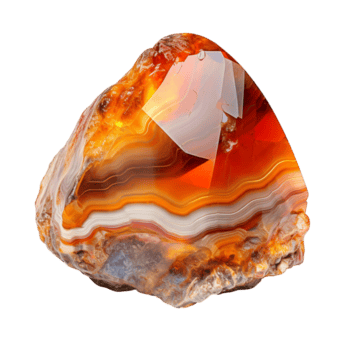
Agate is a variety of chalcedony, which itself is a cryptocrystalline form of quartz. It is characterized by its fine-grained structure and distinctive banding patterns.
Chemical composition
Chemical formula: SiO₂
Silicon dioxide
Crystal structure
Quartz crystal system: trigonal
Microcrystalline (crystals too small to see without magnification)
Color and appearance
Occurs in nearly every color
Typically displays concentric, parallel, or irregular bands
Bands form from variations in mineral content and growth conditions
Translucent to opaque
Luster: waxy to vitreous
Physical properties
Hardness: 6.5–7 on the Mohs scale
No cleavage
Fracture: conchoidal
Specific gravity: ~2.6
Formation
Agate forms when silica-rich fluids fill cavities in volcanic or sedimentary rocks. Over time, repeated deposition creates layered banding.
Geographic sources
Brazil
Uruguay
India
Madagascar
United States
Worldwide distribution
Uses and applications
Jewelry and beads
Decorative carvings and slabs
Mortars, pestles, and lab equipment
Collector specimens
Common types of Agate & their metaphysical associations
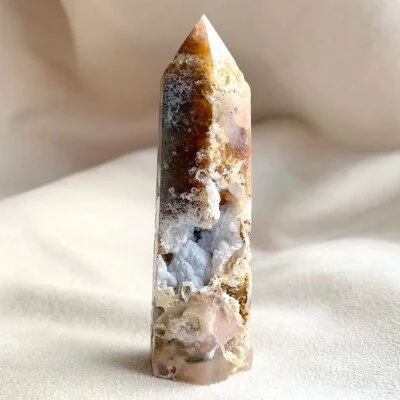
Banded agate
Blue Lace Agate
Botswana Agate
Crazy Lace Agate
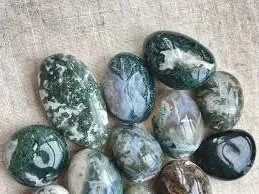
Moss agate
Red or Fire agate
Tree Agate
Dendritic agate
Agate — Metaphysical Properties & Fun Facts
🪨🌈 Core Energy
Agate is known as a stone of stability, grounding, and gentle strength. Its energy feels slow, steady, and deeply supportive 🌱
⚖️ Balance & Stability
Helps stabilize emotional and mental energy ⚖️
Encourages patience and perseverance 🐢
Supports long-term growth rather than quick fixes 🌳
🌍 Grounding & Security
Strong connection to earth energy 🌍
Helps create a sense of safety and rootedness 🛡️
Often used during stressful or transitional times 🔄
🧠 Mental Focus
Encourages clear, practical thinking 🧠
Helps organize thoughts and decisions 📐
Supports concentration and learning 📚
💞 Emotional Support
Gently soothes emotional tension 🌊
Encourages self-acceptance and inner calm 🤍
Helps integrate emotional experiences 🧩
🧿 How People Work With Agate
Carry daily for steady grounding 📿
Use in meditation for balance 🧘♀️
Place in workspaces for focus 💼
Pair with higher-energy stones for stability ✨🪨
✨ Fun Facts
Used in jewelry and tools since ancient times 🕰️
Each band represents a different growth phase ⏳
Ancient cultures believed agate protected travelers 🚶♂️
Some agates are dyed to enhance color 🎨⚠️
🔮 Overall Vibe
Agate is about strength through balance 🪨
It doesn’t rush transformation — it builds it layer by layer.
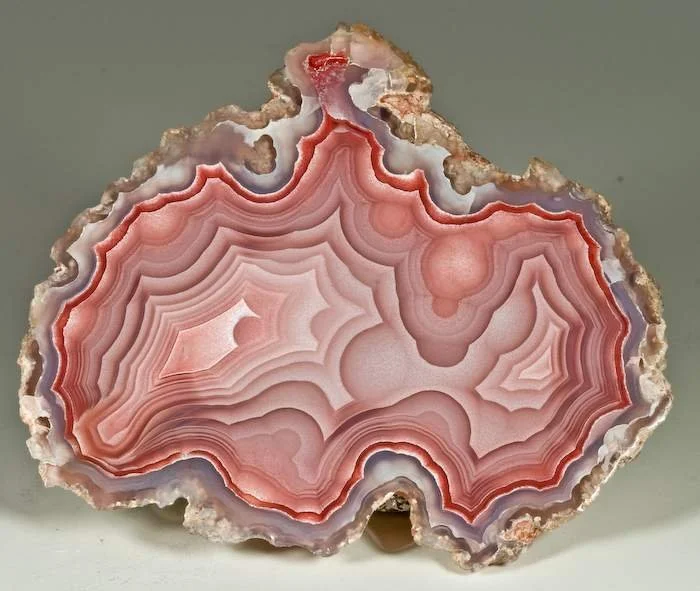
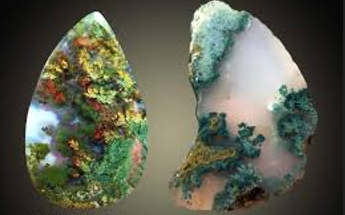
Agate’s metaphysical expression shifts with color and pattern:
Blue Lace Agate – calm communication, soothing anxiety
Moss Agate – growth, abundance, connection to nature
Red or Fire Agate – courage, vitality, creative spark
Botswana Agate – comfort during grief, emotional resilience
Crazy Lace Agate – joy, optimism, emotional flexibility
Tree Agate – inner peace, patience, earth connection
Dinosaur Bone — Mineral & Scientific Information
Agatized dinosaur bone is one of the coolest natural crossovers between deep time and crystal growth — ancient, grounding, and wildly unique.What it is
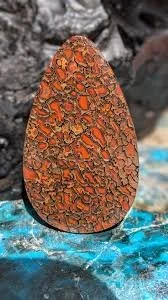
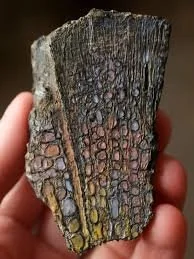
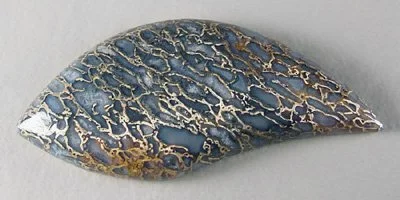
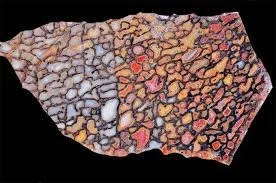
Agatized dinosaur bone (also called fossilized or silicified dinosaur bone) is actual dinosaur bone that has been gradually replaced by silica, most often in the form of agate or chalcedony, while preserving the original bone structure.
Composition
Original material: dinosaur bone (calcium phosphate / hydroxyapatite)
Replacement minerals: silica (SiO₂), typically agate or chalcedony
Trace minerals such as iron, manganese, or carbon contribute to color
Structure and appearance
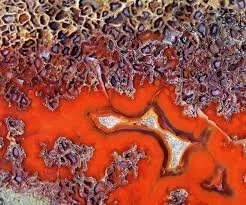
Retains the cellular or “honeycomb” pattern of dinosaur bone (Haversian canals)
Colors vary widely: red, brown, yellow, blue, green, black, cream
Pattern can appear spotty, geometric, or web-like
Opaque
Luster: waxy to vitreous when polished
Physical properties
Hardness: 6.5–7 on the Mohs scale (due to silica replacement)
No cleavage
Fracture: uneven to conchoidal
Specific gravity: varies depending on mineral content
Formation process
After burial, groundwater rich in silica slowly permeates the bone. Over millions of years, the original bone material is replaced molecule by molecule with silica, preserving microscopic structural detail — a process known as permineralization or silicification.
Geologic age
Typically Late Jurassic to Cretaceous
Approximately 65–150 million years old
Geographic sources
United States (Utah, Colorado, Arizona, New Mexico)
Parts of Asia and Africa (rarer)
Uses and applications
Jewelry (cabochons, rings, pendants)
Collector and museum specimens
Educational fossils
Decorative lapidary material
Agatized Dinosaur Bone — Metaphysical Properties & Fun Facts
🦖🪨 Core Energy
Agatized dino bone is known as a stone of ancient wisdom, grounding, and survival strength. Its energy feels heavy, stabilizing, and deeply rooted in Earth’s memory 🌍
🌳 Deep Grounding & Ancestral Energy
Strongly connected to earth energy 🌍
Encourages stability and rootedness 🛡️
Often associated with ancestral or past-life themes 🧬
⏳ Time, Endurance & Transformation
Symbolizes survival through massive change 🌋➡️🌱
Encourages patience and long-term perspective ⌛
Helps integrate lessons from the past 📜
🛡️ Strength & Resilience
Encourages perseverance during hardship 💪
Supports emotional and physical endurance 🧠🪨
Helps build inner strength slowly but steadily 🐢
🧠 Grounded Insight
Combines agate’s stabilizing energy 🪨
With fossil energy tied to deep Earth history 🌋
Encourages wisdom rooted in experience 🌱
🧿 How People Work With Agatized Dino Bone
Carry during periods of major life transition 🔄
Use in grounding or root chakra work 🧘♀️
Pair with lighter stones to balance its weight ⚖️
Meditate on endurance and survival themes 🦖
✨ Fun Facts
You’re holding real dinosaur bone — not a replica 😮
The pattern shows actual bone cell structure 🔬
Each piece comes from a specific species and era 🧬
Considered both a gemstone and a fossil 🪨🦴
🔮 Overall Vibe
Agatized dinosaur bone is about endurance through deep time 🦖
It doesn’t rush or comfort — it steadies and strengthens.
Amazonite — Mineral & Scientific Information
Amazonite is soothing but strong — calm on the surface, empowering underneath.What it is
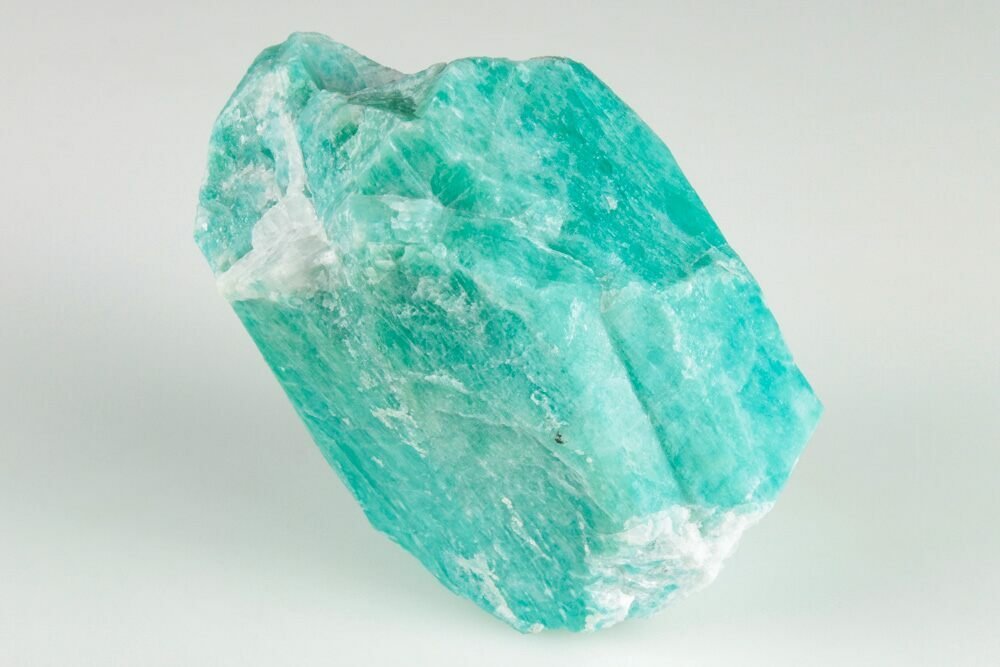
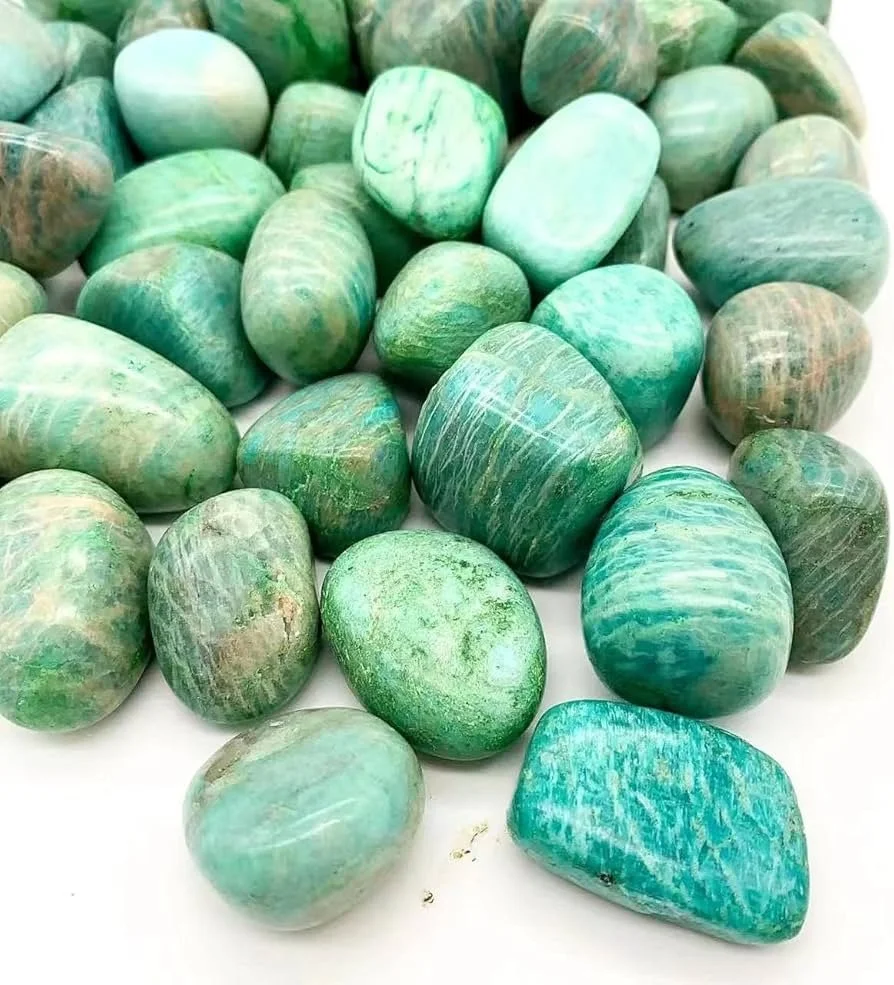
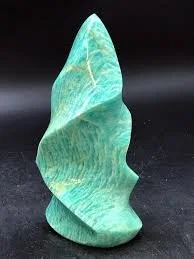
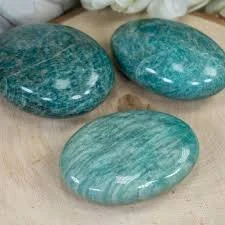
Amazonite is a green to blue-green variety of microcline feldspar, prized for its soft color and often subtle white streaking or grid-like patterns.
Chemical composition
Chemical formula: KAlSi₃O₈
Potassium aluminum silicate
Crystal structure
Crystal system: triclinic
Typically occurs in massive form rather than distinct crystals
Color and appearance
Blue-green to turquoise-green
Color caused by trace amounts of lead and water within the feldspar structure
Opaque to translucent
Luster: vitreous to pearly
Often shows white or pale feldspar streaks (perthitic texture)
Physical properties
Hardness: 6–6.5 on the Mohs scale
Cleavage: two directions at nearly right angles
Fracture: uneven
Specific gravity: ~2.55–2.6
Formation
Amazonite forms in granitic pegmatites, often alongside quartz, albite, smoky quartz, and tourmaline.
Geographic sources
Brazil
Russia
Madagascar
United States (Colorado, Virginia)
Canada
Uses and applications
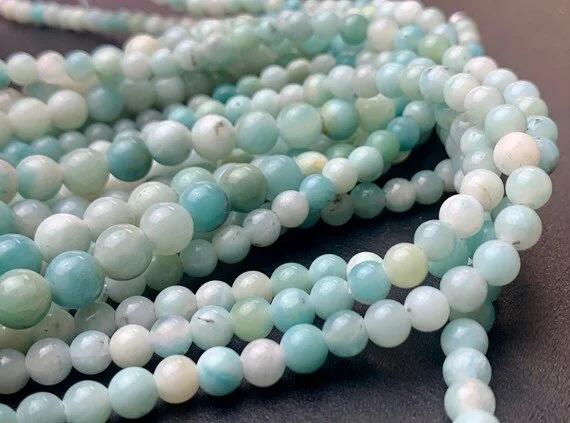
Jewelry (cabochons, beads)
Decorative carvings
Collector mineral specimens
Amazonite — Metaphysical Properties & Fun Facts
💙🌿 Core Energy
Amazonite is known as a stone of calm communication, truth, and emotional balance. Its energy feels soothing yet empowering — like steady confidence with a soft voice 🌊
🗣️ Throat & Heart Chakra Balance
Connects the throat chakra (communication) 🗣️
With the heart chakra (emotional truth) 💚
Encourages speaking from the heart with clarity 🤍
🌬️ Emotional Calm & Stress Relief
Helps soothe anxiety and emotional tension 🌬️
Encourages emotional neutrality and balance ⚖️
Supports healthy boundaries 🛡️
🛡️ Empowerment & Truth
Encourages honest self-expression 🧭
Helps release fear of judgment 🚪
Supports standing in personal truth 💬
📡 Energy Filtering
Traditionally believed to absorb or filter negative energy 🧲
Often associated with protection from emotional or environmental stress ⚡
Commonly kept near workspaces or electronics 💻
🧿 How People Work With Amazonite
Wear during difficult conversations 📿
Meditate with it for calm clarity 🧘♀️
Keep near phones or computers 📱
Pair with grounding stones for balance 🪨
✨ Fun Facts
Despite the name, it’s rarely found near the Amazon River 🌎
Used in jewelry by ancient Egyptian cultures 🏺
Sometimes called the “Stone of Courage and Truth” 🦁
Color can vary widely even within the same deposit 🎨
🔮 Overall Vibe
Amazonite is about truth delivered gently 💙
It doesn’t silence emotion — it helps you express it calmly.
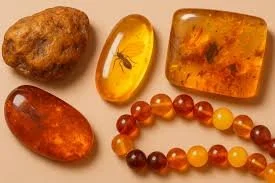
Amber — Mineral & Scientific Information
Amber is ancient sunlight made solid — warm, organic, and deeply grounding in a different way than stone.What it is
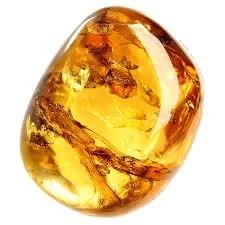
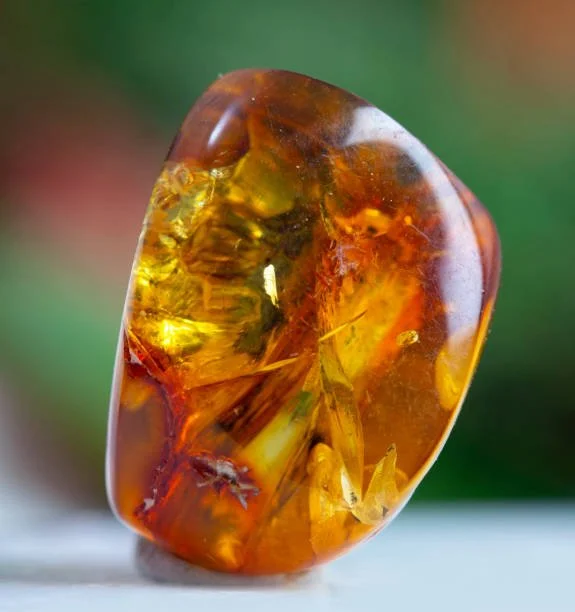
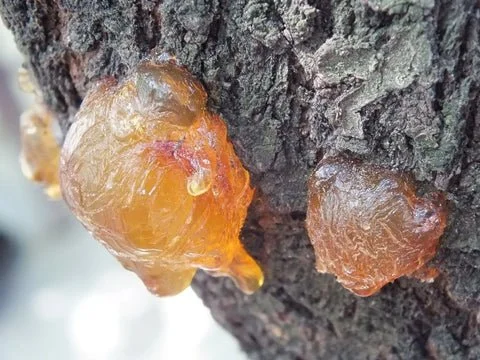
Amber is fossilized tree resin, not a mineral. It formed from sticky resin produced by prehistoric trees that hardened and fossilized over millions of years.
Composition
Organic compound composed primarily of hydrocarbons
Contains succinic acid (especially Baltic amber)
Structure
Amorphous (no crystal structure)
Lightweight and soft compared to minerals
Color and appearance
Yellow, golden, honey, orange, brown
Can also appear red, green, blue, or nearly black
Transparent to opaque
Luster: resinous
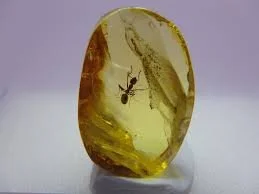
May contain plant material or insects as inclusions
Physical properties
Hardness: 2–2.5 on the Mohs scale
Very light in weight
No cleavage
Fracture: conchoidal to uneven
Generates static electricity when rubbed (triboelectric effect)
Formation process
Tree resin hardened and polymerized over 20–100+ million years, often becoming buried in sediment and protected from oxygen. Over time, pressure and heat completed fossilization.
Geologic age
Commonly from the Eocene period (~40–50 million years old)
Some deposits are older
Geographic sources
Baltic region (largest source)
Dominican Republic
Mexico
Myanmar
Indonesia
Uses and applications
Jewelry and beads
Scientific study of ancient life (paleontology)
Decorative and cultural objects
Traditional remedies in some cultures
Amber — Metaphysical Properties & Fun Facts
☀️🍯 Core Energy
Amber is known as a stone of warmth, vitality, and gentle protection. Its energy feels comforting, nurturing, and subtly energizing — like being wrapped in sunlight 🌞
🌿 Emotional Healing & Comfort
Encourages emotional warmth and optimism 💛
Helps soothe stress and emotional fatigue 🌬️
Supports gentle emotional release 🕊️
🛡️ Protection & Grounding
Traditionally used as a protective talisman 🛡️
Believed to absorb negative or stagnant energy 🧲
Grounds through earth and organic energy 🌍
⚡ Energy & Vitality
Associated with life force and renewal 🔆
Encourages motivation without intensity 🌱
Often used during burnout or recovery 💆♀️
👶 Traditional Use
Commonly worn by children in many cultures 👶
Associated with comfort and soothing energy 🧸
Often linked to ancestral wisdom 📜
🧿 How People Work With Amber
Wear close to the skin for warmth 📿
Carry during stressful or low-energy periods 👜
Meditate with it for comfort and grounding 🧘♀️
Pair with grounding stones for balance 🪨
✨ Fun Facts
Amber can trap insects and plants from prehistoric times 🦟🌿
Floats in salt water 🌊
Rub it and it attracts dust due to static electricity ⚡
Blue amber (Dominican) fluoresces under UV light 💙✨
🔮 Overall Vibe
Amber is about comfort, warmth, and gentle strength ☀️
It doesn’t crystalize energy — it softens and stabilizes it.
Amethyst — Mineral & Scientific Information
Amethyst is calm, clarifying, and quietly powerful — a classic for a reason.What it is
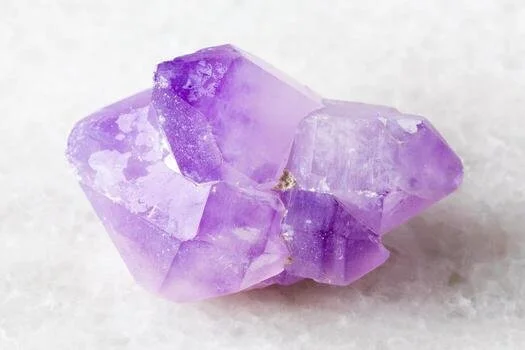
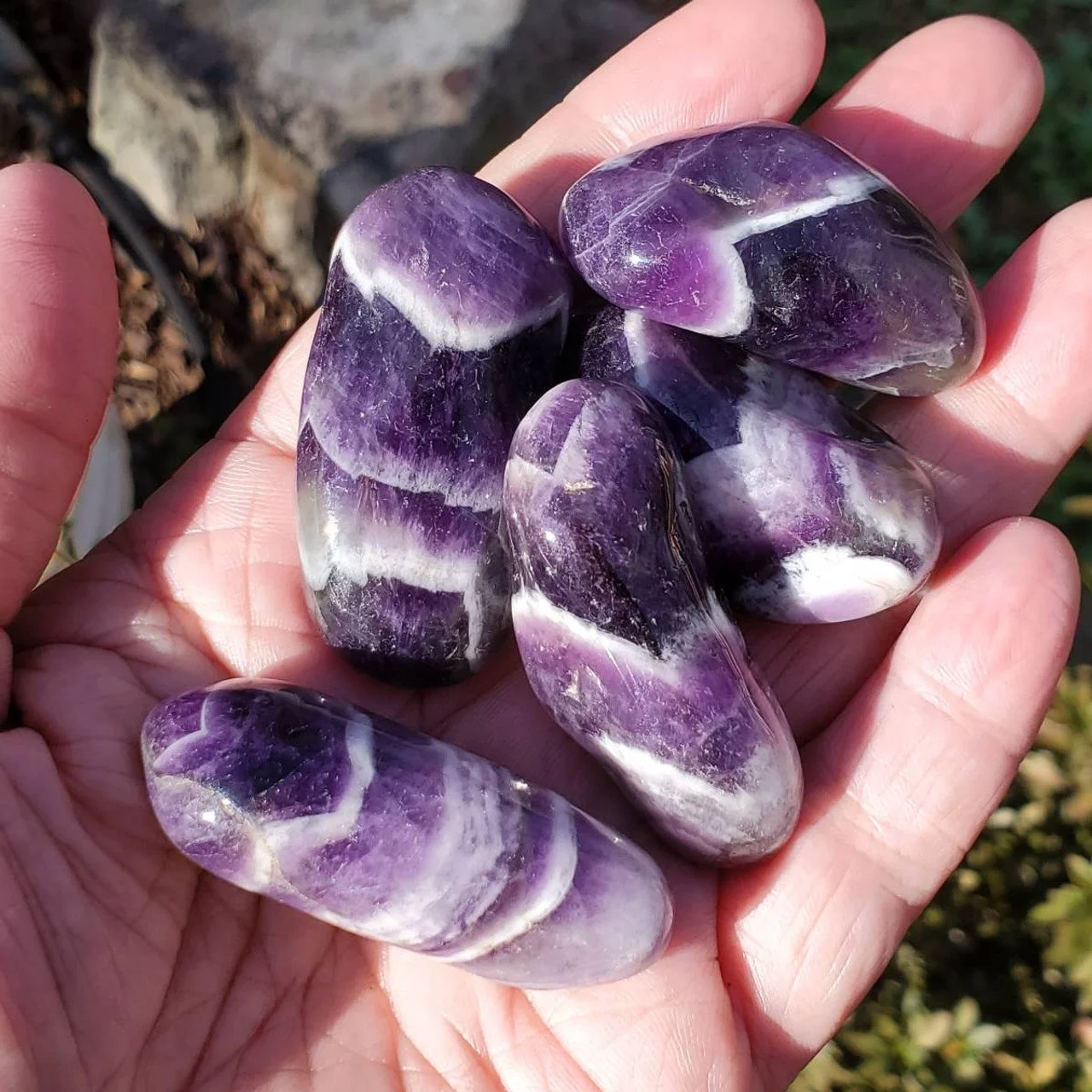
Amethyst is a purple variety of quartz, colored by trace amounts of iron and natural radiation. It is one of the most widely used and recognized gemstones.
Chemical composition
Chemical formula: SiO₂
Silicon dioxide
Crystal structure
Crystal system: trigonal
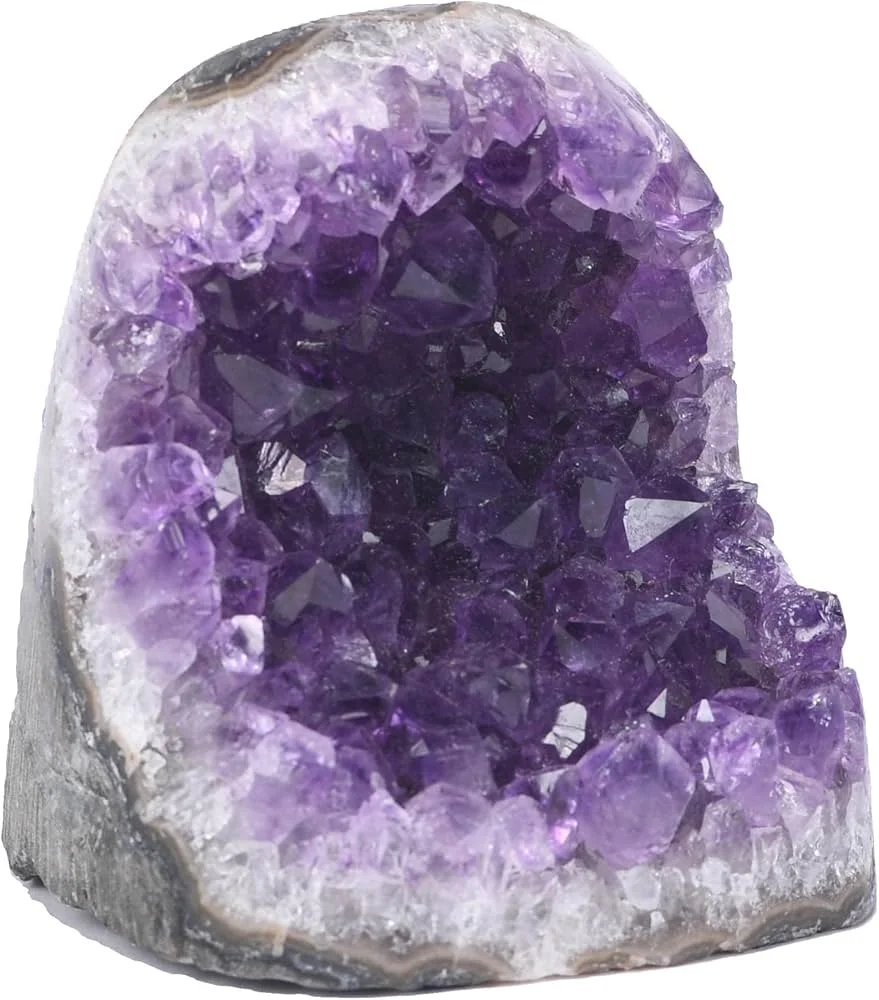
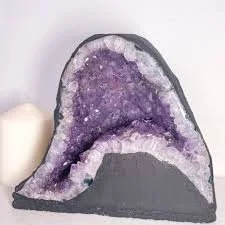
Commonly forms hexagonal prismatic crystals, often lining geodes
Color and appearance
Light lavender to deep violet
Color zoning is common within crystals
Transparent to translucent
Luster: vitreous
Physical properties
Hardness: 7 on the Mohs scale
No cleavage
Fracture: conchoidal
Specific gravity: ~2.65
Optical properties
Can fade with prolonged exposure to sunlight
Heat can turn amethyst yellow or brown (often sold as citrine)
Formation
Amethyst forms in volcanic and hydrothermal environments, often growing inside gas cavities in lava flows that later become geodes.
Geographic sources
Brazil
Uruguay
Zambia
Madagascar
Russia
Uses and applications
Jewelry
Geodes and clusters
Collector crystals
Decorative objects
Amethyst — Metaphysical Properties & Fun Facts
💜✨ Core Energy
Amethyst is known as a stone of calm, clarity, and spiritual awareness. Its energy feels soothing, stabilizing, and mentally clarifying 🌙
🧠 Mental Calm & Focus
Helps quiet racing thoughts 🌀
Encourages clear thinking and insight 💡
Supports meditation and mindfulness 🧘♀️
👑 Crown & Third Eye Support
Associated with the crown chakra 👑
Also linked to the third eye 👁️
Encourages intuition, awareness, and inner wisdom 🔮
🛡️ Protection & Balance
Traditionally used for energetic protection 🛡️
Helps maintain emotional balance ⚖️
Encourages sober, grounded decision-making 🧭
😌 Stress Relief & Emotional Support
Helps ease anxiety and emotional tension 🌬️
Encourages emotional stability 🕊️
Often used for sleep and relaxation 🛏️
🧿 How People Work With Amethyst
Place in bedrooms or meditation spaces 🏡
Meditate with clusters or points 🧘♀️
Wear for calm focus throughout the day 📿
Pair with grounding stones for balance 🪨
✨ Fun Facts
Ancient Greeks believed it prevented intoxication 🍷🚫
February’s birthstone 🎂
Heat-treated amethyst is often sold as citrine 🔥⚠️
Deep purple stones were once reserved for royalty 👑
🔮 Overall Vibe
Amethyst is about clarity with calm 💜
It doesn’t stimulate — it steadies and illuminates.
Ametrine — Mineral & Scientific Information
Ametrine is a beautiful “best of both worlds” crystal — clarity and warmth in one stone.What it is
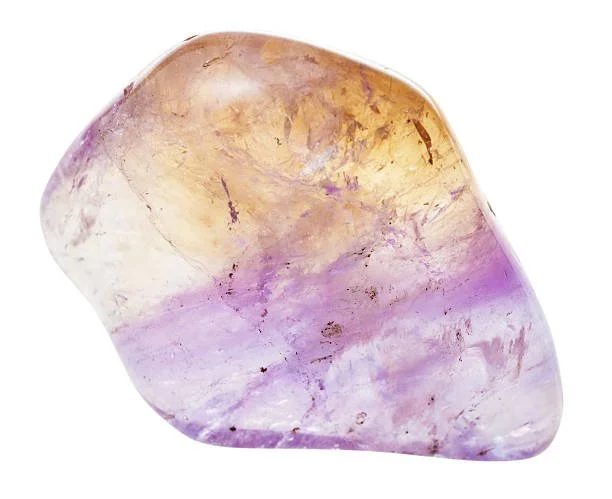
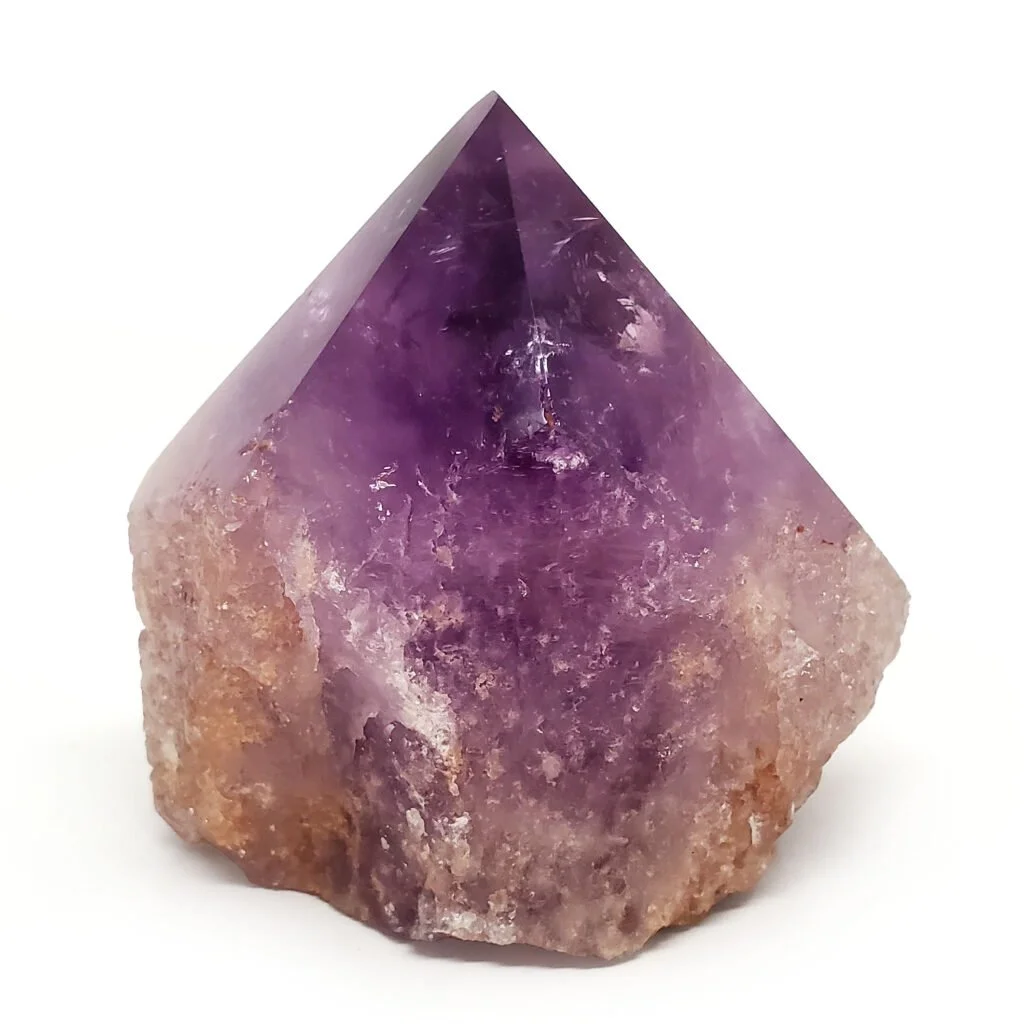
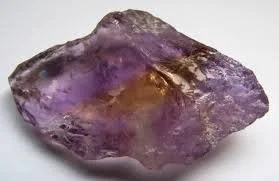
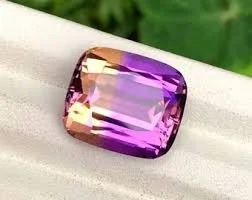
Ametrine is a naturally occurring variety of quartz that displays both amethyst (purple) and citrine (yellow) colors within a single crystal. The color zoning is natural and stable.
Chemical composition
Chemical formula: SiO₂
Silicon dioxide
Color differences are caused by variations in iron oxidation states and temperature during crystal growth.
Crystal structure
Crystal system: trigonal
Forms hexagonal prismatic crystals, often with clear color boundaries
Color and appearance
Purple and yellow zones in the same crystal
Can show sharp or blended color transitions
Transparent to translucent
Luster: vitreous
Physical properties
Hardness: 7 on the Mohs scale
No cleavage
Fracture: conchoidal
Specific gravity: ~2.65
Formation
Ametrine forms when different temperature conditions affect iron impurities in quartz during growth, causing part of the crystal to become amethyst and part citrine.
Geographic sources
Bolivia (Anahí Mine – primary natural source)
Brazil (rare)
Synthetic ametrine is also common
Uses and applications
Jewelry (faceted stones, cabochons)
Collector gemstones
Decorative crystal pieces
Ametrine — Metaphysical Properties & Fun Facts
💜💛✨ Core Energy
Ametrine is known as a stone of balance, integration, and aligned action. Its energy feels harmonizing — blending calm awareness with forward momentum ⚖️
🧠 Mind + Will Balance
Combines amethyst’s clarity 🧠
With citrine’s motivation 🔥
Supports clear thinking paired with decisive action 🎯
👁️ Crown & Solar Plexus Connection
Activates the crown chakra 👑
Energizes the solar plexus chakra ☀️
Encourages confident, intuitive decision-making 🧭
🔄 Emotional & Energetic Alignment
Helps balance emotional extremes ⚖️
Encourages flow between rest and action 🌊➡️🚀
Supports emotional integration 🌱
🚀 Focus & Manifestation
Encourages follow-through on ideas 📝➡️🏁
Helps turn insight into results 💡➡️💼
Useful during life transitions 🔄
🧿 How People Work With Ametrine
Meditate when needing clarity + motivation 🧘♀️
Wear for balanced confidence 📿
Use during goal-setting or planning sessions 📊
Pair with grounding stones for stability 🪨
✨ Fun Facts
Natural ametrine is rare 💎
Most comes from a single Bolivian mine 🇧🇴
Often cut to highlight the color divide ✂️
Synthetic versions are common — natural stones are more valuable ⚠️
🔮 Overall Vibe
Ametrine is about harmony between thought and action 💜💛
It doesn’t pull you in one direction — it aligns you.
Ammolite — Mineral & Scientific Information
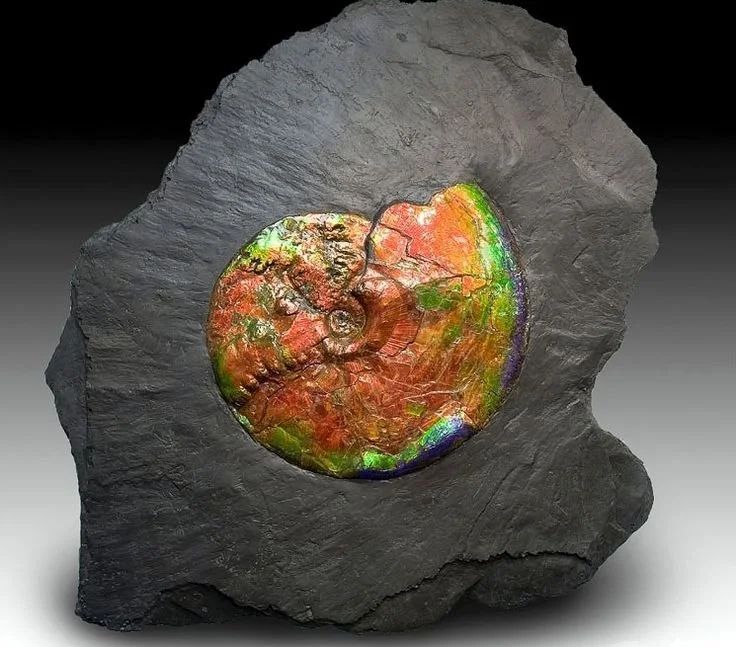
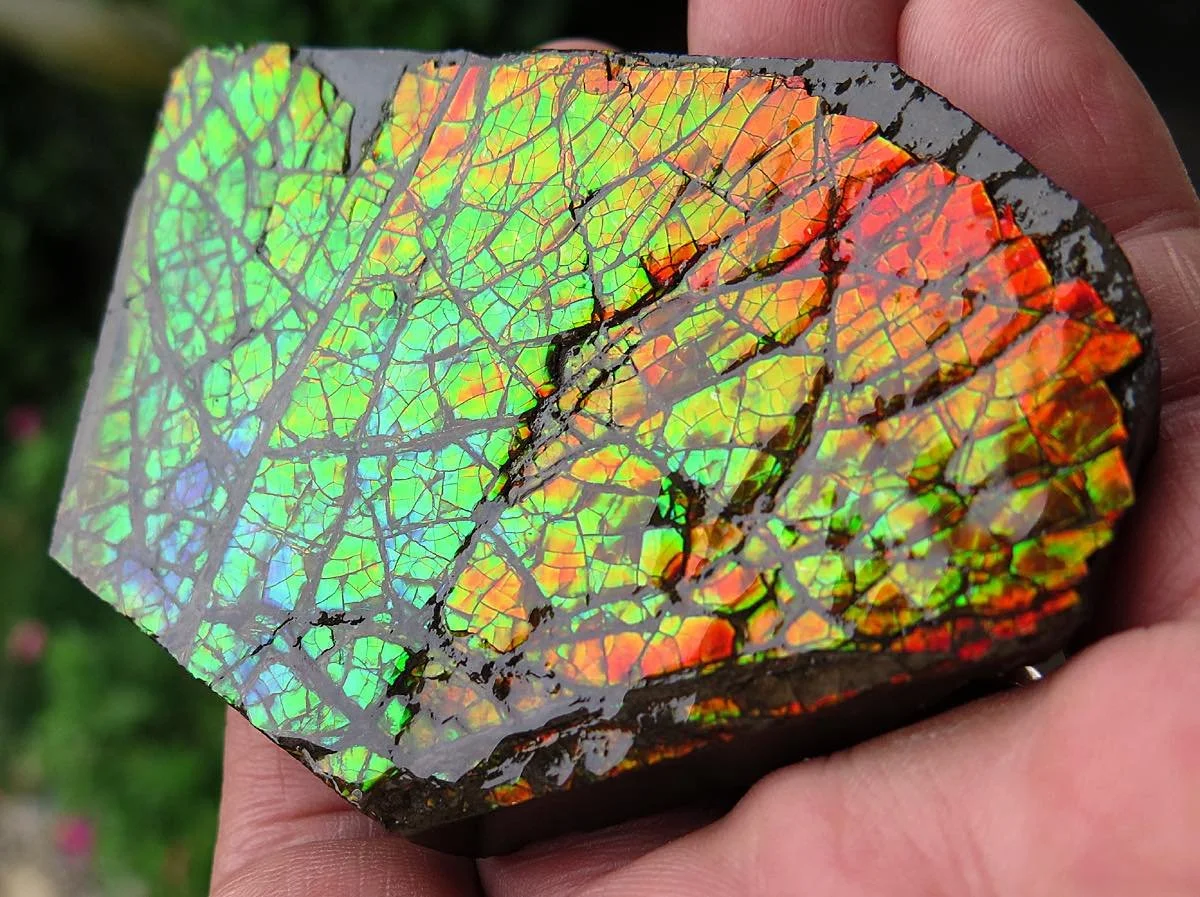
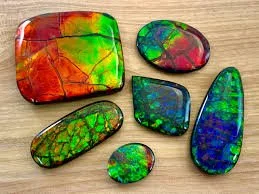
Ammolite is dramatic, rare, and literally made from ancient life — a gemstone that bridges geology, biology, and color.What it is
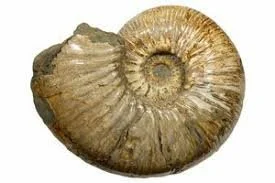
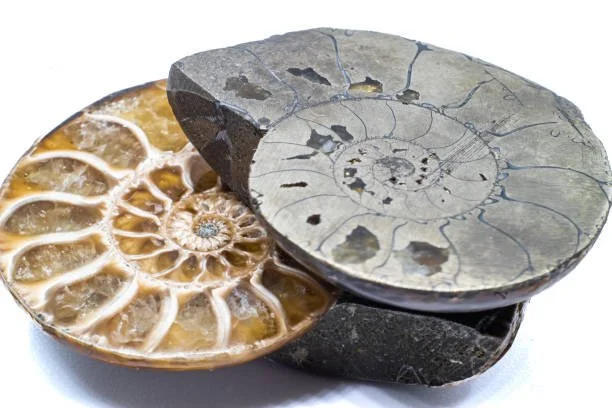
Ammolite is a biogenic gemstone formed from the fossilized shells of extinct ammonites. It is not a mineral but an organic gemstone, similar in category to amber and pearl.
Composition
Primarily composed of aragonite (CaCO₃)
Derived from ammonite shell material
Thin iridescent layers bonded to shale or other backing materials
Structure
Amorphous to microcrystalline
Displays a natural “nacre-like” layered structure
Color and appearance
Brilliant iridescent flashes of red, green, blue, yellow, and violet
Color results from light interference within microscopic aragonite layers
Typically opaque
Luster: pearly to vitreous
Physical properties
Hardness: ~3.5–4 on the Mohs scale
Fragile; often stabilized or set with protective backing
Specific gravity: ~2.8
Formation process
Over 70–75 million years, ammonite shells were buried under sediment. Pressure and mineralization preserved and transformed the shell layers into iridescent ammolite.
Geologic age
Late Cretaceous period
Geographic sources
Alberta, Canada (the only commercial source)
Uses and applications
Fine jewelry (usually with protective settings)
Collector gemstones
Cultural and ceremonial use (especially by Indigenous peoples)
Ammolite — Metaphysical Properties & Fun Facts
🌈🐚 Core Energy
Ammolite is known as a stone of transformation, life force, and dynamic flow. Its energy feels vibrant, expansive, and constantly moving 🌊
🔄 Transformation & Evolution
Symbolizes growth through change 🌀
Encourages embracing transformation 🌱
Helps release outdated patterns 🔓
🌍 Earth + Life Energy
Combines fossil energy 🦴
With vibrant elemental color 🌈
Encourages alignment with natural cycles 🌍
🧭 Motivation & Prosperity
Often associated with abundance and opportunity 💰
Encourages forward momentum 🚀
Linked to Feng Shui prosperity energy 🧲
🧠 Awakening & Awareness
Said to stimulate awareness across multiple chakras 🌈
Encourages insight and adaptability 👁️
Supports creative expression 🎨
🧿 How People Work With Ammolite
Wear as a statement stone 💍
Use during major life transitions 🔄
Meditate on cycles of change 🧘♀️
Pair with grounding stones for balance 🪨
✨ Fun Facts
Official gemstone of Alberta
Called “Seven Color Prosperity Stone” in Feng Shui 🌈
Made from extinct sea creatures 🐙
Each piece’s color pattern is completely unique 🎨
🔮 Overall Vibe
Ammolite is about change that brings vitality 🌈
It doesn’t sit still — it moves you forward.
Angelite — Mineral & Scientific Information
Angelite has a very soft, peaceful presence — gentle, reassuring, and quietly supportive.What it is
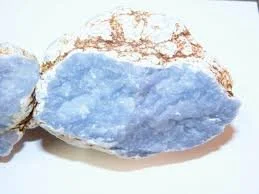
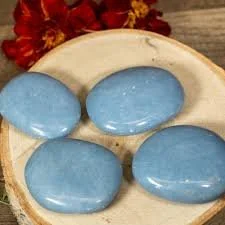
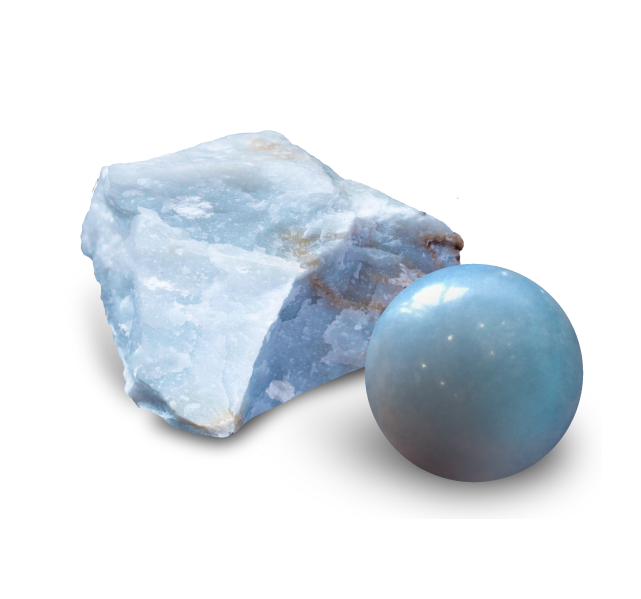
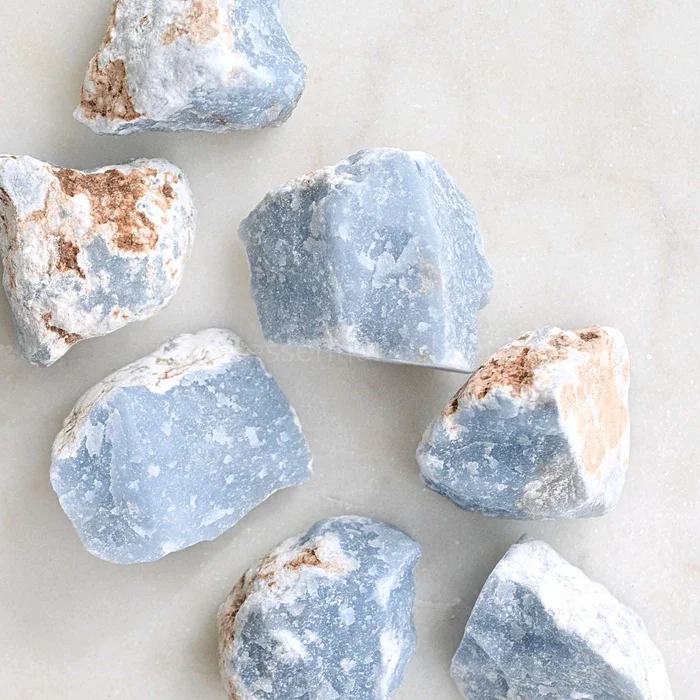
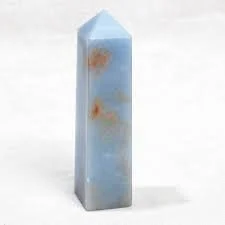
Angelite is a trade name for blue anhydrite, a calcium sulfate mineral. It is closely related to gypsum but lacks water in its crystal structure.
Chemical composition
Chemical formula: CaSO₄
Calcium sulfate
Crystal structure
Crystal system: orthorhombic
Usually occurs in massive or granular form rather than well-defined crystals
Color and appearance
Pale blue to gray-blue
Opaque
Fine-grained, smooth texture when polished
Luster: vitreous to pearly
Physical properties
Hardness: 3–3.5 on the Mohs scale
Perfect cleavage in three directions
Soft and relatively fragile
Specific gravity: ~2.9–3.0
Formation
Anhydrite forms in evaporite environments where seawater evaporates, leaving sulfate minerals behind. Angelite forms when anhydrite is later exposed and polished.
Hydration note
When exposed to water over time, anhydrite can absorb moisture and convert into gypsum — which is why angelite should not get wet.
Geographic sources
Peru (primary commercial source)
Mexico
Germany
Poland
Egypt
Uses and applications
Carvings and polished stones
Jewelry (protective settings only)
Decorative and metaphysical specimens
Angelite — Metaphysical Properties & Fun Facts
👼💙 Core Energy
Angelite is known as a stone of peace, gentle communication, and spiritual comfort. Its energy feels calming, reassuring, and emotionally safe — like a quiet presence beside you 🌬️
🗣️ Throat & Higher Communication
Associated with the throat chakra 🗣️
Encourages calm, compassionate communication 🤍
Often linked to spiritual or intuitive messages 🔮
🕊️ Peace & Emotional Soothing
Helps reduce stress and anxiety 🌬️
Encourages emotional softness and patience 🌸
Supports emotional healing through gentleness 🫶
🌙 Spiritual Connection
Often associated with angelic or higher guidance 👼
Encourages trust in unseen support 🌌
Supports meditation and prayer 🧘♀️
🛡️ Gentle Protection
Said to create a peaceful, protective energy 🛡️
Encourages emotional safety and trust 🤍
Helps soften harsh environments 🏡
🧿 How People Work With Angelite
Meditate with it during emotional stress 🧘♀️
Keep near the bed or meditation space 🛏️
Use during calm communication or reflection 🗣️
Pair with grounding stones for balance 🪨
✨ Fun Facts
Name reflects its calming, “angelic” vibe 👼
Often confused with blue calcite or celestite 🔍
Cannot be cleansed with water 🚫💧
Used symbolically for grief and emotional comfort 🕯️
🔮 Overall Vibe
Angelite is about peace without effort 💙
It doesn’t energize — it reassures and calms.
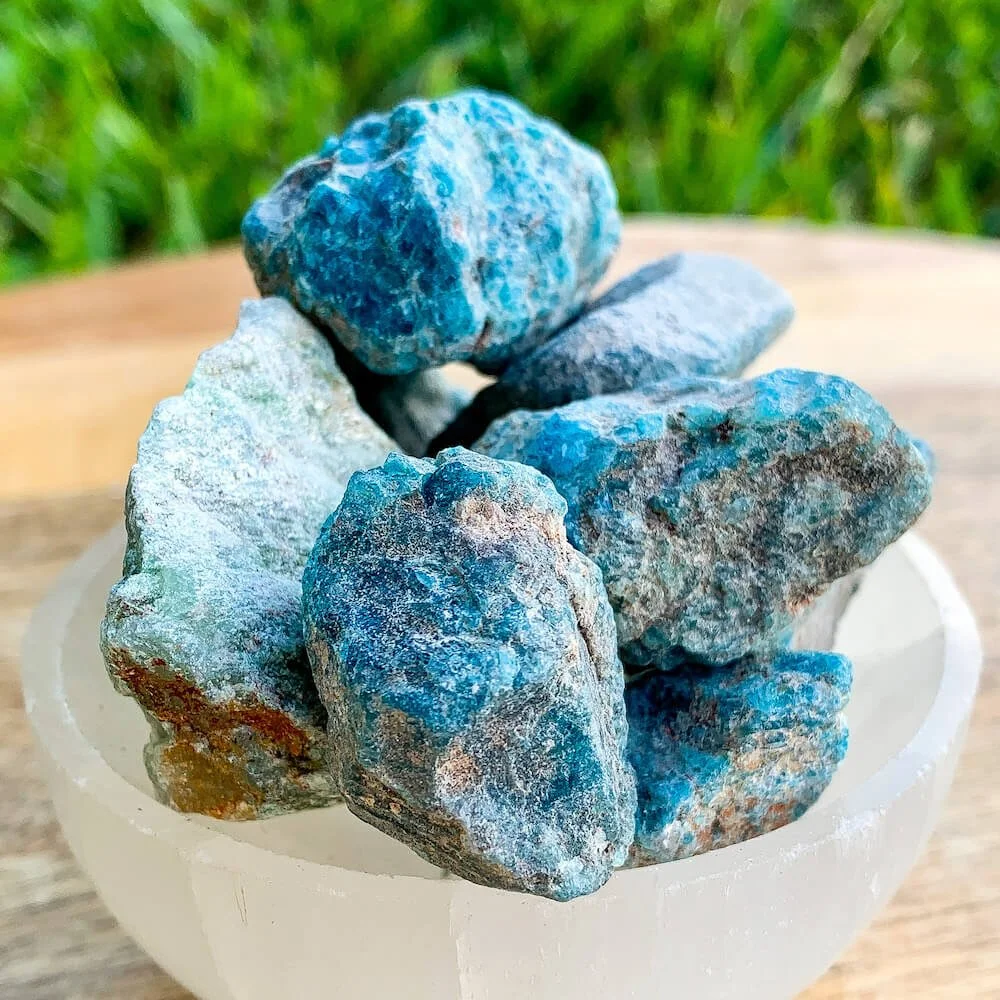
Apatite — Mineral & Scientific Information
Apatite is such an underrated gem — bright, motivating, and surprisingly important in science and crystal lore.What it is
Apatite is a group of phosphate minerals rather than a single mineral species. It is a key component of biological hard tissues, including human teeth and bones.
Chemical composition
General formula: Ca₅(PO₄)₃(F,Cl,OH)
Variants include fluorapatite, chlorapatite, and hydroxylapatite
Crystal structure
Crystal system: hexagonal
Often forms prismatic or tabular crystals
Also occurs in massive or granular forms
Color and appearance
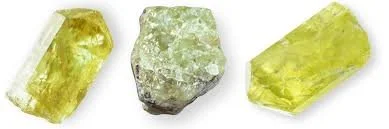
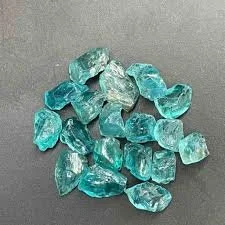
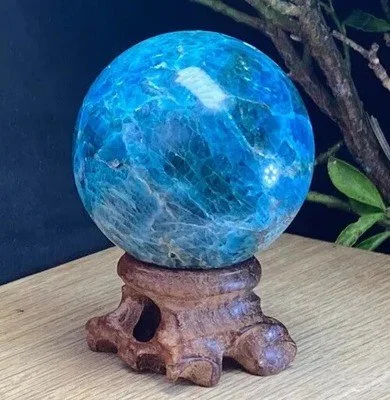
Common colors: blue, green, yellow, violet, colorless
Blue and neon green varieties are most popular
Transparent to opaque
Luster: vitreous
Physical properties
Hardness: 5 on the Mohs scale
Brittle with poor cleavage
Specific gravity: ~3.1–3.2
Formation
Apatite forms in igneous, metamorphic, and sedimentary rocks, making it one of the most widespread phosphate minerals on Earth.
Biological significance
Hydroxylapatite is the primary mineral in:
-Human bones
-Teeth enamel
-Fish scales and vertebrate skeletons
Geographic sources
Brazil
Mexico
Madagascar
Myanmar
Canada
Russia
Uses and applications
Fertilizer production (major source of phosphorus)
Gemstones and mineral specimens
Scientific and biological research
Dental and medical applications
Name origin
From the Greek apatē, meaning “deception,” because apatite is often mistaken for other gemstones.
Apatite — Metaphysical Properties & Fun Facts
💎⚡ Core Energy
Apatite is known as a stone of motivation, clarity, and forward momentum. Its energy feels bright, activating, and mentally stimulating — like flipping on a light switch 🧠✨
🧠 Focus & Mental Clarity
Encourages concentration and learning 📚
Supports goal-setting and follow-through 🎯
Helps clear mental fog 🌤️
🗣️ Communication & Expression
Often linked to the throat chakra 🗣️
Encourages honest self-expression 🧩
Helps align thoughts with words 💬
🔥 Motivation & Manifestation
Said to increase drive and ambition 🚀
Helps overcome procrastination ⏳
Encourages action rather than overthinking 🏃♂️
🌈 Emotional & Energetic Balance
Blue apatite: calm clarity and insight 💙
Green apatite: growth and healing 🌿
Yellow apatite: confidence and creativity 🌞
🧿 How People Work With Apatite
Study or work sessions 📖
Vision boards and intention setting 📝
Meditation for clarity and direction 🧘♀️
Pair with grounding stones to stay balanced 🪨
✨ Fun Facts
Your teeth contain apatite 😬
Softer than quartz, so it scratches easily ⚠️
Often mistaken for tourmaline or beryl 👀
One of the most important minerals for life on Earth 🌍
🔮 Overall Vibe
Apatite is about knowing what you want — and moving toward it ⚡
It energizes the mind more than the body.
Aquamarine — Mineral & Scientific Information
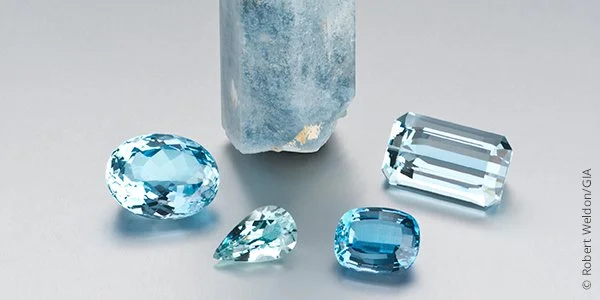
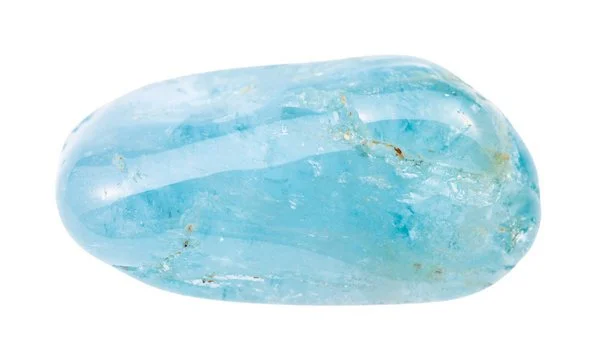
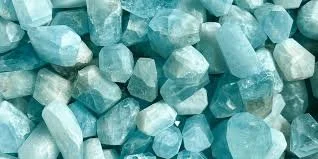
Aquamarine is calm, luminous, and quietly powerful — a stone that feels like clear water and steady breath.What it is
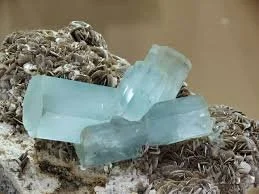
Aquamarine is a blue to blue-green variety of beryl, the same mineral family as emerald and morganite.
Chemical composition
Formula: Be₃Al₂Si₆O₁₈
Color caused by trace amounts of iron
Crystal structure
Crystal system: hexagonal
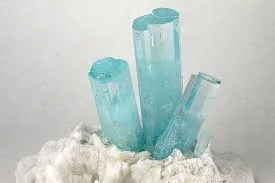
Typically forms long, prismatic crystals with hexagonal cross-sections
Color and appearance
Pale blue to deep blue-green
Transparent to translucent
Luster: vitreous
Deeper blue stones are generally more valued
Physical properties
Hardness: 7.5–8 on the Mohs scale
No cleavage, but can fracture
Specific gravity: ~2.7
Formation
Aquamarine forms in granitic pegmatites and hydrothermal veins, often alongside quartz, feldspar, and mica.
Geographic sources
Brazil (largest producer)
Pakistan
Madagascar
Nigeria
Mozambique
Russia
Uses and applications
Fine jewelry
Collector crystals
Optical and scientific research (beryl family properties)
Name origin
From the Latin aqua marina, meaning “water of the sea.”
Aquamarine — Metaphysical Properties & Fun Facts
🌊💎 Core Energy
Aquamarine is known as a stone of calm communication, emotional clarity, and inner peace. Its energy feels cool, steady, and soothing — like floating in clear ocean water 🫧
🗣️ Communication & Truth
Strongly connected to the throat chakra 🗣️
Encourages clear, honest expression 💬
Helps release fear around speaking your truth 🌬️
💙 Emotional Balance
Soothes stress and overwhelm 😌
Encourages emotional flow instead of suppression 🌊
Supports gentle emotional release 🫶
🧘♀️ Calm & Courage
Promotes courage through calm confidence 🛡️
Helps navigate difficult conversations ⚓
Encourages grace under pressure 🌬️
🌙 Spiritual & Intuitive Flow
Associated with water energy 🌊
Encourages intuition and emotional awareness 👁️
Supports meditation and breathwork 🧘♀️
🧿 How People Work With Aquamarine
Wear during public speaking or important conversations 💍
Meditate with it for calm clarity 🧘♂️
Keep near water or calming spaces 🛁
Pair with grounding stones for emotional balance 🪨
✨ Fun Facts
Sailors once carried aquamarine for protection at sea ⚓
March birthstone ♓
Often heat-treated to enhance blue color 🔥
Part of the same family as emerald 💚
🔮 Overall Vibe
Aquamarine is about speaking calmly, feeling deeply, and staying steady 🌊
It doesn’t rush — it flows.
Arfvedsonite — Mineral & Scientific Information
Arfvedsonite has a deep, mysterious presence — protective, intuitive, and mentally sharpening.What it is
Arfvedsonite is a sodium-rich amphibole mineral, closely related to hornblende and riebeckite. It is best known for its dark color and subtle blue to silver internal flashes.
Chemical composition
Formula: Na₃(Fe²⁺,Fe³⁺)₄Si₈O₂₂(OH)₂
Iron-rich sodium amphibole
Crystal structure
Crystal system: monoclinic
Typically occurs in prismatic crystals or massive, fibrous aggregates
Color and appearance
Black to very dark green or blue-black
May show blue, silver, or greenish chatoyant flashes
Opaque to translucent on thin edges
Luster: vitreous to silky
Physical properties
Hardness: 5–6 on the Mohs scale
Perfect cleavage in two directions (typical of amphiboles)
Specific gravity: ~3.4–3.6
Formation
Arfvedsonite forms in alkaline igneous rocks, especially nepheline syenites and pegmatites rich in sodium and iron.
Geographic sources
Greenland (classic locality)
Canada
Norway
Russia
United States (rare)
Uses and applications
Mineral specimens
Polished stones for collectors
Occasionally used in jewelry with care
Name origin
Named after Johan August Arfwedson, a Swedish chemist who discovered lithium.
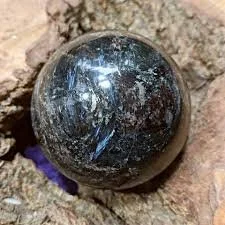
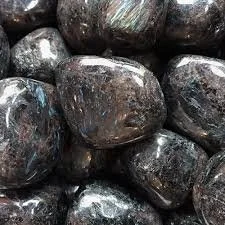
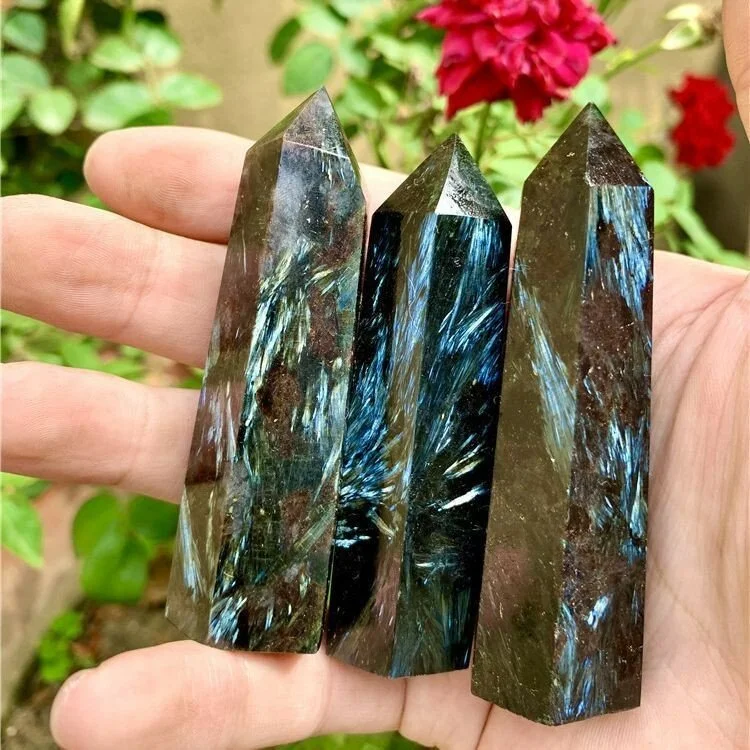
Arfvedsonite — Metaphysical Properties & Fun Facts
🖤⚡ Core Energy
Arfvedsonite is known as a stone of intuition, protection, and mental clarity. Its energy feels deep, grounding, and mentally alert — like a night sky that sharpens awareness 🌌
🧠 Mental Focus & Awareness
Encourages clarity and insight 🧩
Helps cut through confusion and distraction ✂️
Supports decision-making and problem-solving 🔍
🛡️ Protection & Grounding
Often used as an energetic shield 🛡️
Helps absorb and deflect negativity 🌑
Grounds intuitive experiences into reality 🪨
🔮 Intuition & Psychic Development
Associated with enhanced intuition 👁️
Encourages awareness of subtle energies 🌬️
Supports meditation and inner exploration 🧘♀️
🧭 Direction & Life Path
Said to help reveal hidden opportunities 🗝️
Encourages alignment with purpose 🎯
Supports navigating change with clarity 🧭
🧿 How People Work With Arfvedsonite
Meditation for insight and protection 🧘♂️
Keep near workspaces for mental clarity 🖥️
Use during decision-making moments ⚖️
Pair with lighter stones for balance ⚪⚫
✨ Fun Facts
Often mistaken for nuummite or labradorite 👀
Flash comes from internal crystal structure ✨
Less common than many flashy black stones 🖤
Named after a scientist tied to lithium discovery 🔬
🔮 Overall Vibe
Arfvedsonite is about seeing clearly in the dark 🌌
It protects, sharpens, and grounds intuition into action.
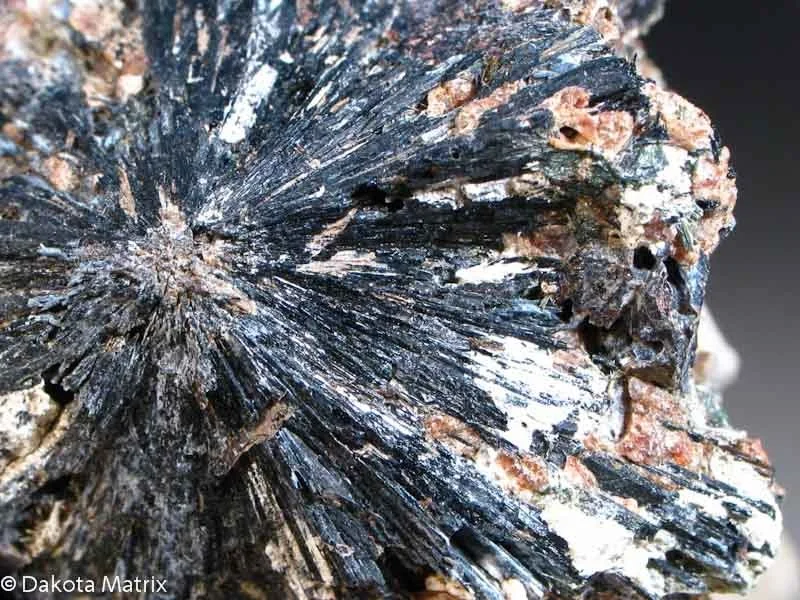
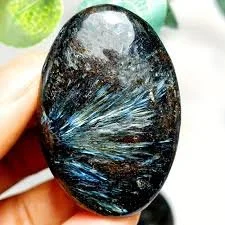
Astrophyllite — Mineral & Scientific Information
Astrophyllite has a bold, cosmic energy — rare, radiant, and deeply transformational.What it is
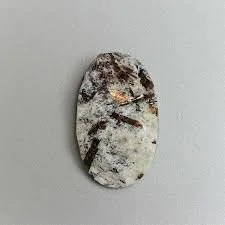
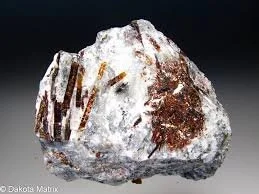
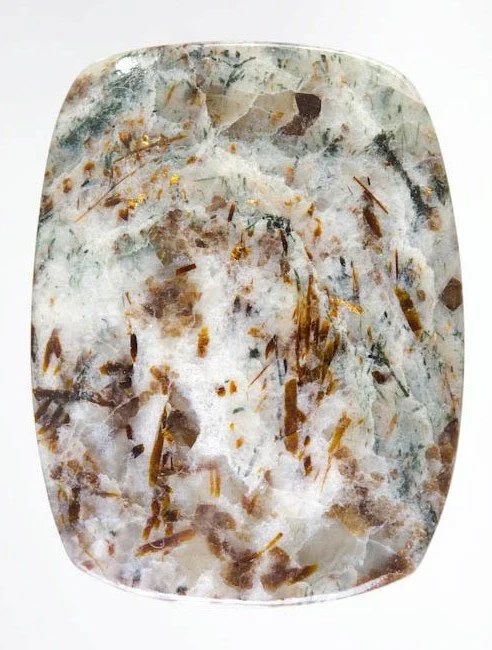
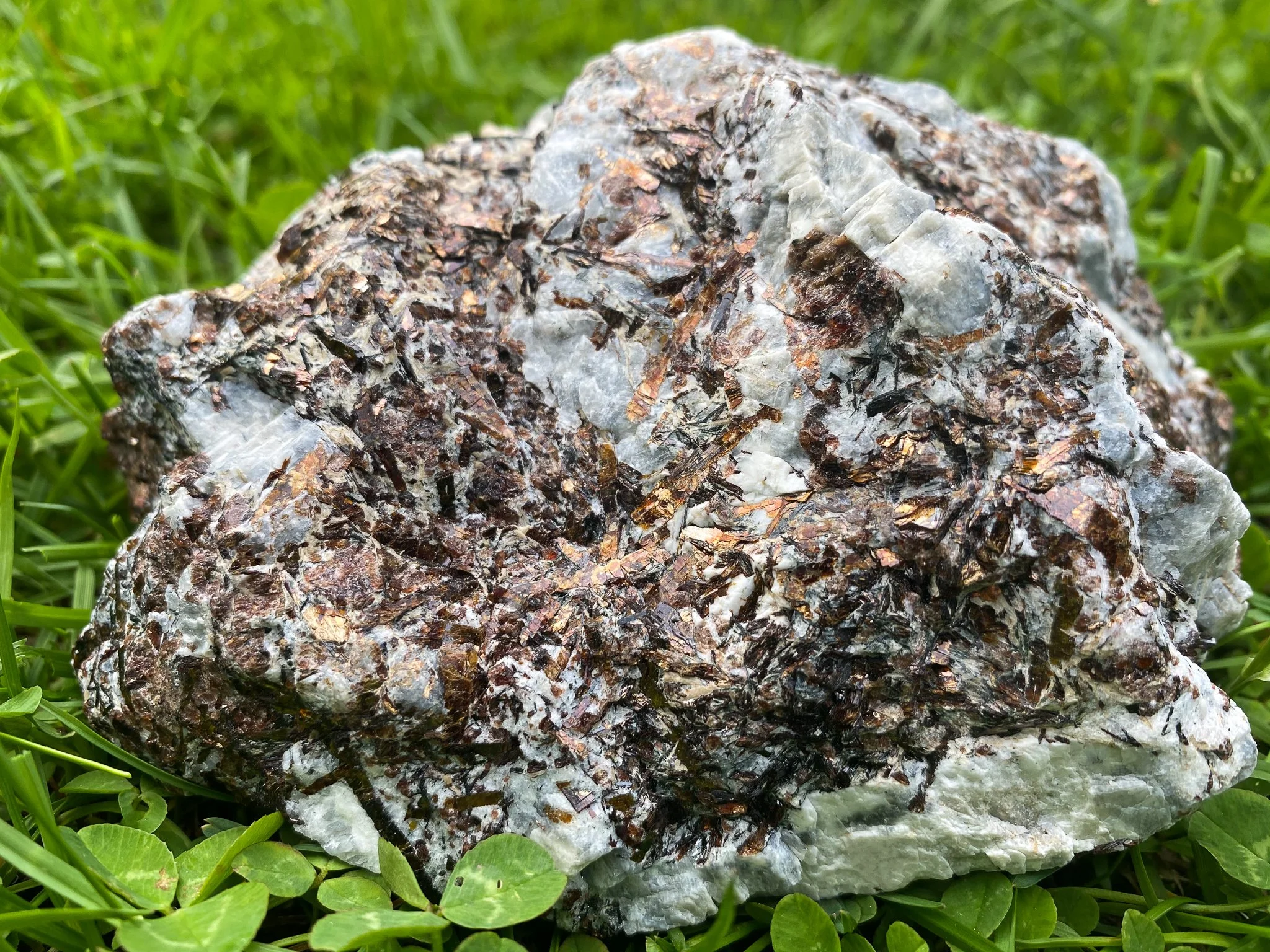
Astrophyllite is a rare potassium–iron–titanium silicate mineral known for its dramatic golden to bronze radiating crystal patterns.
Chemical composition
Formula: (K,Na)₃(Fe²⁺,Mn)₇Ti₂Si₈O₂₄(O,OH)₇
Rich in iron and titanium
Crystal structure
Crystal system: triclinic
Typically occurs in bladed, radiating aggregates rather than individual crystals
Color and appearance
Golden-brown, bronze, copper, or yellow-gold
Radiating “starburst” or firework-like patterns
Opaque
Luster: vitreous to metallic
Physical properties
Hardness: 3–4 on the Mohs scale
Brittle with good cleavage
Specific gravity: ~3.2–3.4
Formation
Astrophyllite forms in alkaline igneous rocks, particularly nepheline syenites and pegmatites, often alongside arfvedsonite, aegirine, and feldspar.
Geographic sources
Norway (type locality)
Russia (Kola Peninsula)
Greenland
Canada
United States (rare)
Uses and applications
Collector mineral specimens
Polished stones and cabochons
Rarely used in jewelry due to softness
Name origin
From the Greek astron (star) and phyllon (leaf), referring to its star-like, bladed crystal structure.
Astrophyllite — Metaphysical Properties & Fun Facts
🌌✨ Core Energy
Astrophyllite is known as a stone of awakening, life purpose, and cosmic connection. Its energy feels expansive and revealing — like suddenly seeing the bigger picture 🔭
🧭 Life Path & Purpose
Encourages clarity about one’s direction 🎯
Helps reveal hidden talents and potentials 🔓
Supports stepping into authenticity 🌟
🔮 Spiritual Awakening
Often linked to higher awareness 👁️
Encourages exploration beyond limiting beliefs 🚀
Supports deep meditation and insight 🧘♀️
🖤 Light + Shadow Integration
Helps integrate shadow aspects 🌑🌕
Encourages honest self-reflection 🪞
Supports transformation through awareness 🔄
⚡ Energy Flow & Alignment
Said to activate and align multiple chakras 🌈
Encourages energetic flow and balance 🌀
Helps release energetic blockages 🧲
🧿 How People Work With Astrophyllite
Meditation for insight and awakening 🧘♂️
Keep during times of major life change 🔄
Pair with grounding stones to stay balanced 🪨
Use as a reminder of purpose and direction 🧭
✨ Fun Facts
Often found with arfvedsonite 🖤✨
Extremely rare compared to most crystals 💎
Each piece has a unique starburst pattern 🌟
Sometimes called a “cosmic compass” 🔭
🔮 Overall Vibe
Astrophyllite is about seeing your path — and choosing it boldly 🌌
It doesn’t whisper. It reveals.
Aventurine — Mineral & Scientific Information
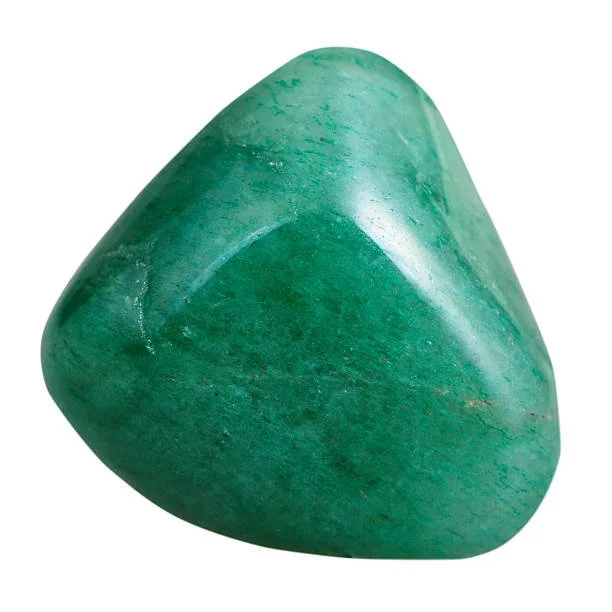
Ooo, aventurine — this one’s all about good vibes and gentle growth.Aventurine is a variety of quartz (SiO₂).
It’s not a separate mineral species
It’s defined by its appearance, not a unique chemical formula
The key feature is aventurescence — that sparkly, shimmering effect
Aventurine Effect (Aventurescence)
That subtle glitter comes from tiny mineral inclusions that reflect light:
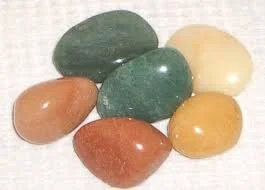
Green aventurine → fuchsite (a chromium-rich mica)
Red / brown aventurine → hematite or goethite
Blue aventurine → dumortierite or similar minerals
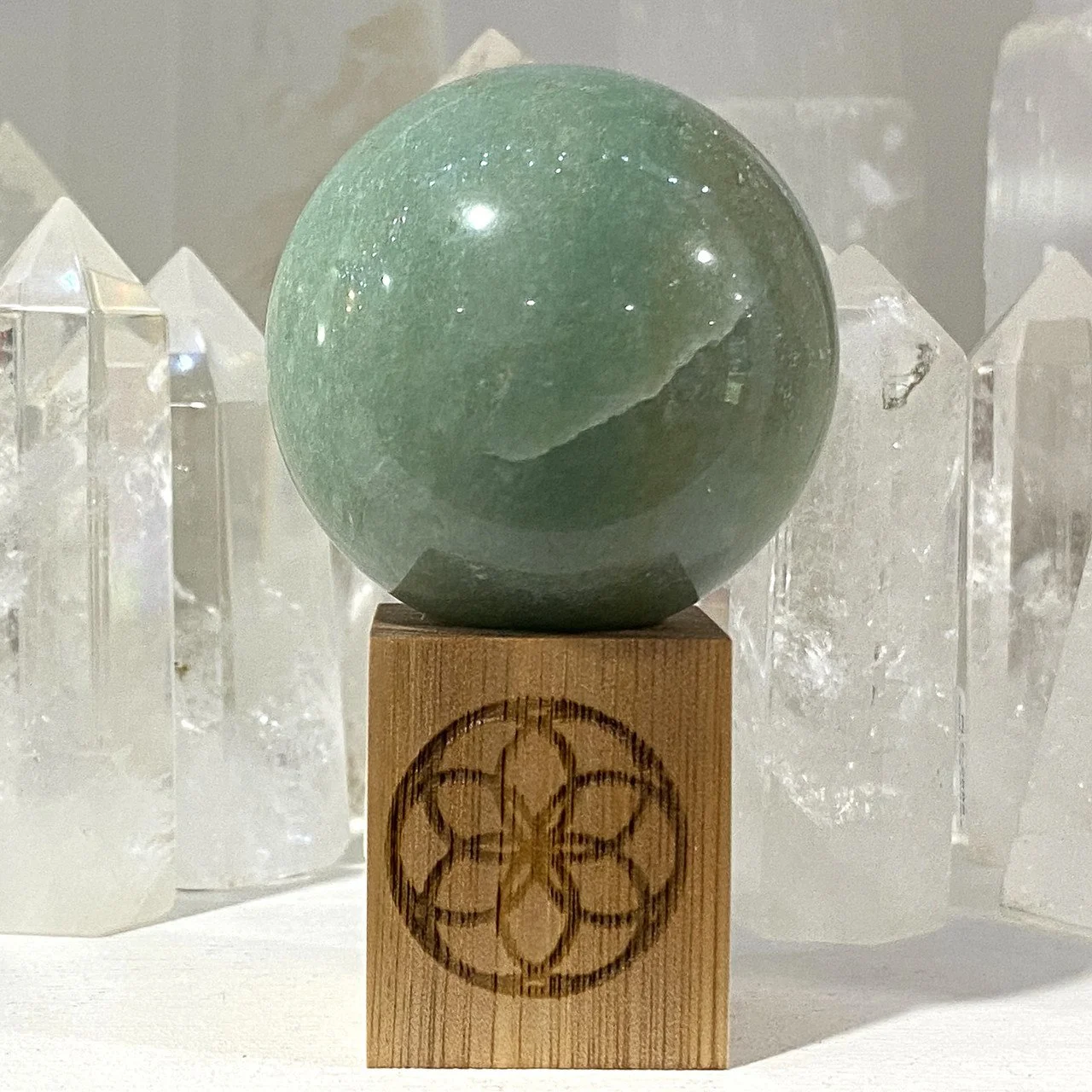
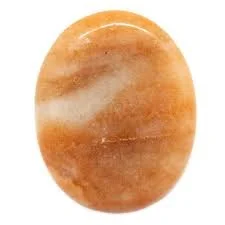
Peach / orange → iron oxides
These inclusions are plate-like and aligned, which is what creates the shimmer.
Chemical & Physical Properties
Chemical formula: SiO₂
Crystal system: Trigonal (same as quartz)
Hardness: ~6.5–7 on the Mohs scale
Luster: Vitreous to slightly greasy
Transparency: Translucent to opaque
Cleavage: None
Fracture: Conchoidal (shell-like curves)
Durable enough for jewelry, carvings, and everyday handling.
Color (Why It Varies)
The base quartz is colorless — the inclusions control everything:
Type of mineral
Size and density of inclusions
How evenly they’re distributed
This is why aventurine often looks mottled or cloudy instead of crystal-clear.
Major natural sources include:
India (especially green aventurine — biggest supplier)
Brazil
Russia
Tanzania
China
Most aventurine on the market today is natural, not synthetic
Aventurine forms when:
Quartz crystallizes in metamorphic or igneous environments
Micaceous or oxide minerals become trapped during growth
Geological pressure aligns the inclusions just right
It’s basically quartz that grew under messy but lucky conditions
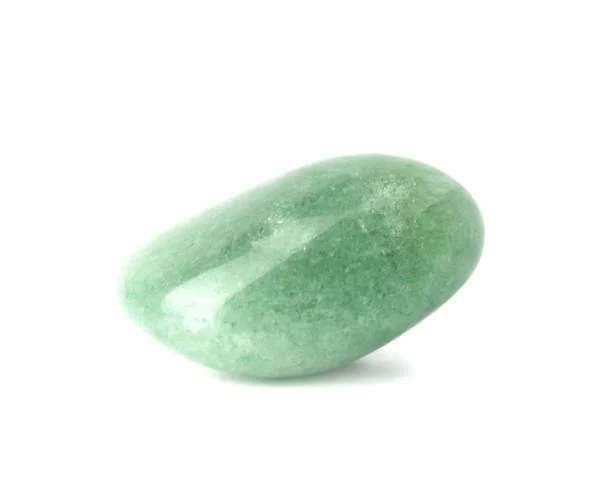
Aventurine — Metaphysical Properties & Fun Facts
🍃 Core Energy
Aventurine is known as the stone of luck, opportunity, and optimism. Its energy is steady and encouraging—like a quiet nudge saying “you’ve got this.”
💚 Emotional & Heart Healing
Strongly connected to the heart chakra 💚
Encourages emotional healing, especially after stress or heartbreak 🤍
Helps release old emotional patterns and self-doubt 🔓
Promotes self-confidence, compassion, and emotional resilience 🌱
🍀 Luck, Abundance & Growth
Popular for career moves, business ventures, and personal growth 📈
Often called the “Stone of Opportunity” 🍀
Associated with:
Attracting luck and prosperity 💰✨
New beginnings and fresh chances 🚪🌟
Taking calculated risks with confidence 🎯
🧠 Mental & Decision-Making
Helps calm a restless or overactive mind 🧘♀️
Encourages clear decision-making without emotional bias ⚖️
Supports creativity and seeing possibilities you might’ve missed 👀✨
🔮 Spiritual & Energetic
Linked to gentle, earth-based spiritual growth 🌍
Encourages alignment with nature and natural cycles 🌿
Helps you stay open to change while feeling grounded 🪨
Sparkly inclusions = symbolic reminder that light exists even in uncertainty ✨
💞 Relationships
Encourages emotional openness and healthy boundaries 💬💚
Supports harmony and understanding in relationships 🕊️
Helps soften stubbornness and invite compromise 🤝
🧿 How People Work With Aventurine
Carry it as a pocket stone for luck 🍀
Wear as jewelry near the heart 💎
Meditate with it when setting intentions 🌙
Place it in workspaces or wallets to invite opportunity 💼💰
Pair with:
-Rose Quartz 💗 (love & compassion)
-Citrine 🌞 (abundance & confidence)
✨ Overall Vibe
Aventurine doesn’t force change—it encourages growth 🌱
It’s about hope over fear 💚, opportunity over stagnation 🍀, and steady progress over pressure ✨
Bloodstone — Mineral & Scientific Information
Bloodstone is grounded, historic, and quietly intense — a stone that blends earthy science with deep symbolic weight.What it is
Bloodstone, also known as heliotrope, is a variety of chalcedony, which itself is a microcrystalline form of quartz (SiO₂).
Color and appearance
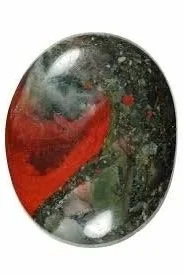
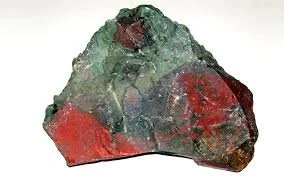
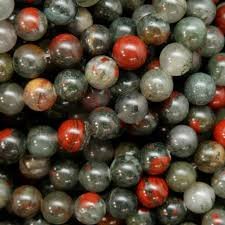
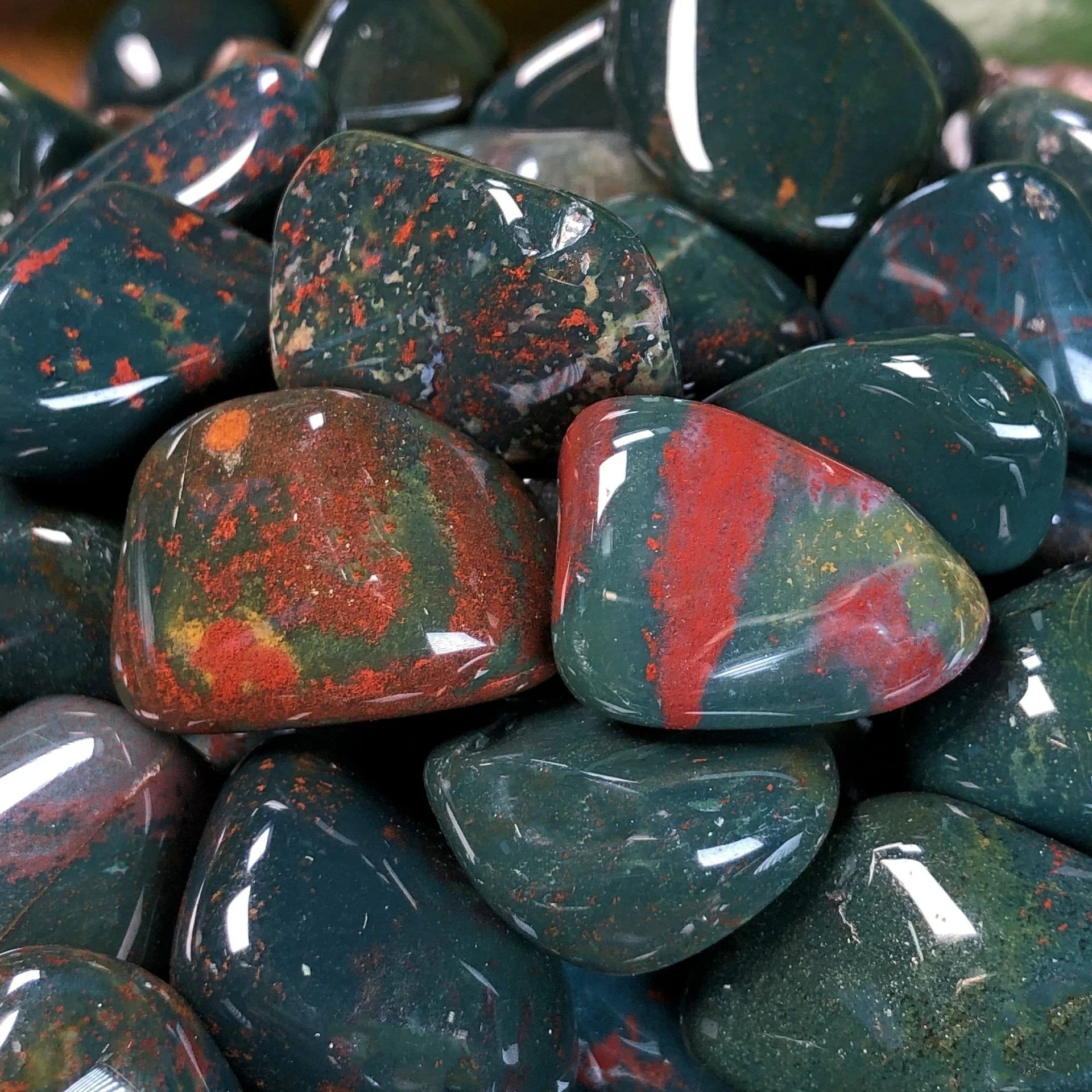
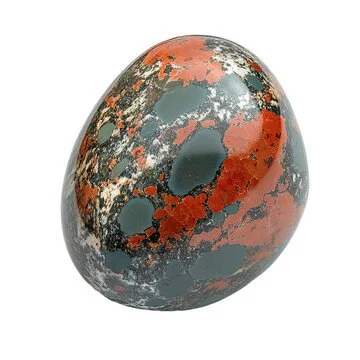
Typically dark green to greenish-black
Characterized by red, brown, or yellowish spots that resemble drops of blood
The red spots are caused by iron oxide inclusions, primarily hematite
Chemical composition
Chemical formula: SiO₂
Impurities: iron oxides (hematite)
Crystal structure
Crystal system: trigonal (quartz family)
Structure: microcrystalline (crystals are too small to see without magnification)
Physical properties
Hardness: 6.5–7 on the Mohs scale
Luster: waxy to vitreous
Transparency: opaque to translucent
Cleavage: none
Fracture: conchoidal
Formation
Bloodstone forms when silica-rich fluids crystallize in volcanic or sedimentary environments. Iron-bearing minerals become trapped during formation and later oxidize, creating the characteristic red spotting.
Where it is found:
India (historically and currently the most important source)
Brazil
Australia
China
United States
Uses (scientific and practical)
Carved into seals, intaglios, beads, and cabochons
Historically used for signet rings due to its durability
Occasionally used in ornamental stonework
Bloodstone — Metaphysical Properties & Fun Facts
🩸 Core Energy
Bloodstone is known as a stone of strength, vitality, and grounding. Its energy is dense, steady, and stabilizing — very “stand your ground” energy 🪨
💪 Physical Vitality (Traditional Beliefs)
Historically believed to boost physical endurance and stamina ⚡
Associated with resilience, recovery, and life force energy 🌱
Often linked to the root chakra 🔴
🛡️ Protection & Courage
Long used as a protective talisman 🛡️
Said to help dispel negativity and emotional toxicity 🌫️➡️✨
Encourages bravery during challenging or high-pressure situations 🦁
🧠 Mental Focus & Grounding
Believed to sharpen focus and decision-making 🎯
Helps reduce mental fatigue and overwhelm 🧘♂️
Encourages practical thinking and emotional steadiness ⚖️
🌍 Earth Connection
Strongly connected to earth energy 🌍
Often used for grounding practices and stabilizing emotions 🌿
Helpful when you feel scattered or disconnected
🧿 How People Work With Bloodstone
Worn or carried for strength and protection 💎
Used during meditation for grounding and courage 🧘
Placed in work or training spaces to encourage endurance 🏋️
✨ Fun Facts
The name heliotrope comes from Greek, meaning “sun turner” 🌞
In medieval Europe, bloodstone was believed to stop bleeding 🩸 (symbolic and historical, not medical)
Warriors once carried it for courage and protection before battle ⚔️
Each stone’s pattern is completely unique — no two “blood splatters” are ever the same
🔮 Overall Vibe
Bloodstone is about strength under pressure, grounded courage, and steady resilience — not flashy, just powerful 💥
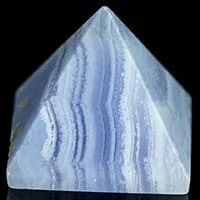
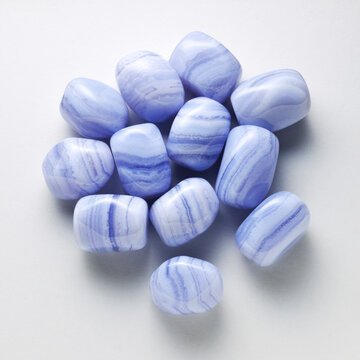
Blue Lace Agate — Mineral & Scientific Information
Blue Lace Agate is gentle, soothing, and quietly beautiful — a stone that feels like a calm breath and soft words.What it is
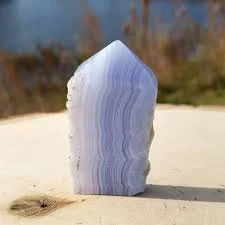
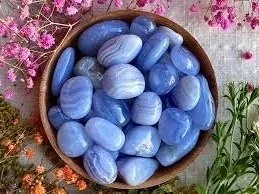
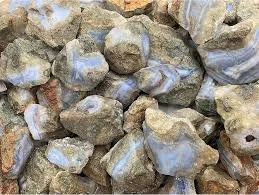
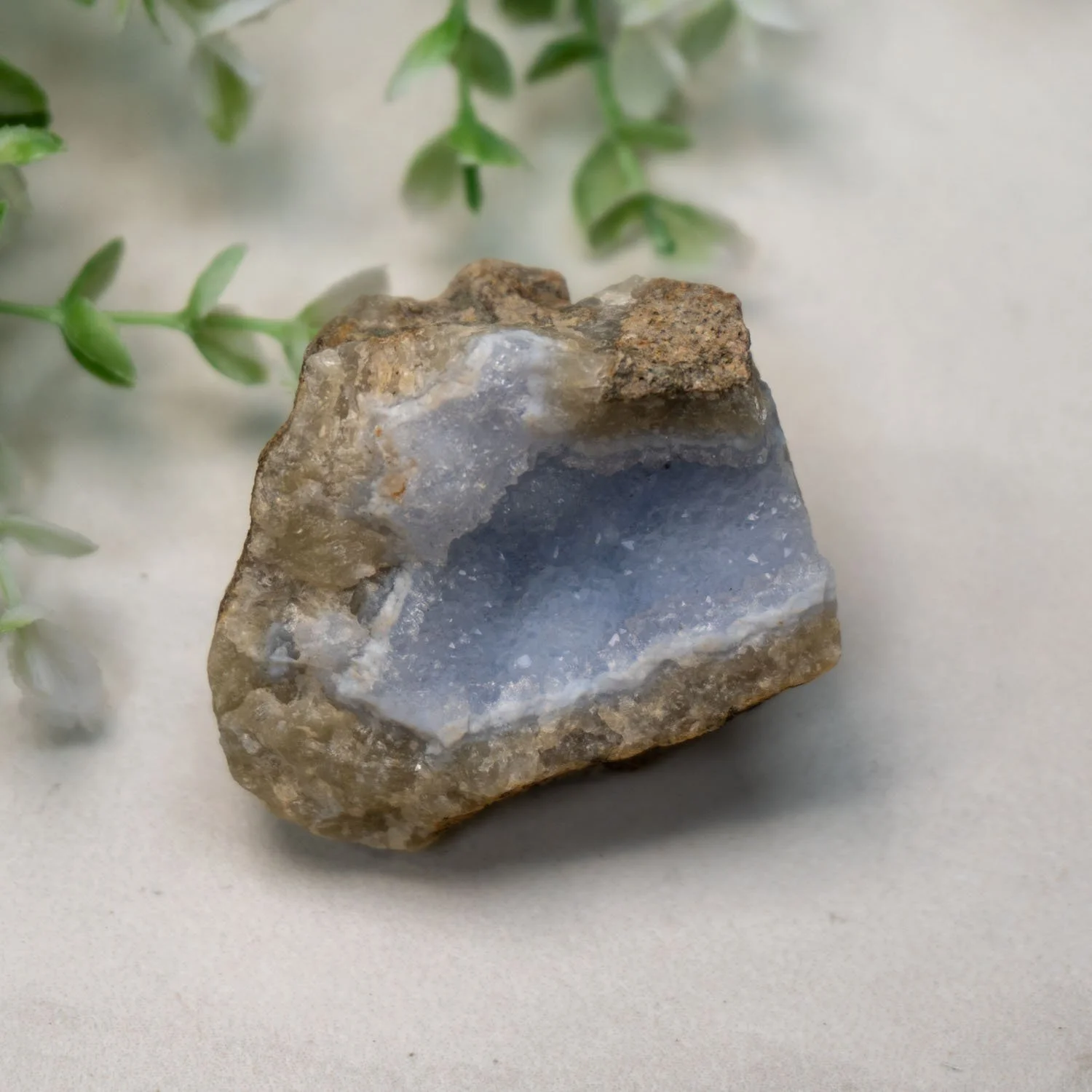
Blue lace agate is a banded variety of chalcedony, which is a microcrystalline form of quartz (SiO₂). Chalcedony consists of extremely fine intergrowths of quartz and moganite.
Color and pattern
Pale blue to light sky-blue, often with white or soft gray bands
The distinctive “lace” pattern forms from rhythmic, layered deposition of silica
The blue coloration is typically due to light scattering from microscopic structures, not strong blue pigments
Chemical composition
Chemical formula: SiO₂
Minor trace elements and structural variations influence color intensity and band contrast
Crystal system and structure
Crystal system: trigonal (quartz group)
Crystal habit: cryptocrystalline (individual crystals are not visible to the naked eye)
Physical properties
Hardness: 6.5–7 (Mohs scale)
Luster: waxy to silky
Transparency: translucent
Cleavage: none
Fracture: conchoidal
Formation process
Blue lace agate forms when silica-rich fluids fill cavities in volcanic rock, such as gas bubbles in lava. Over long periods, changes in temperature, pressure, and chemistry cause silica to deposit in bands, creating the lace-like appearance.
Geographic sources
Namibia is the primary and most famous source
Smaller deposits occur in South Africa and limited other locations
Uses and applications
Jewelry (cabochons, beads, pendants)
Decorative carvings and ornamental stones
Favored in lapidary work due to its uniform hardness and polish quality
Blue Lace Agate — Metaphysical Properties & Fun Facts
💙 Core Energy
Blue lace agate is known as a stone of calm, reassurance, and gentle communication. Its energy is soft and steady — comforting rather than energizing 🌬️
🗣️ Communication & Expression
Strongly associated with the throat chakra 🔵
Believed to help:
-Speak clearly and thoughtfully 🗨️
-Reduce fear of public speaking or confrontation 🎤
-Express emotions calmly and honestly 🤍
😌 Emotional Soothing
Often used to ease anxiety, nervous tension, and emotional stress 🌙
Said to quiet racing thoughts and promote inner peace 🧘
Helpful during emotionally sensitive conversations 🕊️
🌊 Gentle, Supportive Energy
Encourages patience, empathy, and calm responses 🌱
Supports emotional balance without pushing change
Ideal for people who feel overwhelmed by intense environments
🧿 How People Commonly Use It
Worn as necklaces to keep it near the throat 📿
Held during meditation or journaling 🧘
Placed in bedrooms or offices to promote peaceful communication 🕯️
✨ Fun Facts
Natural blue lace agate is much rarer than most agates ⛏️
Many “blue agates” on the market are dyed — true blue lace has soft, cloudy band transitions 🎨
Despite its delicate appearance, it’s durable enough for daily wear 💪
Each stone’s lace pattern is completely unique — no two are ever identical 🌀
🔮 Overall Vibe
Blue lace agate is about soft strength, calm honesty, and emotional grace 💙
It’s the stone equivalent of speaking gently — and being heard.
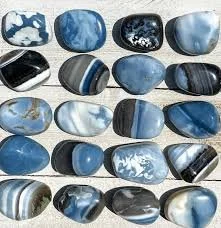
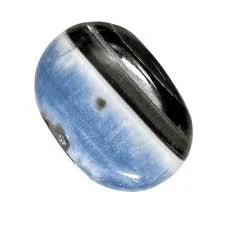
Blue Opal — Mineral & Scientific Information
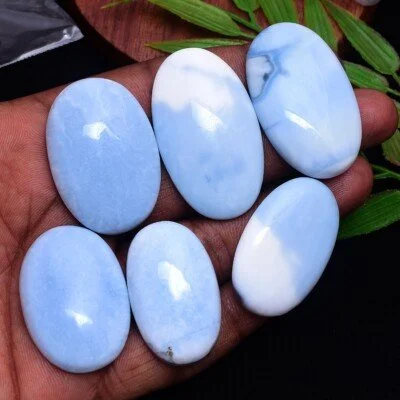
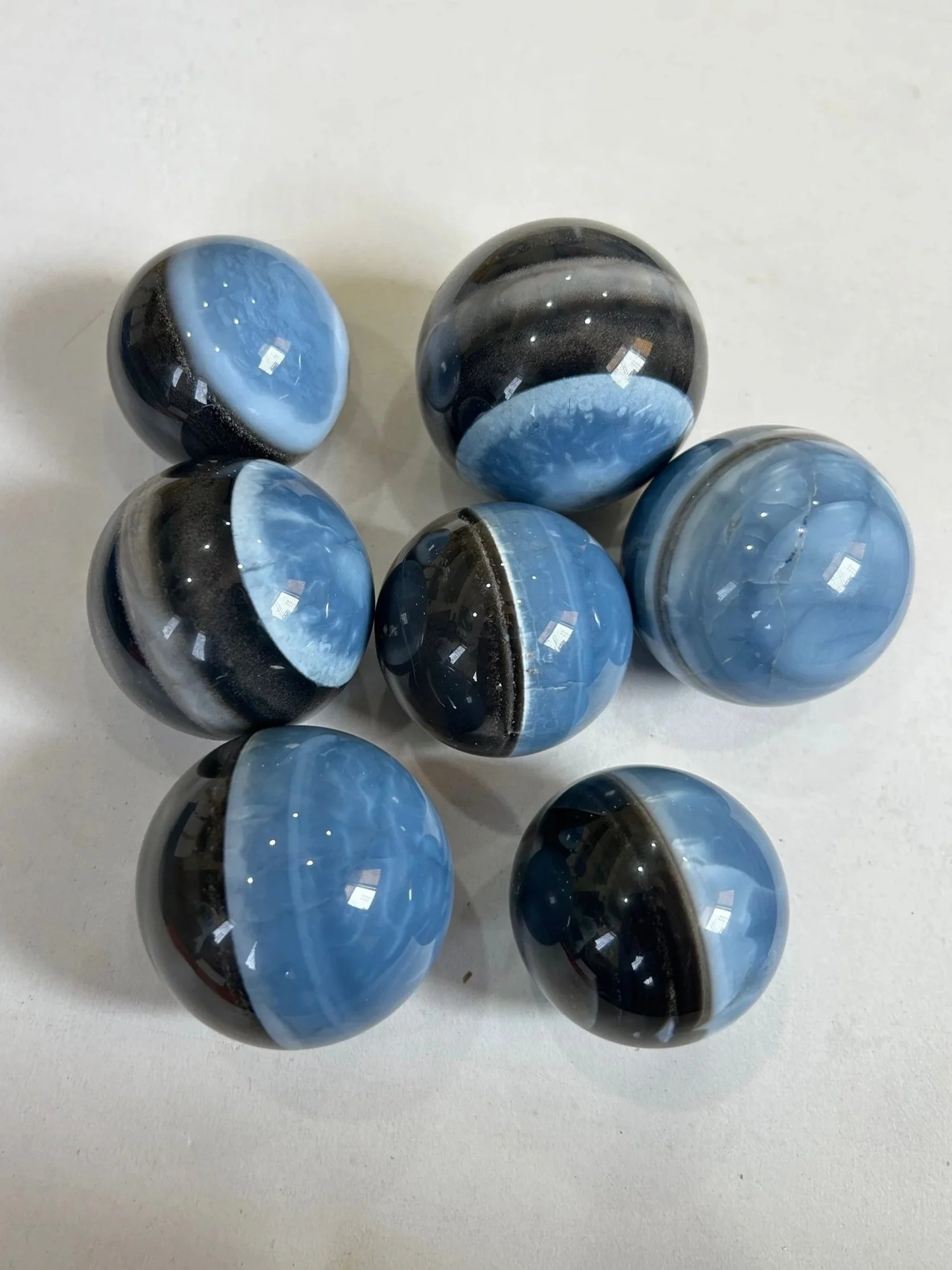
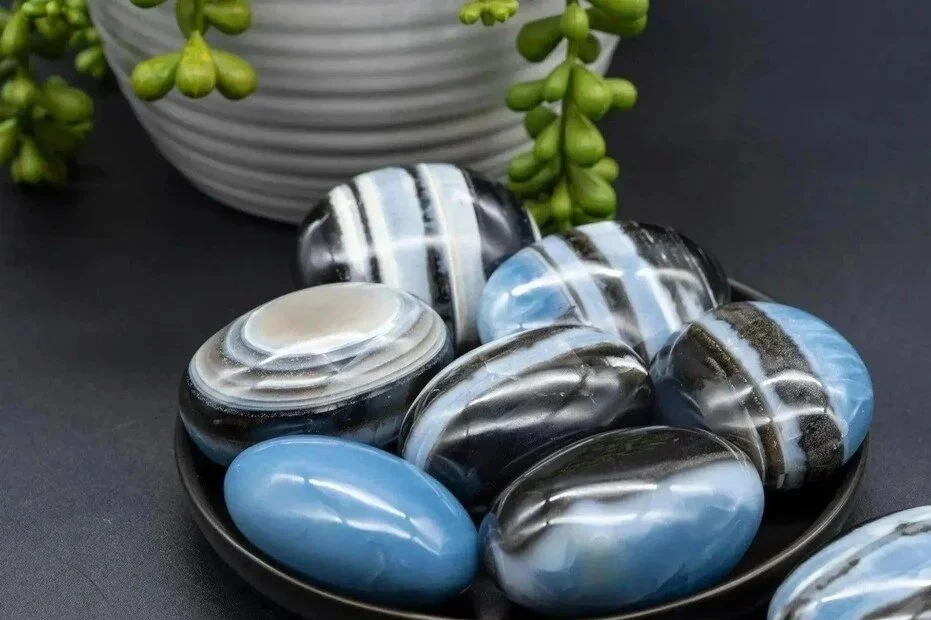
Blue opal has a really nice blend of science and softness.What it is
Blue opal is a variety of common opal, an amorphous (non-crystalline) form of hydrated silica. Unlike precious opal, blue opal typically does not display play-of-color.
Chemical composition
Chemical formula: SiO₂·nH₂O
Water content: typically 3–10%, sometimes higher
The amount and distribution of water strongly affect stability and appearance
Structure
Amorphous (no crystal lattice)
Composed of microscopic silica spheres or irregular networks
Lacks long-range atomic order, which distinguishes opal from quartz
Color and appearance
Typically opaque to translucent
Waxy to dull luster
Pale sky blue to turquoise-blue, sometimes with white or gray zones
Color may be caused by:
-Light scattering from microscopic silica structures
-Trace elements such as copper or iron (depending on locality)
Physical properties
Hardness: 5.5–6.5 on the Mohs scale
Fracture: conchoidal to uneven
Cleavage: none
Density: lower than quartz due to water content
Formation
Blue opal forms when silica-rich water seeps into rock cavities and fractures at relatively low temperatures. As water evaporates or conditions change, hydrated silica gels solidify into opal. Because of its water content, opal remains sensitive to environmental changes.
Major sources
Peru (the most well-known blue opal deposits)
Mexico
United States (Nevada, Oregon)
Australia (less common for blue varieties)
Uses and handling
Used in cabochons, beads, and carvings
Softer and more fragile than quartz; best for low-impact jewelry
Sensitive to rapid temperature changes, dehydration, and prolonged dryness
Blue Opal — Metaphysical Properties & Fun Facts
💙 Core Energy
Blue opal is associated with emotional flow, gentle release, and inner truth. Its energy is soft, fluid, and deeply calming — very “let it move, let it go” 🌊
🗣️ Emotional Expression & Truth
Linked to the throat chakra 🔵
Believed to help express emotions that are hard to put into words 🫶
Encourages honesty that comes from emotional awareness, not pressure 🕊️
😌 Emotional Healing & Release
Often used to release suppressed emotions 💧
Said to help with emotional fatigue and overwhelm 🌙
Encourages healthy emotional boundaries without shutting down 🤍
🌊 Flow & Adaptability
Supports going with the flow rather than resisting change 🌊
Helps soften emotional rigidity and control patterns 🧘
Useful during transitions, grief, or emotional processing 🌱
🧿 How People Work With Blue Opal
Meditate with it during emotional reflection 🧘
Wear it for gentle emotional support (best as pendants) 📿
Keep it nearby during journaling or therapy work ✍️
Store carefully to protect its water content 🪨
✨ Fun Facts
Peruvian blue opal is sometimes called “Andean opal” ⛰️
Unlike precious opal, blue opal’s beauty comes from color and calmness, not flash ✨
Opal is one of the few gemstones that contains water 💧
Some blue opals can slightly change appearance depending on humidity 🌫️
🔮 Overall Vibe
Blue opal is about emotional honesty, gentle release, and flowing forward 💙
It doesn’t push healing — it lets it happen.
Bronzite — Mineral & Scientific Information
Bronzite has a very grounded, no-nonsense energy, and the science behind it is just as solid.
What it is
Bronzite is a variety of enstatite, which belongs to the pyroxene mineral group. It is an iron-bearing magnesium silicate and is classified as an orthopyroxene.
Chemical composition
General formula: (Mg,Fe)₂Si₂O₆
Bronzite specifically contains enough iron to produce its characteristic bronze-like sheen
Crystal system and structure
Crystal system: orthorhombic
Crystal habit: typically massive or granular; well-formed crystals are uncommon
Color and appearance
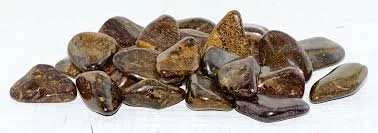
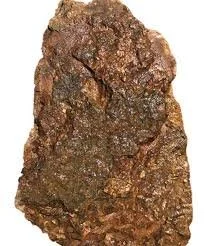
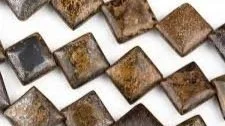
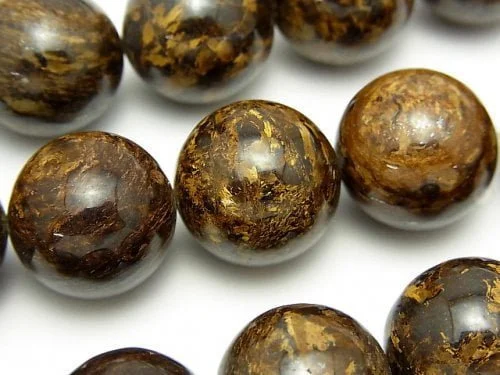
Brown, bronze, greenish-brown, or golden-brown
Often shows a metallic-looking shimmer caused by iron-rich lamellae or exsolution textures
Typically opaque
Physical properties
Hardness: 5.5–6 on the Mohs scale
Luster: vitreous to submetallic
Cleavage: two distinct cleavages at nearly right angles (typical of pyroxenes)
Fracture: uneven to splintery
Density: moderate to high due to iron content
Formation
Bronzite forms in igneous and metamorphic rocks, particularly in ultramafic and mafic environments such as peridotite and pyroxenite. It can also form during metamorphism of magnesium-rich rocks.
Geographic sources
South Africa (major source for gem and ornamental material)
Brazil
Austria
Sri Lanka
United States
Uses and applications
Cut into cabochons and beads
Used in carvings and decorative objects
Occasionally used as an ornamental architectural stone
Studied in geology as part of pyroxene mineral assemblages
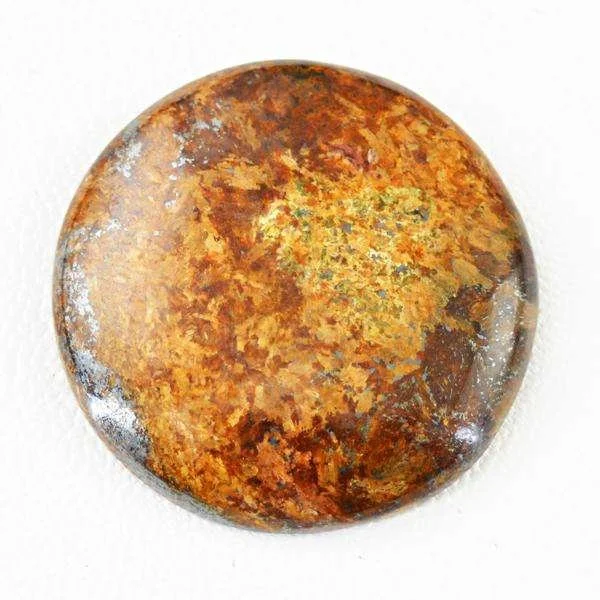
Bronzite — Metaphysical Properties & Fun Facts
🟤 Core Energy
Bronzite is known as a stone of grounding, protection, and decisive action. Its energy is steady, confident, and very “feet on the ground” 🪨
🛡️ Protection & Boundaries
Believed to deflect negative energy and return it to its source 🛡️
Often used for energetic protection without aggression ⚔️➡️🕊️
Encourages strong personal boundaries 🚧
💪 Confidence & Action
Said to support self-confidence and assertiveness 💥
Helps with decision-making and standing firm in your choices 🎯
Associated with taking calm, deliberate action rather than reacting emotionally 🧠
🌍 Grounding & Stability
Strongly linked to earth energy 🌍
Helpful when feeling scattered, overwhelmed, or unmotivated 🌪️➡️🪨
Encourages stability during stress or conflict ⚖️
🧿 How People Work With Bronzite
Carried as a pocket stone for grounding 🪙
Used during meditation to anchor energy 🧘
Placed in workspaces to encourage focus and confidence 💼
Worn for protection and steady courage 📿
✨ Fun Facts
Bronzite gets its name from its bronze-like metallic sheen ✨
It was historically mistaken for bronzed metal in polished form 🪙
The shimmering effect is sometimes called schiller 🌟
Despite its tough look, it’s slightly softer than quartz ⚠️
🔮 Overall Vibe
Bronzite is about calm strength, grounded confidence, and quiet authority
Not flashy — just solid.🟤
Calcite — Mineral & Scientific Information
Love calcite — it’s everywhere in geology and somehow still feels special.
What it is
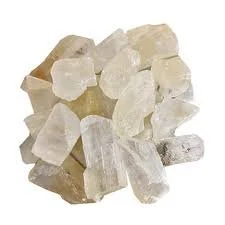
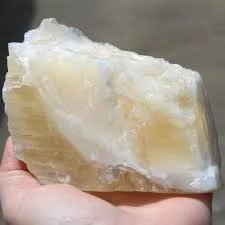
Calcite is a carbonate mineral and one of the most abundant minerals on Earth. It is the primary mineral component of limestone and marble and plays a major role in the global carbon cycle.
Chemical composition
Chemical formula: CaCO₃ (calcium carbonate)
Can incorporate trace elements such as magnesium, iron, manganese, or zinc, which influence color
Crystal system and structure
Crystal system: trigonal (rhombohedral)
Crystal habit: extremely varied — rhombohedra, scalenohedra (“dogtooth”), prisms, fibrous, massive
Color and appearance
Colorless to white is most common
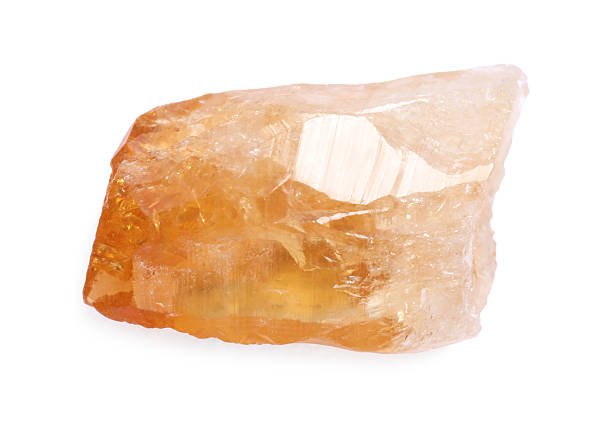
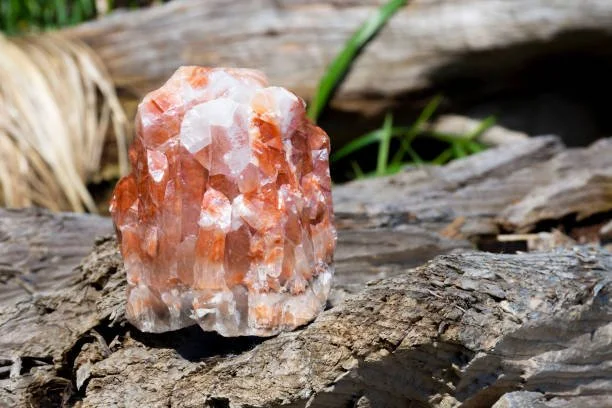
Also occurs in yellow, orange, green, blue, pink, red, brown, and black
Transparent to opaque
Vitreous to pearly luster
Physical properties
Hardness: 3 on the Mohs scale
Cleavage: perfect in three directions (rhombohedral)
Fracture: uneven to conchoidal (rarely seen due to cleavage)
Reacts with weak acids, producing effervescence (CO₂ bubbles)
Optical properties
Exhibits strong double refraction (birefringence) in clear crystals, causing objects viewed through it to appear doubled
Transparent varieties are often called Iceland spar
Formation
Calcite forms in a wide range of environments:
-Sedimentary (biological shells, coral, limestone deposition)
-Metamorphic (recrystallized limestone becomes marble)
-Igneous and hydrothermal veins
Many marine organisms use calcite to build shells and skeletal structures.
Geographic occurrence
Calcite is found worldwide, with notable specimens from:
Iceland
Mexico
China
United States
Romania
Uses and applications
Construction material (limestone, marble)
Cement and lime production
Acid neutralization
Optical instruments (historically)
Soil conditioning and industrial fillers
Calcite — Metaphysical Properties & Fun Facts
✨ Core Energy
Calcite is known as a stone of amplification, clarity, and energetic movement. Its energy is fast, light, and cleansing — like opening windows in a stuffy room 🌬️
🧠 Mental Clarity & Learning
Believed to enhance focus, memory, and learning 📚
Often used by students or during problem-solving 🧩
Helps clear mental fog and stagnation ☁️➡️✨
💛 Emotional Energy & Motivation
Encourages emotional balance and renewed motivation 🔄
Said to gently move stuck emotions without overwhelm 🌊
Helpful during periods of low energy or burnout 🔋
🌈 Color-Specific Vibes
Orange calcite 🧡 → creativity, confidence, vitality
Green calcite 💚 → emotional healing, heart balance
Blue calcite 💙 → calm communication, relaxation
Clear/white calcite 🤍 → clarity, amplification
Honey/yellow calcite 💛 → confidence, personal power
🧿 How People Work With Calcite
Meditate with it to clear and reset energy 🧘
Place in workspaces or study areas 📖
Use in crystal grids to amplify other stones 🔮
Handle gently — it scratches easily ⚠️
✨ Fun Facts
Calcite fizzes in vinegar 🍶🫧
Ancient Vikings may have used Iceland spar for navigation 🧭
It’s one of the few minerals that clearly shows double vision 👀👀
Chalk, marble, and limestone are all forms of calcite 🪨
🔮 Overall Vibe
Calcite is about movement, clarity, and gentle activation ✨
It doesn’t ground you — it gets things flowing.
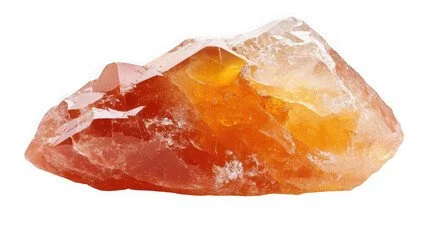
Carnelian — Mineral & Scientific Information
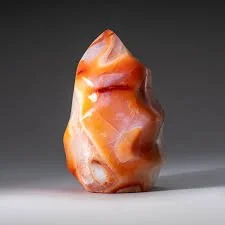
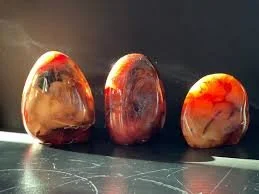
Carnelian is classic - fiery and surprisingly grounded.What it is
Carnelian is a variety of chalcedony, which is a microcrystalline form of quartz (SiO₂). It is closely related to agate and sard, differing mainly in color and translucency.
Color and appearance
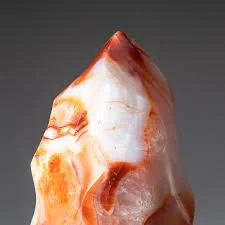
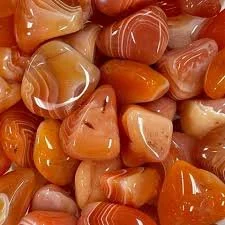
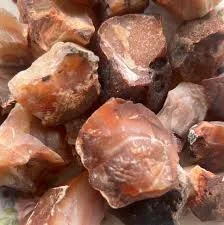
Ranges from pale orange to deep reddish-orange and brownish-red
Color is caused by iron oxide impurities, primarily hematite
Typically translucent with a cloudy or slightly banded appearance, though banding is usually subtle
Chemical composition
Chemical formula: SiO₂
Trace iron content determines depth and saturation of color
Crystal structure
Crystal system: trigonal (quartz group)
Structure: cryptocrystalline, composed of interlocking microscopic quartz crystals
Physical properties
Hardness: 6.5–7 on the Mohs scale
Luster: waxy to vitreous
Transparency: translucent to opaque
Cleavage: none
Fracture: conchoidal
Formation
Carnelian forms in silica-rich environments, commonly filling cavities in volcanic rocks. The iron present within the silica oxidizes over time, producing the characteristic warm red and orange tones. Heat (natural or applied) can intensify the color.
Geographic sources
India (historically the most important source)
Brazil
Uruguay
Madagascar
United States
Uses and applications
Jewelry (cabochons, beads, signet rings)
Carvings, seals, and intaglios
Historically favored for engraved stones due to its durability and contrast
Carnelian — Metaphysical Properties & Fun Facts
🔥 Core Energy
Carnelian is known as a stone of vitality, motivation, and creative fire. Its energy is warm, activating, and confidence-building — like a spark that gets things moving
💪 Energy & Motivation
Associated with increased physical energy and drive ⚡
Said to combat apathy, procrastination, and self-doubt 🚀
Encourages taking action and following through 🎯
🎨 Creativity & Passion
Strongly linked to creative expression 🎭
Supports artists, performers, and anyone starting new projects ✍️
Encourages joy, enthusiasm, and passion for life ❤️
🧠 Confidence & Courage
Believed to boost self-confidence and personal power 💥
Helps with public speaking, leadership, and visibility 🗣️
Encourages boldness without recklessness 🦁
🌍 Grounding with Fire
Connected to the sacral chakra 🟠
Balances fiery energy with stability rather than chaos 🔥⚖️
Helps turn ideas into real-world action 🛠️
🧿 How People Work With Carnelian
Wear it to keep motivation high throughout the day 📿
Use during creative sessions or workouts 🏃
Meditate with it to reignite passion or confidence 🧘
Place in workspaces to encourage productivity 💼
✨ Fun Facts
Ancient Egyptians associated carnelian with life force and protection 🏺
Roman soldiers wore it for courage and strength ⚔️
Carnelian does not fade in sunlight, unlike some dyed stones 🌞
Heat-treated carnelian has been used since antiquity 🔥
🔮 Overall Vibe
Carnelian is about doing, not just dreaming 🔥
It’s warm, motivating, and empowering — momentum in stone form.
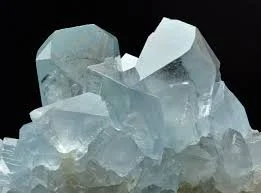
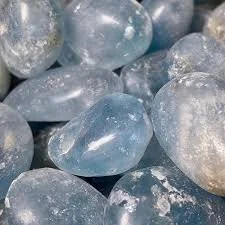
Celestite — Mineral & Scientific Information
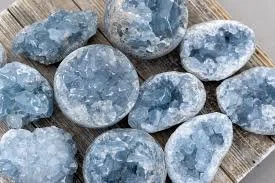
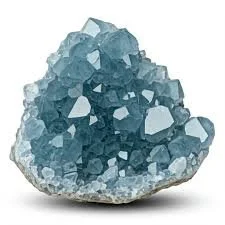
Celestite is delicate, airy, and fascinating from both a science and symbolic angle.What it is
Celestite (also called celestine) is a strontium sulfate mineral and the primary source of the element strontium.
Chemical composition
Chemical formula: SrSO₄
May contain minor calcium or barium substituting for strontium
Crystal system and structure
Crystal system: orthorhombic
Crystal habit: commonly tabular or prismatic crystals; also occurs massive or fibrous
Color and appearance
Colorless, white, pale blue, gray, or yellow
The soft blue variety is the most sought after
Transparent to translucent with a vitreous luster
Physical properties
Hardness: 3–3.5 on the Mohs scale
Cleavage: perfect in one direction, good in others
Fracture: uneven
Density: relatively high due to strontium content
Formation
Celestite forms in sedimentary environments, particularly in evaporite deposits where sulfate-rich waters concentrate and crystallize. It can also form in limestone and dolomite cavities, often producing well-formed crystals.
Geographic sources
Madagascar (famous for blue crystal clusters)
United States (Ohio, Michigan, New York)
Mexico
Spain
United Kingdom
Uses and applications
Primary industrial source of strontium
Used in fireworks and flares (strontium produces red color)
Used in ceramics, glassmaking, and pigments
Collected primarily as a mineral specimen rather than for jewelry due to softness
Celestite — Metaphysical Properties & Fun Facts
💙 Core Energy
Celestite is known as a stone of peace, higher awareness, and gentle clarity. Its energy is light, calming, and uplifting — very quiet, very high-vibration ☁️
🌙 Calm & Emotional Soothing
Believed to reduce stress, anxiety, and emotional tension 😌
Encourages deep relaxation and inner peace 🕊️
Often used during times of emotional sensitivity or overwhelm 🤍
🧠 Mental Clarity & Insight
Said to support clear thinking and intuitive insight 🔮
Helps quiet mental chatter and overthinking 🌬️
Encourages trust in inner guidance ✨
🗣️ Gentle Communication
Associated with the throat and higher chakras 🔵
Encourages kind, thoughtful communication 💬
Helpful when speaking from a place of calm and compassion 🌸
🧿 How People Work With Celestite
Place clusters in bedrooms for restful energy 🛏️
Meditate with it to encourage calm and clarity 🧘
Use during breathwork or mindfulness practices 🌬️
Best kept as a display stone — it’s fragile ⚠️
✨ Fun Facts
The name “celestite” comes from Latin caelestis, meaning “heavenly” ☁️
Those beautiful blue clusters from Madagascar are often naturally formed geodes 💎
Despite its delicate look, celestite is surprisingly heavy for its size ⚖️
It should not be placed in water — it can degrade over time 💧🚫
🔮 Overall Vibe
Celestite is about peace, clarity, and gentle elevation 💙
It doesn’t energize — it softens.
Chalcedony — Mineral & Scientific Information
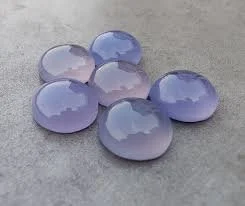
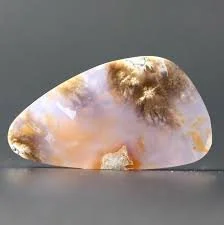
Chalcedony is basically the quiet backbone of half the stones in this library!What it is
Chalcedony is a microcrystalline (cryptocrystalline) form of quartz composed of extremely fine intergrowths of quartz and moganite. It is a broad mineral category rather than a single, narrowly defined gemstone.
Chemical composition
Chemical formula: SiO₂
Typically contains varying proportions of moganite (a silica polymorph)
Trace elements and inclusions influence color and translucency
Structure
Crystal system: trigonal (quartz family)
Crystal size: microscopic; individual crystals are not visible without specialized equipment
Texture: fibrous or granular at the microscopic level
Appearance and varieties
Translucent to opaque
Waxy to silky luster
Can be uniform in color or banded
Includes many named varieties, such as:
-Agate (banded chalcedony)
-Carnelian (orange-red)
-Blue lace agate
-Onyx (layered black and white)
-Jasper (opaque, impurity-rich)
Physical properties
Hardness: 6.5–7 on the Mohs scale
Cleavage: none
Fracture: conchoidal
Durable and resistant to weathering
Formation
Chalcedony forms when silica-rich solutions precipitate in cavities, fractures, or pore spaces in rocks, especially volcanic rocks. Slow deposition and changing conditions result in banding, color variation, and differing textures.
Geographic occurrence
Chalcedony is found worldwide, with significant deposits in:
Brazil
India
Madagascar
United States
Mexico
Uses and applications
Jewelry and beads
Carvings, seals, and intaglios
Tools and weapons in prehistoric cultures due to durability
Decorative and ornamental stone
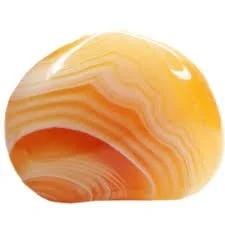
Chalcedony — Metaphysical Properties & Fun Facts
🤍 Core Energy
Chalcedony is known as a stone of calm, balance, and gentle support. Its energy is steady and nurturing — not intense, not pushy 🌊
🗣️ Communication & Harmony
Often associated with the throat chakra 🔵
Believed to encourage thoughtful, kind communication 💬
Helps reduce misunderstandings and emotional reactivity 🕊️
😌 Emotional Balance
Said to soothe anxiety and emotional tension 🌙
Encourages emotional resilience and inner stability ⚖️
Helpful during periods of stress or change 🌱
🤝 Connection & Community
Traditionally linked to cooperation, goodwill, and harmony 🤍
Believed to support healthy relationships and group dynamics 🧑🤝🧑
Encourages empathy and understanding 👂✨
🧿 How People Work With Chalcedony
Wear as jewelry for steady emotional support 📿
Use in meditation to encourage calm awareness 🧘
Place in shared spaces to promote peaceful communication 🕯️
Often used as a “background” stone to balance stronger energies 🔮
✨ Fun Facts
The name “chalcedony” comes from an ancient port city (Chalcedon) ⚓
Ancient civilizations used chalcedony for seals and signet rings 🏺
Many “different” stones are technically chalcedony in disguise 🎭
It’s one of the most common materials found in ancient tools 🪨
🔮 Overall Vibe
Chalcedony is about quiet strength, calm connection, and steady balance 🤍
It doesn’t demand attention — it holds everything together.
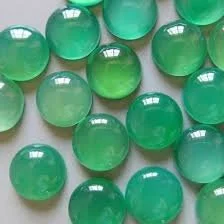
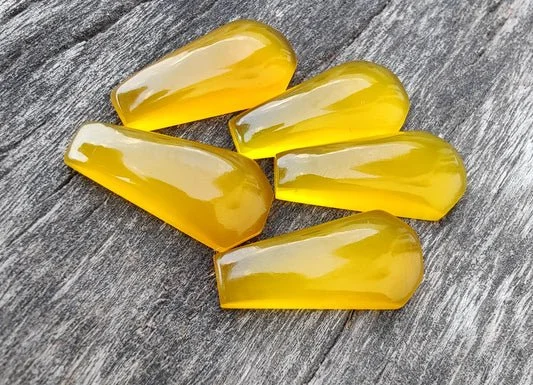
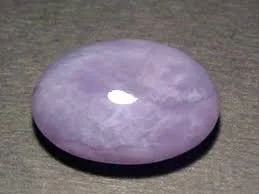
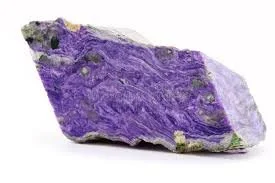
Charoite — Mineral & Scientific Information
Charoite is rare, dramatic, and scientifically unusual.What it is
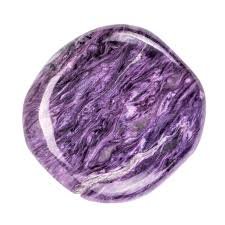
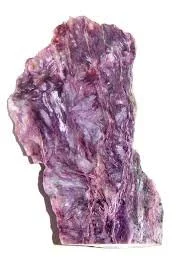
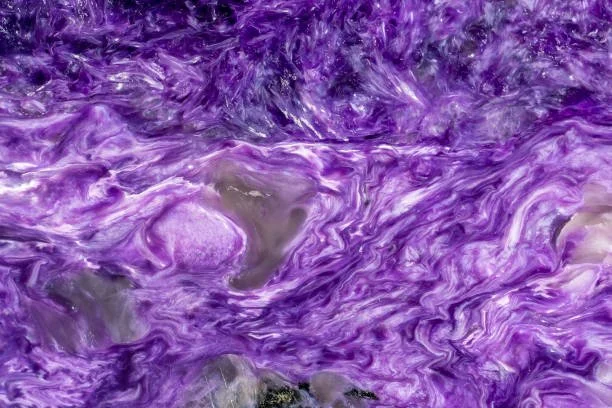
Charoite is a rare silicate mineral known for its striking purple coloration and swirling, fibrous patterns. For many years it was mistaken for a rock rather than a true mineral due to its complex composition and structure.
Chemical composition
Approximate formula: (K,Na)₅(Ca,Ba,Sr)₈Si₁₂O₃₀(OH,F)·nH₂O
Contains potassium, sodium, calcium, barium, strontium, silicon, oxygen, and trace water
Fluorine may partially substitute for hydroxyl groups
Crystal system and structure
Crystal system: monoclinic
Structure: fibrous to radial aggregates; crystals are microscopic and not individually visible
The fibrous structure causes the distinctive swirling, chatoyant appearance
Color and appearance
Lavender to deep violet, often with black, white, or gray inclusions
Purple color is intrinsic to the mineral’s structure, not caused by trace metal impurities
Typically opaque with a silky to vitreous luster
Physical properties
Hardness: 5–6 on the Mohs scale
Cleavage: poor
Fracture: uneven to splintery
Density: moderate
Formation
Charoite forms through metasomatic alteration — a process where hot, chemically active fluids alter existing rocks. It is associated with alkaline igneous complexes and forms under very specific geological conditions.
Geographic occurrence
Found in only one known location in the world:
the Murun Massif near the Chara River in Siberia Russia
All genuine charoite comes from this single region
Uses and applications
Primarily used as a gemstone and ornamental stone
Cut into cabochons, beads, and carvings
Highly valued by collectors due to rarity and distinctive appearance
Charoite — Metaphysical Properties & Fun Facts
💜 Core Energy
Charoite is known as a stone of transformation, insight, and spiritual courage. Its energy is intense but stabilizing — deep change without chaos 🌌
🔮 Transformation & Letting Go
Believed to help release deep fears and old patterns 🔓
Encourages personal growth during major life changes 🌱
Often associated with overcoming resistance to change 🌀
🧠 Insight & Awareness
Linked to the higher chakras 💜✨
Said to enhance intuition and inner vision 👁️
Helps connect emotional understanding with rational thought 🧩
🛡️ Emotional Protection
Thought to act as a protective shield during emotional or spiritual work 🛡️
Helps ground intense emotions rather than amplify them ⚖️
Useful during therapy, shadow work, or deep reflection 🕯️
🧿 How People Work With Charoite
Meditate with it during periods of transition 🧘
Wear it for emotional strength and insight 📿
Journal with it when processing fear or uncertainty ✍️
Pair with grounding stones to balance its intensity 🪨
✨ Fun Facts
Named after the Chara River in Siberia 💧
Was officially recognized as a mineral only in the 1970s 🧪
Despite myths, charoite is not dyed — its purple is completely natural 🎨
No other gemstone looks quite like it 🌈
🔮 Overall Vibe
Charoite is about deep change, inner strength, and conscious transformation 💜
It doesn’t soothe — it guides you through.
Chrysocolla — Mineral & Scientific Information
Chrysocolla is scientifically interesting and energetically gentle.What it is
Chrysocolla is a hydrated copper silicate mineral. In mineralogy, it is somewhat controversial because it often occurs as a mineral-like gel rather than as well-formed crystals, and it frequently intergrows with other copper minerals.
Chemical composition
Approximate formula: (Cu,Al)₂H₂Si₂O₅(OH)₄·nH₂O
Contains copper, aluminum, silicon, oxygen, hydroxyl groups, and variable water content
Composition can vary significantly from specimen to specimen
Structure
Typically amorphous to poorly crystalline
When crystalline, it may show a monoclinic structure, but this is rare
Often occurs as botryoidal, massive, or crust-like formations
Color and appearance
Blue, blue-green, green, turquoise, or cyan
Color is due to copper content
Opaque to translucent with a dull to vitreous luster
Often mixed with quartz, malachite, azurite, or cuprite
Physical properties
Hardness: 2–4 on the Mohs scale (can be higher when silica-rich)
Cleavage: none
Fracture: uneven to conchoidal
Soft and porous unless stabilized by silica
Formation
Chrysocolla forms in the oxidation zones of copper deposits, where copper-rich solutions react with silica-bearing rocks. It is a secondary mineral, meaning it forms from the alteration of preexisting copper minerals.
Geographic occurrence
Peru
Democratic Republic of Congo
Chile
Israel
United States (Arizona, Nevada)
Uses and applications
Primarily ornamental and lapidary use (often stabilized)
Used in cabochons, beads, and carvings
Also of interest to mineral collectors
Not used industrially due to softness and variability
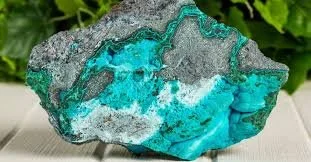
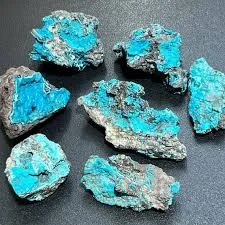
Chrysocolla — Metaphysical Properties & Fun Facts
💙💚 Core Energy
Chrysocolla is known as a stone of calm communication, emotional balance, and feminine wisdom. Its energy is soothing, cooling, and deeply reassuring 🌊
🗣️ Communication & Truth
Strongly associated with the throat chakra 🔵
Encourages speaking gently, honestly, and from the heart 💬
Helpful during difficult conversations or emotional expression 🕊️
😌 Emotional Healing & Balance
Believed to calm intense emotions like anger or resentment 🌙
Encourages emotional release without overwhelm 💧
Supports inner peace and emotional maturity 🤍
🌍 Earth & Feminine Energy
Often linked to nurturing, earth-centered energy 🌿
Associated with divine feminine wisdom and compassion 🌸
Encourages balance between strength and softness ⚖️
🧿 How People Work With Chrysocolla
Wear near the throat or heart 📿
Meditate with it for emotional clarity 🧘
Use during journaling or therapy sessions ✍️
Best handled gently due to softness ⚠️
✨ Fun Facts
Ancient Greeks used chrysocolla as a gold soldering flux 🏺
Its name comes from Greek for “gold glue” ✨
High-silica chrysocolla can be hard enough to polish beautifully 💎
Often mistaken for turquoise, but chrysocolla is softer and more variable 🎨
🔮 Overall Vibe
Chrysocolla is about soft strength, emotional wisdom, and calm truth 💙💚
It doesn’t overpower — it soothes and steadies.
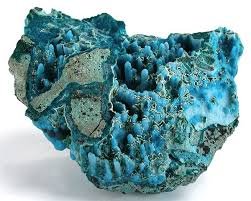
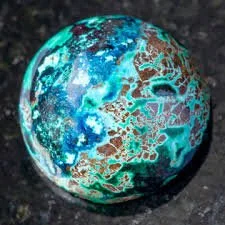
Chrysoprase — Mineral & Scientific Information
Chrysoprase is one of the most prized and elegant members of the chalcedony family.What it is
Chrysoprase is a green variety of chalcedony, which is a microcrystalline form of quartz (SiO₂). It is considered the most valuable variety of chalcedony due to its vivid, natural green color.
Color and appearance
Apple green to deep emerald-green
Color is caused by nickel-bearing compounds, not chromium (unlike emerald)
Typically translucent with a smooth, waxy luster
Color distribution is often even, without banding
Chemical composition
Chemical formula: SiO₂
Trace nickel (usually as nickel silicates) produces the green coloration
Crystal structure
Crystal system: trigonal (quartz family)
Structure: cryptocrystalline, composed of microscopic quartz fibers
Physical properties
Hardness: 6.5–7 on the Mohs scale
Cleavage: none
Fracture: conchoidal
Transparency: translucent to opaque
Formation
Chrysoprase forms when silica-rich fluids interact with nickel-rich host rocks, often in lateritic or weathered ultramafic environments. The nickel becomes incorporated into the chalcedony structure during formation.
Geographic sources
Australia (especially Western Australia; historically the most important source)
Poland
Tanzania
Brazil
Madagascar
Uses and applications
Jewelry (cabochons, beads, cameos)
Decorative carvings
Historically used in royal and ecclesiastical jewelry
Highly valued by collectors when color is vivid and untreated
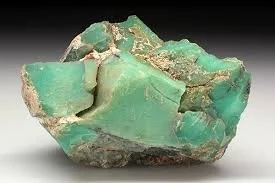
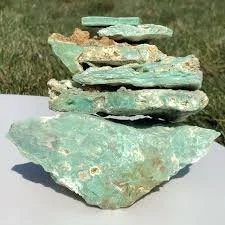
Chrysoprase — Metaphysical Properties & Fun Facts
💚 Core Energy
Chrysoprase is known as a stone of renewal, hope, and heart healing. Its energy is fresh, uplifting, and emotionally restorative — like a deep breath of spring air 🌱
💖 Heart Healing & Emotional Balance
Strongly connected to the heart chakra 💚
Believed to support emotional healing after heartbreak or loss 🤍
Encourages forgiveness, compassion, and emotional openness 🌿
🌱 Renewal & Growth
Associated with new beginnings and personal growth 🌼
Helps release old emotional patterns and self-sabotage 🔓
Encourages optimism and trust in life’s flow ✨
🧠 Emotional Awareness & Truth
Said to help bring unconscious emotions to the surface gently 🌊
Encourages honest self-reflection without harsh judgment 🪞
Balances emotional sensitivity with inner strength ⚖️
🧿 How People Work With Chrysoprase
Wear near the heart for ongoing emotional support 📿
Meditate with it when setting intentions for healing 🌙
Use during journaling or therapy work ✍️
Place in living spaces to encourage harmony and renewal 🕯️
✨ Fun Facts
Alexander the Great reportedly wore chrysoprase for success in battle ⚔️
In medieval Europe, it symbolized happiness and prosperity 🏰
High-quality chrysoprase can rival jade in appearance 💎
Unlike many green stones, chrysoprase’s color is completely natural 🎨
🔮 Overall Vibe
Chrysoprase is about emotional renewal, gentle healing, and hopeful growth 💚
It doesn’t push change — it invites it.
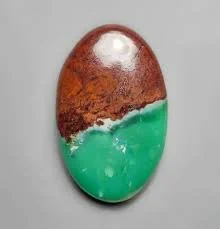
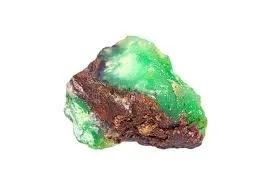
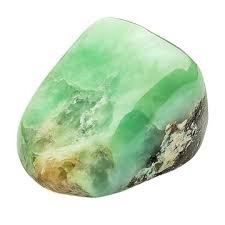
Citrine — Mineral & Scientific Information
Citrine is a classic and there’s some important science context around it.What it is
Citrine is a yellow to orange variety of quartz (SiO₂). Natural citrine is relatively rare; much of the citrine sold commercially is heat-treated amethyst or smoky quartz.
Color and cause
Pale yellow to deep golden brown
Color in natural citrine comes from trace iron impurities and their oxidation state
Heat treatment changes iron’s valence, producing yellow or orange tones
Chemical composition
Chemical formula: SiO₂
Trace iron content controls color saturation
Crystal structure
Crystal system: trigonal (quartz family)
Crystal habit: prismatic crystals; also massive
Physical properties
Hardness: 7 on the Mohs scale
Luster: vitreous
Transparency: transparent to translucent
Cleavage: none
Fracture: conchoidal
Formation
Natural citrine forms in hydrothermal environments when quartz crystallizes at higher temperatures that favor yellow coloration rather than purple (amethyst). Heat-treated citrine is produced by heating amethyst or smoky quartz to approximately 470–560 °C.
Geographic sources
Brazil (dominant source, both natural and heat-treated)
Madagascar
Russia
Spain
Bolivia (some natural material)
Identification notes
Natural citrine usually has pale, even color
Heat-treated amethyst often shows:
-Orange-brown or reddish tones
-White bases on crystal points
-Patchy color zoning
Uses and applications
Jewelry (faceted stones, cabochons)
Decorative crystals and carvings
Collectors’ specimens
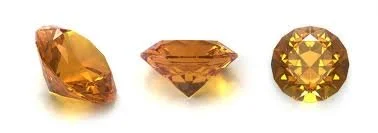
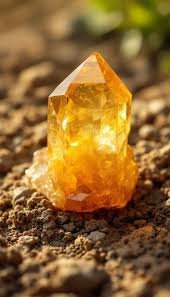
Citrine — Metaphysical Properties & Fun Facts
🌞 Core Energy
Citrine is known as a stone of abundance, confidence, and personal power. Its energy is bright, uplifting, and activating — like bottled sunlight ☀️
💼 Abundance & Manifestation
Often called the “merchant’s stone” 💰
Believed to attract prosperity, success, and opportunity 📈
Encourages a mindset of abundance rather than scarcity ✨
💪 Confidence & Motivation
Linked to the solar plexus chakra 🟡
Said to boost self-esteem and personal authority 💥
Helps overcome fear, doubt, and procrastination 🚀
🧠 Mental Clarity & Creativity
Encourages clear thinking and optimism 🧩
Supports creativity, problem-solving, and motivation 🎨
Helps transform negative thinking into positive action 🔄
🔥 Energy That Doesn’t Drain
Unlike many stones, citrine is believed to not absorb negative energy 🌞
Said to energize rather than ground or soothe ⚡
Often used in workspaces and business settings 💼
🧿 How People Work With Citrine
Keep it in wallets, cash drawers, or offices 💰
Wear it for confidence and visibility 📿
Meditate with it when setting goals or intentions 🎯
Pair with grounding stones to balance its intensity 🪨
✨ Fun Facts
Natural citrine is one of the rarest quartz colors ⛏️
Heat-treated citrine has been used since ancient times 🔥
Citrine was popular in Art Deco jewelry 💎
Despite myths, citrine can fade with extreme heat or prolonged sunlight 🌞⚠️
🔮 Overall Vibe
Citrine is about confidence, clarity, and empowered action 🌞
It doesn’t calm you down — it lights you up.
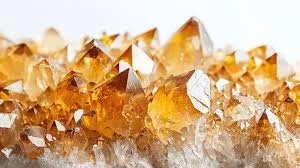
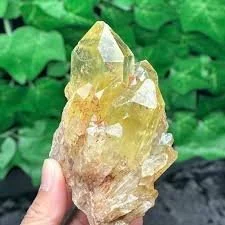
Coppernite — Mineral & Scientific Information
Coppernite is one of those names that causes a lot of confusion, so I’ll be very clear and accurate here.
What it is (important clarification)
Coppernite is not an officially recognized mineral species. It is a trade or metaphysical name used for stones that contain native copper or copper-rich mineral inclusions, most commonly within dark silicate or feldspar-rich host rocks.
Depending on the seller, “coppernite” may refer to:
Copper-bearing arfvedsonite
Copper-bearing feldspar
Copper-included igneous rock matrices
Occasionally copper-included quartz or syenite
There is no IMA-approved mineral called coppernite.
Composition
Variable
Typically includes native copper (Cu⁰) or copper sulfides
Host rock may contain feldspar, amphiboles, or other silicates
Structure
Massive rather than crystalline
Copper occurs as veins, flecks, or sheets within the host material
Color and appearance
Dark gray, black, or deep brown base
Metallic copper flashes or veins (reddish-orange)
Opaque
Luster: dull to metallic (from copper inclusions)
Physical properties
Hardness: varies widely (typically 5–6 overall)
Density influenced by copper content
Durability depends on host rock
Formation
Forms in igneous environments where molten copper-rich fluids penetrate cooling rock, depositing native copper or copper minerals into fractures and grain boundaries.
Geographic sources
United States (especially regions with native copper deposits)
Canada
Madagascar (market material)
Mexico
Uses and applications
Polished stones and cabochons
Metaphysical and collector pieces
Occasionally jewelry (with stabilization)
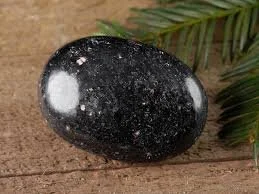
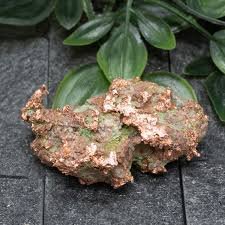
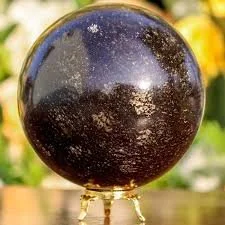
Coppernite — Metaphysical Properties & Fun Facts
⚡🧲 Core Energy
Coppernite is considered a stone of energy flow, grounding, and manifestation. It blends copper’s conductive power with dark, stabilizing earth energy 🌍
🔌 Energy Conduction
Copper is known as an energetic amplifier ⚡
Helps move stagnant energy 🌀
Enhances the flow between intention and action 🔗
🪨 Grounding & Stability
Strong earth connection 🌱
Helps anchor spiritual insights into reality ⚓
Encourages practical action 🛠️
🧠 Mental Focus & Motivation
Supports clarity and determination 🎯
Encourages confidence in decision-making 💪
Helps bridge thought and execution 🧩
🛡️ Protective Qualities
Often used as an energetic shield 🛡️
Said to absorb excess or chaotic energy 🌑
Grounds emotional overwhelm 🪨
🧿 How People Work With Coppernite
Hold during intention-setting or manifestation 📝
Use in grounding meditation 🧘♂️
Keep near workspaces for focus 🖥️
Pair with high-vibration stones for balance ⚫✨
✨ Fun Facts
Copper has been used spiritually for over 5,000 years 🏺
Copper conducts both electricity and heat — symbolic of energy flow ⚡
Trade names like coppernite vary widely between sellers 🔍
Often confused with astrophyllite or arfvedsonite 🖤✨
🔮 Overall Vibe
Coppernite is about moving energy into form ⚡
It grounds intention and helps ideas become real.
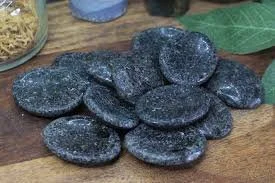
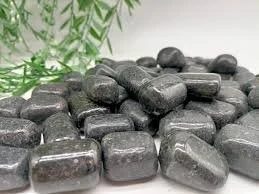
Danburite — Mineral & Scientific Information
Danburite is one of those quietly powerful, under-the-radar minerals.
What it is
Danburite is a calcium boron silicate mineral. Chemically and structurally, it is distinct from quartz and feldspar and is valued both as a collector mineral and as a gemstone when transparent.
Chemical composition
Chemical formula: CaB₂(SiO₄)₂
Elements present: calcium, boron, silicon, oxygen
Crystal structure
Crystal system: orthorhombic
Crystals are typically prismatic with wedge-shaped terminations
Often shows strong striations on crystal faces
Color and appearance
Colorless to pale yellow, champagne, light brown, or pink
Usually transparent to translucent
Luster: vitreous to greasy
Physical properties
Hardness: 7–7.5 on the Mohs scale
Cleavage: imperfect in one direction
Fracture: conchoidal to uneven
Specific gravity: ~3.0
Formation
Danburite forms in contact-metamorphic environments, particularly in limestone or marble altered by boron-rich fluids from intrusive igneous bodies. It can also occur in hydrothermal veins.
Geographic sources
Mexico (San Luis Potosí and Charcas — major gem-quality sources)
Madagascar
Japan
Russia
Myanmar
United States (New York, California)
Uses and applications
Faceted gemstones (especially colorless and pale stones)
Mineral specimens for collectors
Occasionally used in metaphysical jewelry due to durability and clarity
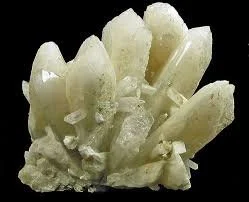
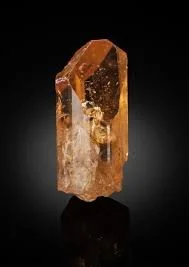
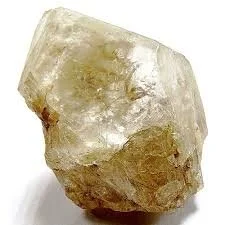
Danburite — Metaphysical Properties & Fun Facts
🤍 Core Energy
Danburite is known as a stone of peace, higher awareness, and gentle emotional release. Its energy is calm, refined, and deeply soothing — subtle but powerful ✨
🕊️ Emotional Healing & Release
Believed to help release emotional trauma and grief 🤍
Encourages forgiveness and emotional clarity 🫧
Supports letting go of attachments that no longer serve 🌬️
👁️ Higher Consciousness & Spiritual Connection
Associated with the crown and higher heart chakras 💫
Said to enhance intuition, spiritual insight, and awareness 🌌
Often used during meditation for clarity and stillness 🧘♀️
🧠 Mental Calm & Clarity
Helps quiet mental noise and overthinking 🕯️
Encourages gentle, rational understanding of emotional experiences ⚖️
Supports inner peace during stressful transitions 🌊
🛡️ Gentle Protection
Believed to create a soft energetic shield rather than a hard barrier 🌙
Encourages emotional boundaries without isolation 🤍
🧿 How People Work With Danburite
Meditate with it during emotional or spiritual healing work 🌙
Wear near the heart or throat for calm expression 📿
Use during sleep or dream work 😴
Pair with grounding stones to balance its high-frequency energy 🪨
✨ Fun Facts
Named after Danbury, Connecticut, where it was first discovered 🗺️
Often mistaken for quartz, but it’s chemically very different 🔬
Highly prized gem-quality danburite comes from Mexico 💎
Some crystals exhibit a soft champagne glow in sunlight ☀️
🔮 Overall Vibe
Danburite is about peace, clarity, and emotional release 🤍
It doesn’t energize or ground — it elevates and soothes.
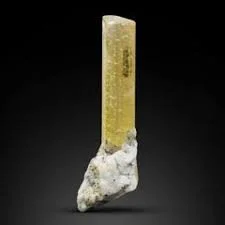
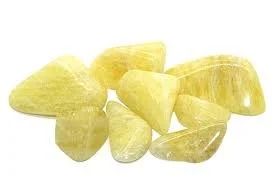
Diamond — Mineral & Scientific Information
Diamond is iconic, extreme, and scientifically fascinating — a gemstone that’s as much about physics as it is about beauty.What it is
Diamond is a crystalline form of pure carbon and is the hardest naturally occurring mineral known. Despite being made of the same element as graphite, its atomic structure gives it radically different properties.
Chemical composition
Chemical formula: C
Composed of carbon atoms bonded in a rigid tetrahedral lattice
Crystal structure
Crystal system: cubic (isometric)
Each carbon atom is covalently bonded to four others, creating an extremely strong 3D framework
Color and appearance
Luster: adamantine
Transparency: transparent to opaque
Typically colorless, but can occur in yellow, brown, blue, green, pink, red, and black
Color is caused by trace elements or structural defects:
-Nitrogen → yellow
-Boron → blue
-Radiation exposure → green
Physical properties
Hardness: 10 on the Mohs scale
Cleavage: perfect in four directions
Fracture: conchoidal
Specific gravity: ~3.52
Thermal conductivity: extremely high
Formation
Most natural diamonds form 150–200 km below Earth’s surface in the mantle under extreme pressure and temperature. They are transported to the surface via kimberlite or lamproite volcanic eruptions. Some diamonds are much older than Earth’s continents.
Geographic sources
Russia
Botswana
Canada
South Africa
Australia
Angola
Uses and applications
Gemstones
Industrial cutting, drilling, and polishing tools
Heat sinks and electronics
Optical and scientific instruments
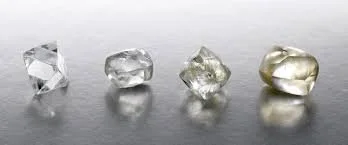
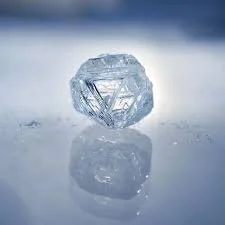
Diamond — Metaphysical Properties & Fun Facts
💎 Core Energy
Diamond is considered a stone of clarity, strength, and amplification. It’s not subtle — it magnifies whatever energy or intention you bring to it ✨
🧠 Clarity & Truth
Said to enhance mental clarity and focus 🔍
Encourages honesty, integrity, and truth 🪞
Amplifies awareness of both strengths and weaknesses ⚖️
🔥 Power & Amplification
Known as a powerful energy amplifier ⚡
Believed to strengthen the effects of other stones 💠
Can intensify intentions — good or bad — so intention matters 👀
💖 Love, Commitment & Strength
Symbol of enduring love and commitment 💍
Represents unbreakable bonds and loyalty 🤍
Encourages emotional strength within relationships 🛡️
👑 Higher Consciousness
Associated with the crown chakra 👑
Said to support spiritual awakening and higher awareness 🌌
Often linked with enlightenment and inner sovereignty ✨
🛡️ Protection & Resilience
Believed to strengthen energetic boundaries 💎
Encourages resilience, courage, and personal authority 💪
Helps maintain clarity under pressure 🧊
🧿 How People Work With Diamond
Wear for clarity, confidence, and authority 📿
Use in meditation for focus and intention-setting 🧘♀️
Pair with grounding stones to balance its intensity 🪨
Combine with other crystals to amplify their effects 🔗
✨ Fun Facts
Diamonds can be over 3 billion years old ⏳
They burn at very high temperatures because they’re pure carbon 🔥
Ancient cultures believed diamonds were fallen stars 🌠
The largest gem-quality diamond ever found was the Cullinan 💎
🔮 Overall Vibe
Diamond is about clarity, strength, and amplification 💎
It doesn’t soften or soothe — it sharpens and reveals.
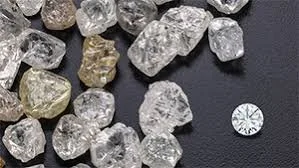
Diopside — Mineral & Scientific Information
Diopside is a bit of a hidden gem (literally and scientifically).What it is
Diopside is a calcium magnesium silicate mineral belonging to the pyroxene group. It is an important rock-forming mineral in both igneous and metamorphic rocks and can also occur in gem-quality crystals.
Chemical composition
Chemical formula: CaMgSi₂O₆
End-member of the diopside–hedenbergite solid solution series
Crystal structure
Crystal system: monoclinic
Typically forms short prismatic crystals
Two distinct cleavage directions at nearly 90°, characteristic of pyroxenes
Color and appearance
Most commonly green
Can also be colorless, yellow, brown, violet, or black
Gem-quality chrome diopside owes its vivid green color to chromium
Luster: vitreous
Transparency: transparent to opaque
Physical properties
Hardness: 5.5–6.5 on the Mohs scale
Cleavage: two directions, nearly at right angles
Fracture: uneven to conchoidal
Specific gravity: ~3.2–3.4
Formation
Diopside forms in igneous rocks such as basalt and peridotite and in metamorphosed limestones and dolostones (skarns). It is common in Earth’s upper mantle and is also found in meteorites.
Geographic sources
Russia (Siberia — major source of chrome diopside), Italy, Myanmar, Pakistan, South Africa, United States (New York, California)
Uses and applications
Gemstones (especially chrome diopside)
Indicator mineral in petrology and mantle studies
Collector specimens
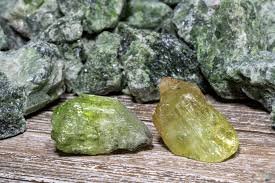
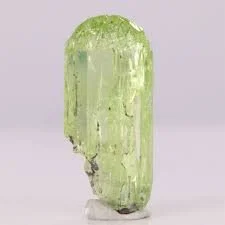
Diopside — Metaphysical Properties & Fun Facts
💚 Core Energy
Diopside is known as a stone of emotional healing, empathy, and reconnection. Its energy is deeply heart-centered and grounding 🌱
💖 Heart Healing & Compassion
Strongly associated with the heart chakra 💚
Believed to help heal emotional wounds and past trauma 🤍
Encourages compassion, forgiveness, and emotional honesty 🌿
🌍 Grounding & Earth Connection
Said to deepen connection to Earth energy 🌎
Encourages balance between emotional sensitivity and stability ⚖️
Helpful during times of grief or emotional processing 🌊
🧠 Emotional Awareness
Believed to help bring suppressed emotions to the surface gently 🫧
Encourages healthy emotional expression 🗣️
Supports understanding emotional patterns without overwhelm 🧩
🛡️ Protection Through Strength
Rather than blocking emotions, diopside is thought to help process them 💪
Encourages resilience and emotional courage 🛡️
Helps prevent emotional burnout 🔥❌
🧿 How People Work With Diopside
Wear near the heart for emotional healing 📿
Meditate with it during grief or self-reflection 🌙
Use in nature-based or grounding rituals 🌲
Pair with calming stones for balance 🪨
✨ Fun Facts
Chrome diopside is sometimes called the “emerald of the north” 💚
Diopside has been identified in meteorites ☄️
The name comes from Greek meaning “two appearances,” referring to its crystal faces 🔬
Its vivid green can rival much more expensive gems 💎
🔮 Overall Vibe
Diopside is about emotional truth, heart healing, and grounded compassion 💚
It doesn’t numb emotions — it helps you feel them safely.
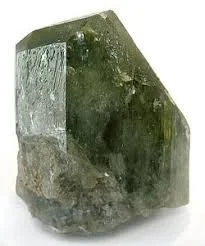
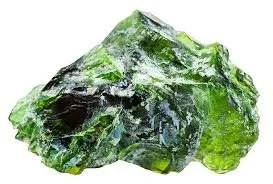
Dumortierite — Mineral & Scientific Information
Dumortierite is fascinating both scientifically and energetically.What it is
Dumortierite is a boron aluminum silicate mineral that occurs primarily in fibrous or massive forms. It is best known for its deep blue to violet coloration and is often mistaken for sodalite or lapis lazuli when polished.
Chemical composition
Chemical formula: Al₇BO₃(SiO₄)₃O₃
Contains aluminum, boron, silicon, and oxygen
May include trace iron or manganese, influencing color
Crystal structure
Crystal system: orthorhombic
Crystals are typically fibrous, columnar, or acicular
Often forms compact, massive aggregates rather than distinct crystals
Color and appearance
Blue, violet-blue, bluish-purple, brownish-red, or green
Luster: vitreous to dull
Transparency: translucent to opaque
Physical properties
Hardness: 7–8.5 on the Mohs scale
Cleavage: poor to indistinct
Fracture: uneven to fibrous
Specific gravity: ~3.3–3.4
Formation
Dumortierite forms in high-temperature metamorphic environments, especially in aluminum-rich rocks such as gneiss and schist. It can also occur in pegmatites and hydrothermal veins.
Geographic sources
France (type locality), Sri Lanka, Namibia, Madagascar, Peru, United States (Nevada, California)
Uses and applications
Decorative stones and carvings
Cabochons and beads
Used as a porcelain and ceramic additive to increase strength and heat resistance
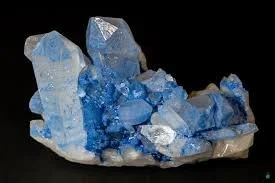
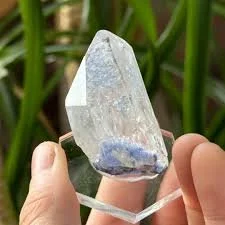
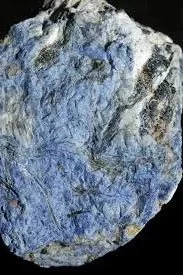
Dumortierite — Metaphysical Properties & Fun Facts
💙 Core Energy
Dumortierite is known as a stone of discipline, mental strength, and patience. Its energy is steady, grounding, and mentally clarifying 🧠
🧠 Mental Focus & Discipline
Strongly associated with the third eye and throat chakras 👁️🗣️
Believed to enhance concentration, memory, and learning 📘
Encourages logical thinking and mental organization 🧩
🛡️ Emotional Stability
Said to help maintain emotional control during stressful situations 🌊
Encourages patience and calm perseverance 🕯️
Supports confidence without arrogance 💪
🗣️ Communication & Truth
Helps articulate thoughts clearly and honestly 🗨️
Encourages standing firm in one’s truth ⚖️
Useful for public speaking, studying, and decision-making 🎯
🌍 Responsibility & Reliability
Often associated with responsibility and follow-through 📋
Encourages long-term commitment rather than quick fixes ⏳
Helpful for breaking unhealthy habits 🔄
🧿 How People Work With Dumortierite
Keep it nearby when studying or working 📚
Wear during difficult conversations or negotiations 📿
Meditate with it for clarity and mental calm 🧘♀️
Pair with grounding stones for balance 🪨
✨ Fun Facts
Dumortierite is sometimes marketed as “blue quartz” (incorrectly) ❌
It’s used industrially to strengthen ceramics 🔥
Its deep blue color can resemble denim or ink 🎨
Named after French paleontologist Eugène Dumortier
🔮 Overall Vibe
Dumortierite is about mental clarity, discipline, and emotional steadiness 💙
It doesn’t rush insight — it builds it patiently.
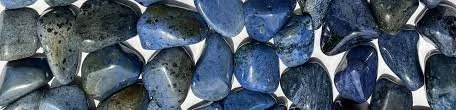

Emerald — Mineral & Scientific Information
Ahh, emerald 💚 — iconic, ancient, and deceptively complex.What it is
Emerald is a green variety of beryl, colored by trace amounts of chromium and/or vanadium. It is one of the four traditional precious gemstones, alongside diamond, ruby, and sapphire.
Chemical composition
Chemical formula: Be₃Al₂Si₆O₁₈
Trace chromium and/or vanadium are responsible for the green color
Presence of inclusions is common and expected
Crystal structure
Crystal system: hexagonal
Crystals are typically prismatic with flat terminations
Internal fractures and inclusions are known as jardin (“garden”)
Color and appearance
Color ranges from bluish-green to yellowish-green
The most valued emeralds have vivid, saturated green color
Luster: vitreous
Transparency: transparent to translucent
Physical properties
Hardness: 7.5–8 on the Mohs scale
Toughness: low to moderate due to inclusions
Cleavage: poor
Fracture: conchoidal to uneven
Specific gravity: ~2.7–2.8
Formation
Emeralds form under rare geological conditions where beryllium-rich fluids interact with chromium- or vanadium-rich rocks, often in hydrothermal veins or metamorphic environments. These incompatible elements rarely coexist, making emeralds geologically uncommon.
Geographic sources
Colombia (most famous and highly prized), Zambia, Brazil, Afghanistan, Ethiopia, Russia
Uses and applications
High-end jewelry
Collector specimens
Historical artifacts and royal regalia
Frequently treated with oils or resins to improve clarity
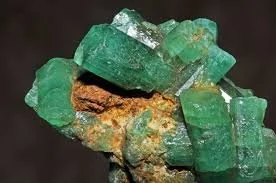
Emerald — Metaphysical Properties & Fun Facts
💚 Core Energy
Emerald is known as a stone of wisdom, love, and heart-centered truth. Its energy is refined, balanced, and deeply stabilizing 🌿
💖 Love & Heart Healing
Strongly connected to the heart chakra 💚
Believed to encourage unconditional love and emotional harmony 🤍
Supports healing from emotional wounds and fostering trust 🌱
🧠 Wisdom & Insight
Said to enhance intuition, discernment, and clarity 🔍
Encourages truth-seeking and intellectual balance ⚖️
Historically associated with foresight and prophecy 👁️
🤝 Relationships & Loyalty
Linked to fidelity, loyalty, and deep partnership 💍
Encourages honest communication and mutual understanding 🗣️
Said to strengthen long-term bonds 🤍
🛡️ Balance & Protection
Believed to calm emotional turbulence 🌊
Encourages patience and emotional resilience 🕯️
Traditionally worn as a protective talisman 🧿
🧿 How People Work With Emerald
Wear near the heart for emotional balance 📿
Meditate with it for insight and truth 🌙
Use during relationship or trust work 💞
Pair with grounding stones for stability 🪨
✨ Fun Facts
Cleopatra famously adored emeralds 👑
Emeralds were mined in Egypt over 4,000 years ago ⛏️
Inclusions (jardin) are considered part of an emerald’s beauty 🌿
Some emeralds can be more valuable than diamonds 💎
🔮 Overall Vibe
Emerald is about wisdom, love, and emotional truth 💚
It doesn’t overwhelm — it steadies and refines.
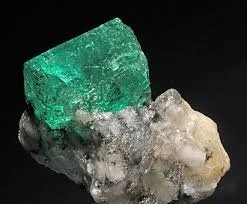
Feldspar — Mineral & Scientific Information
Feldspar is everywhere — foundational, versatile, and quietly powerful. It’s one of those minerals that doesn’t shout, but without it, Earth wouldn’t look the way it does.
What it is
Feldspar is a group of rock-forming silicate minerals, not a single mineral. Feldspars make up about 60% of Earth’s crust, making them the most abundant mineral group on the planet.
Chemical composition
General formula: XAl(Al,Si)₃O₈, where X = potassium (K), sodium (Na), or calcium (Ca)
Major feldspar groups
Alkali feldspar: potassium and sodium rich (orthoclase, microcline, sanidine)
Plagioclase feldspar: sodium–calcium series (albite → anorthite)
Crystal structure
Crystal system: monoclinic or triclinic (depending on species)
Typically forms blocky or tabular crystals
Commonly occurs in massive or granular form
Color and appearance
Usually white, cream, gray, pink, or tan
Can be blue, green, or multicolored
Transparent to opaque
Luster: vitreous to pearly
Physical properties
Hardness: ~6 on the Mohs scale
Two cleavages at nearly 90°
Brittle fracture
Specific gravity: ~2.5–2.8
Formation
Feldspars crystallize from magma and are found in:
-Igneous rocks (granite, basalt)
-Metamorphic rocks (gneiss)
-Sedimentary rocks (as grains)
They weather into clay minerals over time.
Geographic occurrence
Found worldwide — literally on every continent.
Uses and applications
Ceramics and glassmaking
Construction materials
Fillers in paints, plastics, and rubber
Gem varieties (moonstone, labradorite, sunstone, amazonite)
Name origin
From the German Feldspat, meaning “field stone.”
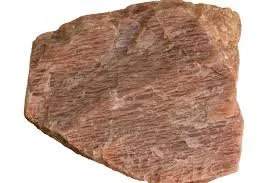
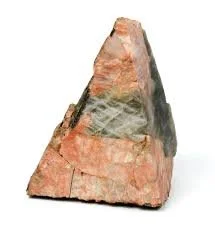
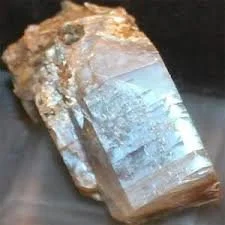
Feldspar — Metaphysical Properties & Fun Facts
🌍✨ Core Energy
Feldspar is known as a stone of balance, foundation, and gentle growth. Its energy feels steady and supportive — not flashy, but deeply stabilizing 🪨
⚖️ Balance & Stability
Encourages emotional balance 🌿
Supports steady progress rather than sudden change 🧭
Helps create a sense of grounded normalcy 🏡
🌱 Growth & Renewal
Associated with personal development 🌱
Encourages patience and consistency ⏳
Supports long-term goals 📈
🧠 Mental Clarity
Helps organize thoughts 🧩
Encourages practical decision-making 🛠️
Supports clear thinking without overwhelm 🌤️
🌙 Feldspar Varieties & Their Vibes
Moonstone 🌙 → intuition and emotional flow
Labradorite ✨ → transformation and insight
Sunstone ☀️ → confidence and joy
Amazonite 🌿 → calm communication
🧿 How People Work With Feldspar
Use for grounding daily routines 🧘♀️
Pair with high-energy stones for balance ⚡🪨
Keep in living or work spaces 🏡
Meditate on stability and growth 🌱
✨ Fun Facts
Most crystals you love are feldspar varieties 💎
Granite is mostly feldspar 🪨
Feldspar weathers into clay 🏺
Without feldspar, Earth’s crust would be unrecognizable 🌍
🔮 Overall Vibe
Feldspar is about building a solid life, one layer at a time 🧱
It’s the quiet backbone of both geology and personal growth.
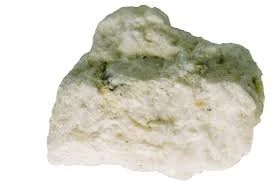
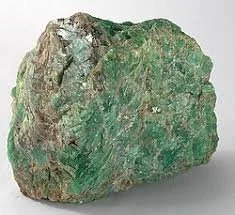
Fluorite — Mineral & Scientific Information
Fluorite is one of the most visually diverse and scientifically interesting minerals out there.What it is
Fluorite is a calcium fluoride mineral and the primary source of fluorine. It is well known for its wide range of colors and for exhibiting fluorescence under ultraviolet light.
Chemical composition
Chemical formula: CaF₂
Composed of calcium and fluorine
Crystal structure
Crystal system: cubic (isometric)
Common crystal habit: cubes, octahedrons, and complex intergrowths
Perfect octahedral cleavage in four directions
Color and appearance
Colorless, purple, green, blue, yellow, brown, pink, black, or multicolored
Color is caused by trace impurities, defects, or radiation exposure
Luster: vitreous
Transparency: transparent to translucent
Physical properties
Hardness: 4 on the Mohs scale
Cleavage: perfect in four directions
Fracture: subconchoidal to uneven
Specific gravity: ~3.18
Formation
Fluorite commonly forms in hydrothermal veins, often associated with lead, silver, and zinc ores. It can also occur in sedimentary rocks and as a secondary mineral in igneous environments.
Geographic sources
China (largest producer)
Mexico
South Africa
Spain
United Kingdom
United States (Illinois, Kentucky)
Uses and applications
Industrial flux in steel and aluminum production
Source of fluorine for chemicals and pharmaceuticals
Optical lenses (low dispersion)
Decorative specimens and carvings
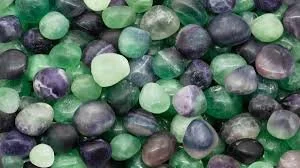
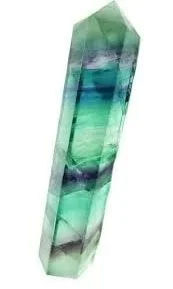
Fluorite — Metaphysical Properties & Fun Facts
🌈 Core Energy
Fluorite is known as a stone of clarity, organization, and mental focus. Its energy is clean, structured, and stabilizing — like tidying your mind 🧠✨
🧠 Mental Clarity & Focus
Strongly associated with the third eye 👁️
Believed to improve concentration and decision-making 🎯
Helps organize thoughts and reduce mental clutter 📚
🛡️ Protection & Stabilization
Said to protect against mental overwhelm and confusion 🧿
Encourages emotional balance and calm 🕯️
Helps maintain energetic boundaries 🔒
🌬️ Emotional & Energetic Cleansing
Believed to clear negative thought patterns 🔄
Encourages emotional neutrality rather than suppression ⚖️
Supports clarity during stressful transitions 🌊
🎨 Color-Specific Vibes
Purple fluorite: intuition & insight 💜
Green fluorite: healing & renewal 💚
Blue fluorite: calm communication 💙
Yellow fluorite: confidence & creativity 💛
Rainbow fluorite: balance & integration 🌈
🧿 How People Work With Fluorite
Keep it nearby when studying or working 📖
Meditate with it for mental clarity 🧘♀️
Place in offices or creative spaces 💼
Pair with grounding stones due to its light energy 🪨
✨ Fun Facts
Fluorite gave its name to the term “fluorescence” 💡
It’s softer than quartz, so it scratches easily ⚠️
Ancient Romans carved fluorite into decorative vessels 🏺
Some fluorite glows under UV light 🔦
🔮 Overall Vibe
Fluorite is about clarity, focus, and structured calm 🌈
It doesn’t energize or sedate — it organizes.
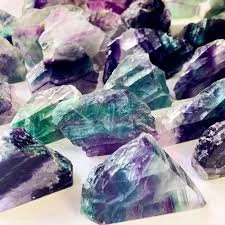
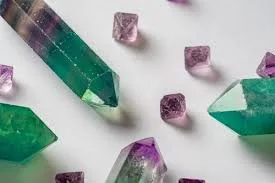
Garden Quartz (Lodolite) — Mineral & Scientific Info
Garden quartz is one of those stones that feels like a tiny world captured in crystal — earthy, dreamy, and endlessly fascinating.What it is
Garden quartz, also called lodolite, scenic quartz, or inclusion quartz, is a variety of clear quartz (SiO₂) that contains visible mineral inclusions. The quartz itself is normal rock crystal; the “garden” appearance comes from what’s trapped inside.
Chemical composition
Host crystal: quartz (SiO₂)
Inclusions may include chlorite, feldspar, hematite, kaolinite, iron oxides, manganese oxides, or clay minerals.
Crystal structure
Crystal system: trigonal
Typically well-formed prismatic quartz crystals
Inclusions are enclosed during crystal growth
Color and appearance
Clear to milky quartz body
Inclusions appear as mossy, cloud-like, landscape, or underwater scenes
Common inclusion colors: green, red, brown, white, black, yellow
Transparent to translucent
Luster: vitreous
Physical properties
Hardness: 7 on the Mohs scale
No cleavage
Conchoidal fracture
Specific gravity: ~2.65
Formation
Garden quartz forms when quartz crystals grow in environments rich in fine mineral particles. These minerals become trapped during growth, creating layered or suspended inclusions that resemble gardens, forests, or landscapes.
Geographic sources
Brazil (primary source)
Madagascar
India
United States (limited)
Uses and applications
Collector specimens
Cabochons and carvings
Jewelry (durable due to quartz hardness)
Scientific study of crystal growth and inclusion environments
Name origin
“Lodolite” comes from Portuguese lodo, meaning “mud,” referring to the muddy-looking inclusions.
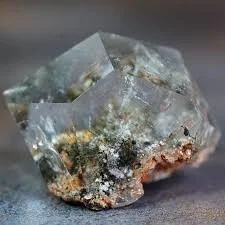
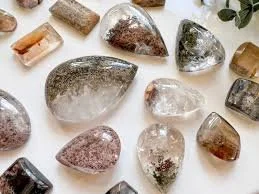
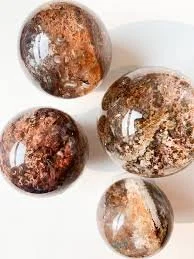
Garden Quartz — Metaphysical Properties & Fun Facts
🌿🔮 Core Energy
Garden quartz is known as a stone of manifestation, connection to nature, and inner worlds. Its energy feels grounding yet expansive — like standing in a forest and daydreaming 🌳✨
🌍 Earth Connection
Strong grounding energy 🪨
Encourages connection to nature 🌱
Supports environmental awareness 🌍
🌱 Manifestation & Growth
Said to amplify intentions 🌟
Helps bring ideas into form 🛠️
Encourages steady, organic growth 🌿
🧠 Inner Vision & Creativity
Stimulates imagination 🎨
Encourages visualization 🖼️
Supports meditation and journeying 🧘♀️
🌌 Multidimensional Awareness
Often associated with inner exploration 👁️
Encourages seeing multiple perspectives 🔭
Helps bridge physical and subtle worlds 🌈
🧿 How People Work With Garden Quartz
Meditate by “entering” the landscape 🧘♂️
Use during manifestation rituals 📝
Keep on altars or nature spaces 🕯️
Pair with grounding stones for balance 🪨
✨ Fun Facts
No two garden quartz pieces look alike 🎨
Sometimes called “dream stone” 💭
Inclusions are millions of years old ⏳
Popular with both geologists and mystics 🔬🔮
🔮 Overall Vibe
Garden quartz is about watching ideas take root and grow 🌱
It’s imagination anchored in Earth.
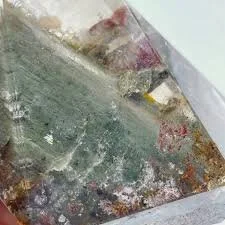
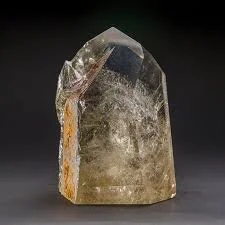
Garnet — Mineral & Scientific Information
Garnet ❤️ — ancient, powerful, and way more diverse than most people realize.What it is
Garnet is not a single mineral but a group of closely related silicate minerals with similar crystal structures and physical properties. Garnets are important both as gemstones and as rock-forming minerals.
Chemical composition
General formula:
X₃Y₂(SiO₄)₃
-X = calcium, magnesium, iron, or manganese
-Y = aluminum, iron, or chromium
Common garnet varieties:
Almandine (Fe₃Al₂Si₃O₁₂)
Pyrope (Mg₃Al₂Si₃O₁₂)
Spessartine (Mn₃Al₂Si₃O₁₂)
Grossular (Ca₃Al₂Si₃O₁₂)
Andradite (Ca₃Fe₂Si₃O₁₂)
Uvarovite (Ca₃Cr₂Si₃O₁₂)
Crystal structure
Crystal system: cubic (isometric)
Crystals often form dodecahedrons or trapezohedrons
No cleavage; fractures are conchoidal to uneven
Color and appearance
Most commonly red, but also orange, yellow, green, purple, brown, black, and color-changing varieties
Color depends on chemical composition
Luster: vitreous to resinous
Transparency: transparent to opaque
Physical properties
Hardness: 6.5–7.5 on the Mohs scale
Specific gravity: ~3.5–4.3 (varies by type)
High durability and resistance to weathering
Formation
Garnets form in metamorphic rocks (schist, gneiss) and igneous rocks. They grow under high temperature and pressure and are often used by geologists as indicators of metamorphic conditions.
Geographic sources
India
Sri Lanka
Madagascar
Tanzania
Russia
United States (Arizona, New York)
Uses and applications
Gemstones
Abrasives (sandpaper, water-jet cutting)
Geological indicators of pressure and temperature
Garnet — Metaphysical Properties & Fun Facts
🔥 Core Energy
Garnet is known as a stone of vitality, passion, and grounding strength. Its energy is warm, stabilizing, and deeply activating ❤️
💪 Energy & Vitality
Believed to boost physical energy and endurance ⚡
Encourages motivation and drive 🚀
Often associated with life force and regeneration 🔥
🛡️ Grounding & Protection
Strongly connected to the root chakra 🔴
Said to provide grounding, stability, and security 🪨
Historically worn as a protective talisman 🧿
❤️ Love, Passion & Commitment
Associated with romantic love and devotion 💞
Encourages passion balanced with loyalty 💍
Said to strengthen emotional bonds 🤍
🧠 Emotional Balance
Helps process intense emotions without suppression 🌊
Encourages courage and emotional honesty 💬
Supports confidence during difficult transitions ⚖️
🎨 Garnet Variety Vibes
Red (almandine, pyrope): passion & grounding ❤️
Orange (spessartine): creativity & joy 🧡
Green (grossular, demantoid): growth & prosperity 💚
Purple or color-change garnets: transformation 🔮
🧿 How People Work With Garnet
Wear for strength, confidence, and protection 📿
Use in grounding or manifestation practices 🌍
Keep nearby during physically or emotionally demanding times 💪
Pair with heart or crown stones to balance intensity ⚖️
✨ Fun Facts
Garnets were used as gemstones over 5,000 years ago 🏺
Ancient travelers wore garnet for protection on journeys 🗺️
Some garnets change color under different lighting 🌈
Tiny garnets are used as industrial abrasives 🧱
🔮 Overall Vibe
Garnet is about strength, passion, and grounded vitality 🔥
It doesn’t spark chaos — it fuels steady fire.
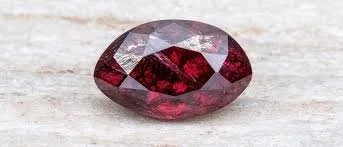
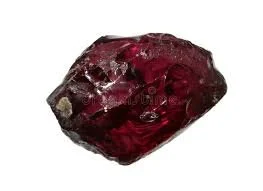
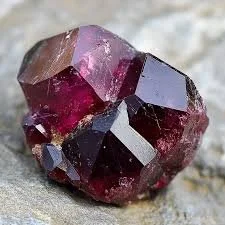
Goldstone — Material & Scientific Information
Ooo, goldstone ✨ — a sparkly favorite, and a little different from most of the stones we’ve covered in this library.What it is
Goldstone is not a natural mineral. It is a man-made glass infused with metallic copper (or other metals) that create its signature glittering appearance. It’s sometimes called aventurine glass, though it is unrelated to natural aventurine.
Composition
Base material: silica-rich glass
Metallic inclusions: usually copper, sometimes cobalt, manganese, or chromium depending on color
The sparkle comes from tiny metallic crystals suspended in the glass
Structure
Amorphous (non-crystalline), like all glass
Metallic particles crystallize within the glass as it cools slowly in a low-oxygen environment
Color varieties
Reddish-brown (classic goldstone, copper-based)
Blue (cobalt-based)
Green (chromium-based)
Purple (manganese-based)
Physical properties
Hardness: ~5.5–6 on the Mohs scale
Luster: vitreous with strong aventurescence
Transparency: translucent to opaque
Fracture: conchoidal
No cleavage
History & origin
Goldstone is believed to have originated in Italy during the Renaissance, possibly developed by glassmakers in Venice. Early production was likely accidental, later refined intentionally.
Uses and applications
Jewelry and beads
Decorative carvings and objects
Ornamental and metaphysical use
Occasionally mistaken for natural stone despite being synthetic
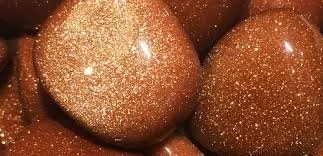
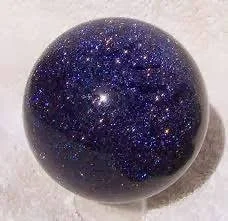
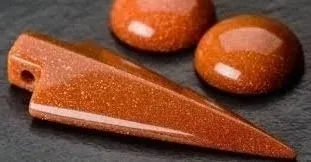
Goldstone — Metaphysical Properties & Fun Facts
✨ Core Energy
Goldstone is often considered a stone of ambition, confidence, and motivation. Even though it’s man-made, many people value its symbolic and energetic qualities 🌟
🔥 Motivation & Drive
Associated with ambition and goal-setting 🎯
Said to encourage perseverance and determination 💪
Helpful when working toward long-term goals 🚀
🧠 Confidence & Self-Belief
Believed to boost confidence and courage 🦁
Encourages a positive mindset and optimism 🌞
Often used to counter self-doubt 🪞
🛡️ Protection & Resilience
Traditionally associated with protective energy 🧿
Said to deflect negativity and emotional drain 🔄
Encourages emotional strength during challenges 🛡️
🎨 Color-Specific Vibes
Brown/red goldstone: vitality & ambition 🔥
Blue goldstone: calm confidence & communication 🌌
Green goldstone: growth & opportunity 🌱
Purple goldstone: intuition & transformation 🔮
🧿 How People Work With Goldstone
Wear as jewelry for confidence and motivation 📿
Keep on desks or in workspaces 💼
Use during intention-setting or manifestation practices ✍️
Pair with grounding stones to balance its stimulating energy 🪨
✨ Fun Facts
The sparkle is real metal, not glitter ✨
Sometimes called the “stone of ambition” 🏆
Despite being synthetic, it’s been used for centuries 🏺
Its look often symbolizes finding light in darkness 🌌
🔮 Overall Vibe
Goldstone is about confidence, momentum, and inner sparkle ✨
It’s a reminder that even something created can carry meaning.
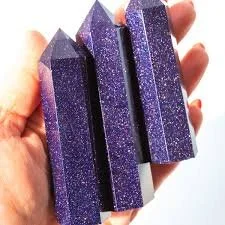
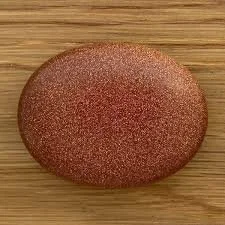
Green Aventurine — Mineral & Scientific Information
Green aventurine is gentle, lucky, and super approachable.What it is
Green aventurine is a variety of quartz, specifically a form of microcrystalline quartz closely related to chalcedony. It is defined by its characteristic shimmering effect known as aventurescence.
Chemical composition
Chemical formula: SiO₂
The green color is caused by inclusions of fuchsite, a chromium-rich mica
The reflective mica platelets create the stone’s sparkle
Crystal structure
Crystal system: trigonal (quartz family)
Structure: microcrystalline to granular rather than visible crystals
Color and appearance
Light to medium green, sometimes bluish or yellowish green
Displays aventurescence (sparkly or glittery appearance)
Luster: vitreous to silky
Transparency: translucent to opaque
Physical properties
Hardness: 6.5–7 on the Mohs scale
Cleavage: none
Fracture: conchoidal
Specific gravity: ~2.64–2.69
Formation
Green aventurine forms when silica-rich fluids crystallize in the presence of mica inclusions, typically in metamorphic or sedimentary environments.
Geographic sources
India (largest commercial source)
Brazil
Russia
Tanzania
Spain
Uses and applications
Jewelry (beads, cabochons)
Carvings and decorative objects
Popular tumbled stones
Frequently used in metaphysical practices
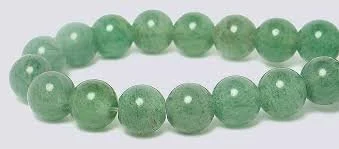
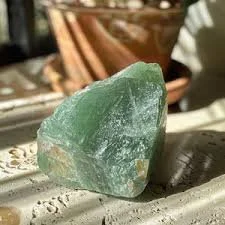
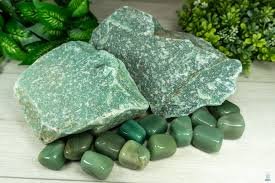
Green Aventurine — Metaphysical Properties & Fun Facts
🍀 Core Energy
Green aventurine is known as the stone of luck, opportunity, and growth. Its energy is gentle, optimistic, and steady — not flashy, just reliably good 🌱
💚 Heart Healing & Emotional Balance
Strongly connected to the heart chakra 💚
Encourages emotional healing and release of old patterns 🤍
Promotes compassion, empathy, and calm 🌿
🍀 Luck, Abundance & Opportunity
Often called the “Stone of Opportunity” 🍀
Said to attract luck, prosperity, and new chances ✨
Encourages taking healthy risks and saying yes to growth 🚪
🧠 Mental Calm & Decision-Making
Helps quiet mental chatter 🧘♀️
Encourages balanced, confident decision-making ⚖️
Supports creativity and open-minded thinking 🎨
🌍 Grounding & Growth
Aligns with Earth energy 🌎
Encourages steady personal growth rather than sudden change 🌱
Helps you move forward without pressure or force 💫
🧿 How People Work With Green Aventurine
Carry as a pocket stone for luck 🍀
Wear near the heart for emotional balance 📿
Place in workspaces or wallets for opportunity 💼💰
Meditate with it when starting something new 🌙
✨ Fun Facts
Its sparkle comes from natural mica, not glitter ✨
Often confused with jade, but much more sparkly 💎
Used historically as a good-luck talisman 🧿
One of the most popular stones for beginners 🌿
🔮 Overall Vibe
Green aventurine is about gentle growth, emotional balance, and good fortune 💚
It doesn’t rush you — it supports you.
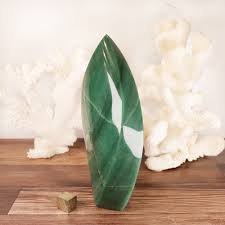
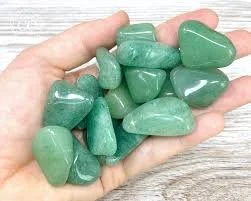
Green Opal — Mineral & Scientific Information
Green opal is soft, nurturing, and a little underrated.What it is
Green opal is a variety of common opal, which is an amorphous form of hydrated silica. Unlike precious opal, it does not display play-of-color but is valued for its soothing green hues.
Chemical composition
Chemical formula: SiO₂·nH₂O
Contains 3–21% water by weight
Green color is usually caused by nickel, chlorite, or other mineral inclusions
Structure
Amorphous (non-crystalline)
Lacks a regular crystal lattice, unlike quartz
Color and appearance
Pale green, apple green, olive, or bluish green
Typically opaque to translucent
Luster: waxy to vitreous
Even coloration or subtle mottling
Physical properties
Hardness: 5.5–6.5 on the Mohs scale
Cleavage: none
Fracture: conchoidal to uneven
Specific gravity: ~2.0–2.2
Formation
Green opal forms at low temperatures when silica-rich solutions seep into rock cavities and solidify, trapping water and trace minerals. It commonly occurs in sedimentary environments and weathered volcanic rock.
Geographic sources
Madagascar
Peru
Australia
Tanzania
Brazil
Uses and applications
Cabochons and beads
Carvings and decorative stones
Collectible specimens
Occasionally used in metaphysical jewelry
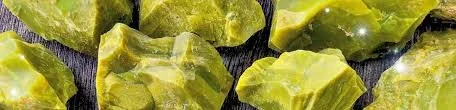
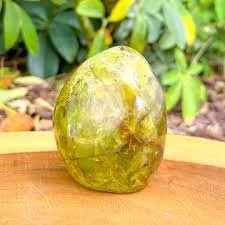
Green Opal — Metaphysical Properties & Fun Facts
🌿 Core Energy
Green opal is known as a stone of emotional renewal, heart healing, and gentle transformation. Its energy is soft, calming, and nurturing — very “safe space” vibes
💚 Heart Healing & Emotional Release
Strongly connected to the heart chakra 💚
Encourages emotional healing and release of stored feelings 🤍
Supports compassion, forgiveness, and self-acceptance 🌱
🌊 Emotional Flow & Balance
Believed to help emotions move freely rather than get stuck 🌊
Encourages healthy expression of feelings 🗣️
Helpful during times of emotional sensitivity or transition 🕯️
🌱 Growth & Renewal
Associated with fresh starts and personal growth 🌼
Helps release old emotional patterns gently 🔓
Encourages hope and emotional resilience ✨
🧠 Calm & Reassurance
Said to soothe anxiety and emotional overwhelm 🧘♀️
Encourages inner peace and patience 🕊️
Helpful for highly sensitive people 💞
🧿 How People Work With Green Opal
Wear near the heart for emotional support 📿
Meditate with it during emotional healing work 🌙
Use during journaling or therapy sessions ✍️
Keep in restful spaces like bedrooms or altars 🕯️
✨ Fun Facts
Green opal does not show play-of-color 🌈❌
It’s often confused with chrysoprase or aventurine 👀
Opal’s water content makes it sensitive to heat ⚠️
Ancient cultures associated opal with hope and renewal 🌿
🔮 Overall Vibe
Green opal is about gentle healing, emotional flow, and renewal 💚
It doesn’t push transformation — it allows it.
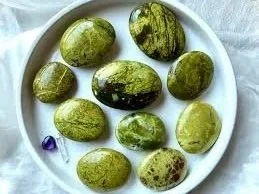
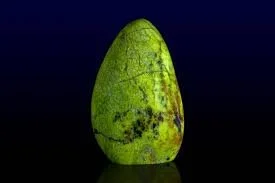
Hematite — Mineral & Scientific Information
Hematite is a classic grounding stone with some very cool science behind it.
What it is
Hematite is an iron oxide mineral and one of the most important iron ores. Despite often appearing metallic gray or black, its name comes from the Greek word for blood, referring to its red streak.
Chemical composition
Chemical formula: Fe₂O₃
Composed primarily of iron and oxygen
Crystal structure
Crystal system: trigonal
Often forms tabular, platy, or massive habits
Can also occur as botryoidal (rounded) or earthy aggregates
Color and appearance
Surface color: metallic gray, black, or silver
Internal color/streak: reddish-brown to red
Luster: metallic to dullTransparency: opaque
Physical properties
Hardness: 5–6 on the Mohs scale
Cleavage: none
Fracture: uneven
Specific gravity: ~5.3 (relatively heavy)
Formation
Hematite forms in a wide range of environments, including sedimentary, metamorphic, and igneous settings. It is a major component of banded iron formations and can also form through weathering of other iron minerals.
Geographic sources
Brazil
Australia
South Africa
United States (Minnesota, Michigan)
China
Uses and applications
Primary ore of iron
Pigments (red ochre)
Polishing compounds
Jewelry and decorative items
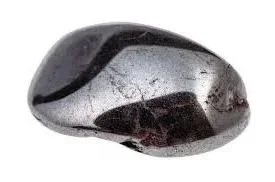
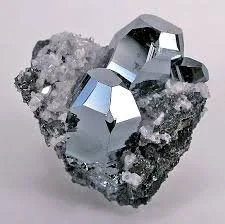
Hematite — Metaphysical Properties & Fun Facts
🪨 Core Energy
Hematite is known as a stone of grounding, protection, and stability. Its energy is heavy, anchoring, and deeply centering 🧲
🛡️ Grounding & Protection
Strongly connected to the root chakra 🔴
Believed to anchor scattered energy and promote stability 🌍
Often used as a protective stone 🧿
🧠 Mental Focus & Logic
Said to enhance focus, logic, and practical thinking 🧠
Helps cut through mental clutter and confusion ✂️
Supports problem-solving and decision-making ⚖️
💪 Strength & Confidence
Associated with courage and inner strength 💥
Encourages resilience during stress or chaos 🛡️
Helps build self-confidence and assertiveness 🧱
🌊 Emotional Balance
Believed to absorb excess emotional energy 🌊
Encourages calm, controlled emotional responses 🕯️
Helpful for anxiety rooted in overwhelm 💭
🧿 How People Work With Hematite
Wear as jewelry for grounding and protection 📿
Carry during stressful situations 🪨
Place near electronics to absorb scattered energy 💻
Use during meditation to stay present 🧘♀️
✨ Fun Facts
Hematite streak is always red, no matter the surface color 🔴
Ancient people used it as face paint and pigment 🎨
Mars appears red due to hematite-rich dust 🪐
Polished hematite jewelry is often slightly magnetic 🧲
🔮 Overall Vibe
Hematite is about stability, focus, and grounded strength 🪨
It doesn’t lift you up — it holds you steady.
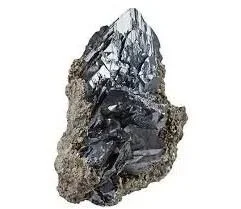
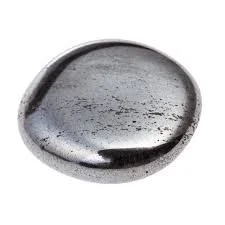
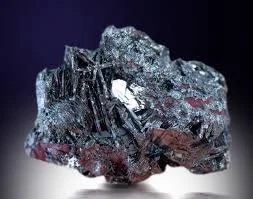
Herkimer Quartz — Mineral & Scientific Information
Herkimer quartz is essentially the accurate mineral name for what many people call Herkimer diamonds. They are deceptively powerful little crystals.What it is
Herkimer quartz is a highly transparent variety of quartz (SiO₂) that forms as naturally double-terminated crystals. It is named for Herkimer County, New York, where it is famously found. When sourced from this locality, it may also be marketed as a “Herkimer diamond,” though it is not a true diamond.
Chemical composition
Chemical formula: SiO₂
Extremely pure quartz with minimal impurities
Crystal structure
Crystal system: trigonal (quartz family)
Naturally double-terminated due to free growth in rock cavities
Sharp, well-developed crystal faces
Color and appearance
Luster: vitreous
Colorless and highly transparent
May contain inclusions such as:
-Hydrocarbon bubbles
-Water inclusions
-Gas pockets
Physical properties
Hardness: 7 on the Mohs scale
Cleavage: none
Fracture: conchoidal
Specific gravity: ~2.65
Formation
Herkimer quartz formed approximately 500 million years ago in dolostone. Silica-rich fluids entered gas pockets within the rock, allowing crystals to grow freely without attachment, resulting in terminations at both ends.
Geographic sources
Exclusively Herkimer County, New York (for true Herkimer quartz)
Similar double-terminated quartz occurs worldwide but is not technically Herkimer quartz
Uses and applications
Jewelry
Mineral specimens
Scientific study of fluid inclusions
Optical and decorative uses
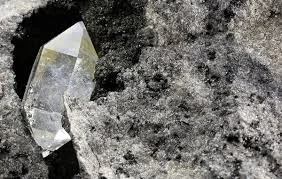
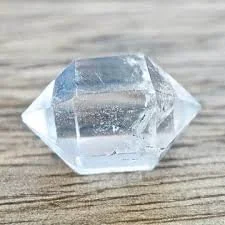
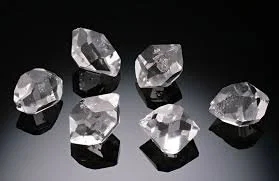
Herkimer Quartz — Metaphysical Properties & Fun Facts
✨ Core Energy
Herkimer quartz is considered a stone of clarity, amplification, and alignment. Its energy is crisp, focused, and high-frequency 💎
🧠 Mental Clarity & Focus
Believed to sharpen awareness and concentration 🔍
Helps cut through mental fog and distraction ✂️
Encourages clear thinking and truth-seeking 👁️
⚡ Amplification & Energy Flow
Known for amplifying intentions and other stones ⚡
Double termination is said to allow energy to flow in and out freely 🔁
Often used in manifestation and crystal grids 🔮
🌌 Spiritual Awareness & Dream Work
Associated with the third eye and crown chakras 👁️👑
Believed to enhance meditation, lucid dreaming, and intuition 🌙
Said to help align mind, body, and spirit ⚖️
🛡️ Cleansing & Alignment
Thought to clear energetic blockages 🫧
Encourages energetic balance and coherence ✨
Often used to “reset” stagnant or chaotic energy 🔄
🧿 How People Work With Herkimer Quartz
Meditate with it at the third eye or crown 🧘♀️
Keep near the bed for dream recall 😴
Use in grids or pairings to boost other stones 🔗
Balance with grounding stones to avoid overstimulation 🪨
✨ Fun Facts
Naturally double-terminated — no cutting required 💎
Some contain ancient water sealed inside 🌊
Often mined by hand from extremely hard rock ⛏️
Clear Herkimer quartz can look almost like cut crystal ✨
🔮 Overall Vibe
Herkimer quartz is about clarity, amplification, and alignment 💎
It doesn’t add noise — it refines the signal.
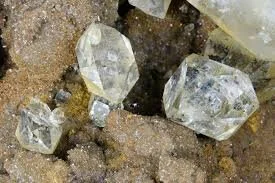
Howlite — Mineral & Scientific Information
Howlite is calm, understated, and surprisingly interesting once you look closer.What it is
Howlite is a calcium borosilicate hydroxide mineral. It is most commonly found in white or gray nodules with distinctive gray or black veining and is frequently dyed to imitate other stones, especially turquoise.
Chemical composition
Chemical formula: Ca₂B₅SiO₉(OH)₅
Contains calcium, boron, silicon, oxygen, and hydrogen
Crystal structure
Crystal system: monoclinic
Crystals are rare; howlite usually occurs in massive or nodular form
Color and appearance
Naturally white or light gray with dark veining
Opaque
Luster: dull to vitreous when polished
Physical properties
Hardness: 3.5 on the Mohs scale
Cleavage: none
Fracture: uneven
Porous structure (absorbs dye easily)
Specific gravity: ~2.5–2.6
Formation
Howlite forms in evaporite deposits, often associated with gypsum and other borate minerals. It crystallizes as calcium-rich borate material replaces earlier minerals.
Geographic sources
Canada (largest source, especially Nova Scotia)
United States (California)
Germany
Turkey
Uses and applications
Jewelry and beads
Decorative carvings
Commonly dyed and sold as imitation turquoise
Educational specimens

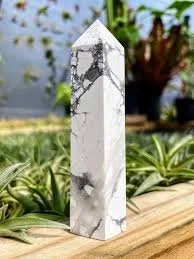
Howlite — Metaphysical Properties & Fun Facts
🤍 Core Energy
Howlite is known as a stone of calm, patience, and emotional awareness. Its energy is gentle, soothing, and quiet — like mental white noise in the best way 🕊️
🧠 Mental Calm & Stress Relief
Believed to quiet an overactive mind 🧘♀️
Helps reduce stress, anxiety, and racing thoughts 🌬️
Encourages mindfulness and presence 🕯️
😌 Emotional Balance & Patience
Said to ease irritability and emotional reactivity 🌊
Encourages patience and emotional regulation ⚖️
Helpful during frustration or overwhelm 🤍
🌙 Sleep & Relaxation
Often associated with restful sleep 😴
Believed to calm the mind before bed 🌙
Used to support dream recall without intensity 💭
🧠 Awareness & Learning
Encourages self-awareness and emotional insight 🪞
Said to support learning by reducing mental clutter 📘
Helps absorb information calmly rather than forcefully 🧩
🧿 How People Work With Howlite
Wear or carry for calming energy 📿
Keep near the bed or under a pillow 🛏️
Use during meditation or breathwork 🧘♀️
Pair with grounding stones for stability 🪨
✨ Fun Facts
Howlite is often dyed bright blue and sold as “turquoise” ❌
The veining resembles marble or spiderweb patterns 🕸️
Named after Canadian chemist Henry How 👨🔬
Because it’s soft, it’s easy to carve ✂️
🔮 Overall Vibe
Howlite is about calm, patience, and mental stillness 🤍
It doesn’t energize — it soothes and slows.
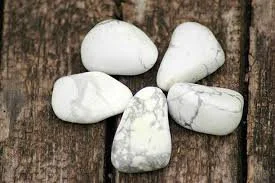
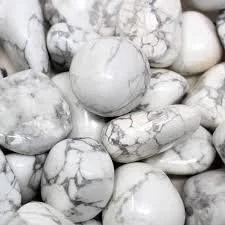
Iolite — Mineral & Scientific Information
Iolite is subtle, moody, and quietly powerful.
What it is
Iolite is the gem-quality variety of cordierite, a magnesium aluminum cyclosilicate mineral. It is best known for its strong pleochroism, meaning it shows different colors when viewed from different angles.
Chemical composition
Chemical formula: (Mg,Fe)₂Al₄Si₅O₁₈
Magnesium-rich with variable iron content
Crystal structure
Crystal system: orthorhombic
Typically found in granular or massive forms; well-formed crystals are uncommon
Color and appearance
Blue-violet, violet-blue, gray-blue, or yellowish depending on viewing angle
Transparent to translucent
Strong pleochroism: blue, violet, and yellow-brown tones
Physical properties
Hardness: 7–7.5 on the Mohs scale
Cleavage: poor
Fracture: uneven to conchoidal
Specific gravity: ~2.6
Formation
Iolite forms in high-grade metamorphic rocks, particularly gneiss and schist, and can also occur in igneous rocks. It develops under conditions of intense heat and pressure.
Geographic sources
India
Sri Lanka
Madagascar
Brazil
Myanmar
Tanzania
Uses and applications
Gemstone jewelry
Mineral specimens
Geological indicator of metamorphic conditions
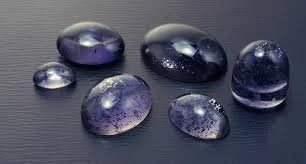
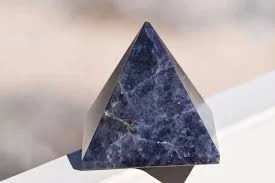
Iolite — Metaphysical Properties & Fun Facts
🔮 Core Energy
Iolite is often called the stone of vision and inner guidance. Its energy is calm but deeply insightful — less flashy, more quietly transformative 💙
🧭 Inner Vision & Intuition
Believed to strengthen intuition and inner knowing 👁️
Encourages trust in personal insight rather than external noise 🧠
Helps reveal subtle truths and hidden patterns 🕵️♀️
🧠 Focus & Mental Clarity
Said to clear mental confusion and distraction 🌬️
Helps with decision-making and seeing the bigger picture 🧩
Encourages logical thinking balanced with intuition ⚖️
🌌 Spiritual Insight
Associated with the third eye chakra 👁️
Used in meditation for insight, visualization, and self-discovery 🧘♀️
Believed to aid in navigating spiritual transitions 🌠
🧳 Direction & Purpose
Sometimes called a “compass stone” 🧭
Encourages alignment with personal goals and life direction 🎯
Helpful during times of change or uncertainty 🌊
🧿 How People Work With Iolite
Meditate with it during reflection or decision-making 🧘♀️
Carry when seeking clarity or direction 🧭
Pair with grounding stones to balance its introspective nature 🪨
Use during journaling or creative planning ✍️
✨ Fun Facts
Historically used by Vikings as a sunstone for navigation 🌞
Its color shift depends heavily on orientation 🔄
Often confused with sapphire due to its blue color 💙
Can appear almost colorless from certain angles 👀
🔮 Overall Vibe
Iolite is about vision, direction, and inner truth 💙
It doesn’t shout — it quietly points the way.
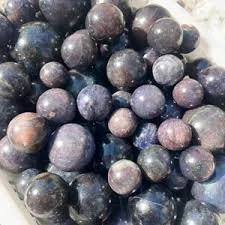
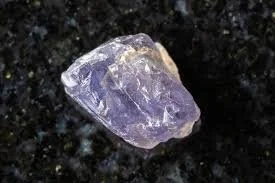
Jade — Mineral & Scientific Information
Jade is a classic — ancient, grounded, and culturally powerful.
What it is
“Jade” is a gem name, not a single mineral. True jade refers to two distinct minerals: nephrite and jadeite. Both are tough, compact, and prized for carving and jewelry, but they differ in chemistry and structure.
1. Nephrite
Mineral group: amphibole
Chemical formula: Ca₂(Mg,Fe)₅Si₈O₂₂(OH)₂
Crystal system: monoclinic
Structure: fibrous, interlocking crystals
2. Jadeite
Mineral group: pyroxene
Chemical formula: NaAlSi₂O₆
Crystal system: monoclinic
Structure: granular crystals
Color and appearance
Colors include green, white, lavender, yellow, brown, black, and gray
Jadeite generally has brighter, more vivid colors
Nephrite is typically softer green or creamy white
Luster: waxy to vitreous
Transparency: opaque to translucent
Physical properties
Extremely high toughness (resistance to breaking)
Cleavage: poor
Fracture: splintery (nephrite) or granular (jadeite)
Hardness:
-Nephrite: 6–6.5 Mohs
-Jadeite: 6.5–7 Mohs
Formation
Nephrite forms through metamorphic processes involving magnesium-rich rocks
Jadeite forms under high-pressure, low-temperature conditions, often in subduction zones
Geographic sources
Jadeite: Myanmar (Burma), Guatemala, Japan
Nephrite: China, Canada, New Zealand, Russia
Uses and applications
Jewelry
Carvings and sculptures
Tools and weapons historically
Cultural and ceremonial objects
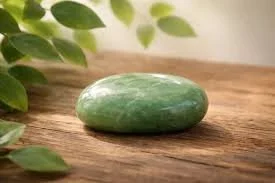
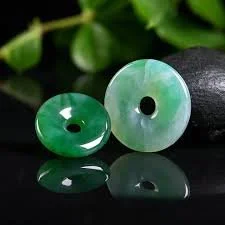
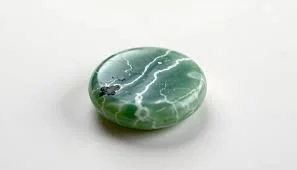
Jade — Metaphysical Properties & Fun Facts
💚 Core Energy
Jade is known as a stone of harmony, prosperity, and protection. Its energy is steady, nurturing, and deeply grounding 🌿
⚖️ Balance & Emotional Stability
Believed to promote emotional balance and calm 🌊
Encourages peace, patience, and inner harmony 🕊️
Helps regulate emotional extremes ⚖️
🍀 Prosperity & Good Fortune
Often associated with abundance and good luck 🍀
Thought to attract prosperity through wise choices rather than risk 💰
Symbolizes long-term success and stability 🏡
🛡️ Protection & Well-Being
Traditionally worn as a protective talisman 🧿
Said to absorb negative energy and promote safety 🤍
Historically linked to physical and emotional well-being 🌱
💞 Relationships & Heart Energy
Strongly connected to the heart chakra 💚
Encourages compassion, empathy, and healthy relationships 🤝
Promotes self-love and emotional healing 🌸
🧿 How People Work With Jade
Wear as jewelry for continuous balancing energy 📿
Carry as a charm for luck and protection 🍀
Use in meditation focused on peace and gratitude 🧘♀️
Place in the home for harmony and abundance 🏡
✨ Fun Facts
Jade has been used for over 7,000 years 🕰️
In ancient China, jade was considered more valuable than gold 👑
Many “jade” items on the market are actually serpentine or glass ❌
Jade’s toughness made it ideal for ancient tools 🪓
🔮 Overall Vibe
Jade is about balance, prosperity, and enduring strength 💚
It doesn’t rush — it builds slowly and lasts.
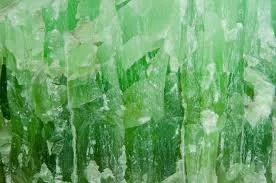
Jasper — Mineral & Scientific Information
Jasper - earthy, ancient, and wildly diverse.What it is
Jasper is a variety of chalcedony, which is microcrystalline quartz (SiO₂). It is distinguished by its opaque appearance and rich colors caused by mineral impurities and inclusions.
Chemical composition
Chemical formula: SiO₂
Contains various impurities such as iron oxides, clay minerals, and organic material
Crystal structure
Crystal system: trigonal (quartz family)
Microcrystalline structure; crystals are not visible to the naked eye
Color and appearance
Red, yellow, brown, green, gray, blue, and multicolored
Often patterned with bands, spots, swirls, or landscapes
Opaque with a dull to vitreous luster
Physical properties
Hardness: 6.5–7 on the Mohs scale
Cleavage: none
Fracture: conchoidal
Specific gravity: ~2.6
Formation
Jasper forms from silica-rich sediments or volcanic ash that solidify and are later altered by mineral-rich fluids. Its patterns result from the way impurities are deposited during formation.
Geographic sources
Found worldwide:
Major sources include Brazil
India
Madagascar
Russia
Australia
The United States
Uses and applications
Jewelry and beads
Carvings and decorative objects
Historical tools and seals
Architectural and ornamental stone
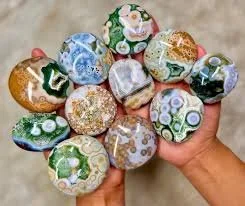
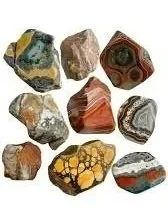
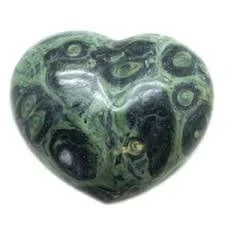
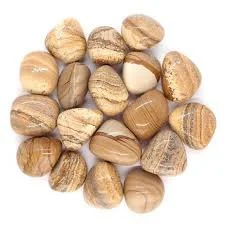
Jasper — Metaphysical Properties & Fun Facts
🌍 Core Energy
Jasper is known as a stone of grounding, stability, and nurturing strength. Its energy is slow, steady, and deeply connected to the earth 🌱
🛡️ Grounding & Protection
Believed to anchor energy and promote stability 🪨
Often used as a protective stone 🧿
Helps create a sense of safety and security 🏡
💪 Strength & Endurance
Said to support physical and emotional endurance 🏋️♀️
Encourages perseverance during long-term challenges 🛤️
Associated with quiet resilience rather than force ⚖️
🧠 Emotional Balance
Helps soothe emotional stress and overwhelm 🌊
Encourages patience and emotional steadiness 🕊️
Useful during times of anxiety or burnout 🤎
🎨 Creativity & Earth Connection
Many believe jasper supports creativity and imagination 🎨
Encourages connection with nature and natural rhythms 🌾
Often used in grounding meditation practices 🧘♀️
🧿 How People Work With Jasper
Carry or wear daily for grounding 📿
Use in meditation focused on stability and balance 🧘♀️
Place in the home or workspace for steady energy 🏠
Pair with higher-energy stones to balance intensity ⚡
✨ Fun Facts
Known as the “supreme nurturer” in crystal lore 🌍
Ancient civilizations used jasper for seals and amulets 🏺
Each variety (red, picture, ocean, leopard skin, etc.) has its own personality 🎭
Some jasper patterns look like landscapes or maps 🗺️
🔮 Overall Vibe
Jasper is about grounding, endurance, and earthy wisdom 🌍
It doesn’t rush or sparkle — it holds steady.
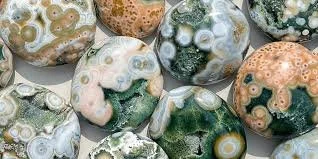
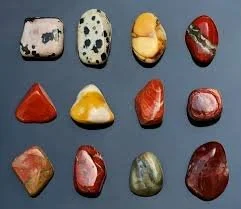
Kunzite — Mineral & Scientific Information
Kunzite has a soft, luminous energy with some fascinating science behind it.What it is
Kunzite is the pink to lilac variety of spodumene, a lithium aluminum silicate mineral. It is named after gemologist George Frederick Kunz, who identified and popularized it in the early 1900s.
Chemical composition
Chemical formula: LiAlSi₂O₆
Contains lithium, aluminum, silicon, and oxygen
Trace amounts of manganese give kunzite its pink color
Crystal structure
Crystal system: monoclinic
Forms long, prismatic crystals with strong vertical striations
Color and appearance
Pale pink, rose, lilac, to violet
Transparent to translucent
Strong pleochroism: can appear pale or nearly colorless from certain angles
Luster: vitreous
Physical properties
Hardness: 6.5–7 on the Mohs scale
Cleavage: perfect in two directions
Fracture: uneven
Specific gravity: ~3.2
Formation
Kunzite forms in lithium-rich pegmatites, often alongside other spodumene varieties, tourmaline, quartz, and lepidolite.
Geographic sources
Afghanistan
Pakistan
Brazil
Madagascar
United States (California)
Uses and applications
Gemstone jewelry
Collector specimens
Source mineral for lithium (industrial spodumene)
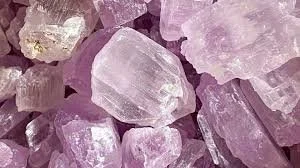
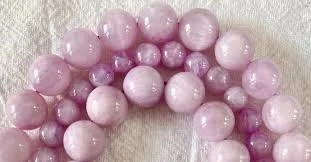
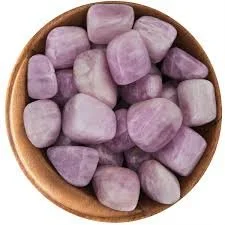
Kunzite — Metaphysical Properties & Fun Facts
💗 Core Energy
Kunzite is known as a stone of unconditional love and emotional openness. Its energy is gentle but deep — soft on the surface, powerful at the heart 🌸
💞 Heart Healing & Compassion
Strongly associated with the heart chakra 💗
Believed to encourage compassion, empathy, and forgiveness 🤍
Helps dissolve emotional walls and fear around love 🌊
🕊️ Emotional Calm & Release
Said to soothe anxiety and emotional overwhelm 🌬️
Encourages emotional honesty without drama ⚖️
Helpful during grief, heartbreak, or emotional healing 💧
🌌 Spiritual Love & Connection
Often linked to higher heart and crown energies 👑
Believed to support loving awareness and spiritual growth ✨
Encourages alignment between love and wisdom 💫
🛡️ Protection Through Gentleness
Thought to create a protective field of loving energy 🧿
Encourages kindness without losing boundaries 🌷
Helps sensitive people stay open without absorbing negativity 🫧
🧿 How People Work With Kunzite
Wear near the heart for emotional support 📿
Meditate with it during self-love or forgiveness practices 🧘♀️
Keep nearby during stressful or emotionally charged situations 🌸
Pair with grounding stones to balance its softness 🪨
✨ Fun Facts
Kunzite can fade if exposed to strong sunlight ☀️
Its pleochroism means cutters must orient it carefully ✂️
It’s a lithium mineral — tied to calm and emotional balance 🔋
Large kunzite crystals can grow impressively long 📏
🔮 Overall Vibe
Kunzite is about love, gentleness, and emotional truth 💗
It doesn’t push — it opens.
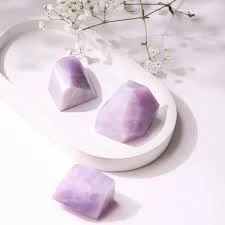
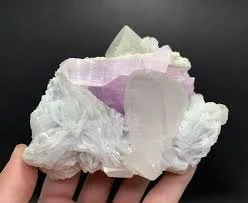
Kyanite — Mineral & Scientific Information
Ooo, Kyanite — beautiful and scientifically weird in the best way.What it is
Kyanite is an aluminum silicate mineral best known for its anisotropic hardness—meaning its hardness changes depending on the direction you test it. It is an important index mineral used by geologists to identify metamorphic conditions.
Chemical composition
Chemical formula: Al₂SiO₅
One of three polymorphs with andalusite and sillimanite
Crystal structure
Crystal system: triclinic
Forms long, bladed or columnar crystals, often in fan-like aggregates
Color and appearance
Commonly blue, but also green, black, gray, white, and orange
Transparent to translucent
Luster: vitreous to pearly
Physical properties
Cleavage: perfect in one direction
Fracture: uneven
Specific gravity: ~3.6
Hardness:
-~4.5–5 parallel to the crystal length
-~6.5–7 perpendicular to the crystal length
Formation
Kyanite forms in high-pressure metamorphic rocks, such as schist and gneiss. Its presence indicates deep burial and intense pressure during rock formation.
Geographic sources
Nepal
Brazil
Switzerland
United States (North Carolina, Virginia)
Kenya
Uses and applications
Gemstone jewelry (with care)
Industrial ceramics and refractory materials
Geological pressure indicator
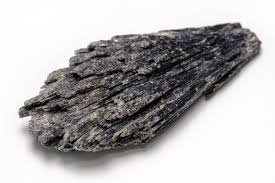
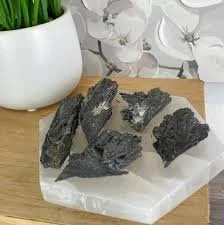
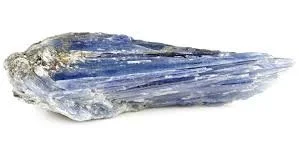
Kyanite — Metaphysical Properties & Fun Facts
💙 Core Energy
Kyanite is known as a stone of alignment, clarity, and energetic flow. Its energy is clean, directional, and balancing — like a tuning fork for your system 🎶
⚖️ Alignment & Balance
Believed to align chakras automatically 🔗
Encourages energetic balance without force ⚖️
Helps bring scattered energy back into coherence ✨
🧠 Communication & Truth
Often associated with the throat chakra 🗣️
Said to support clear communication and self-expression 💬
Helps speak truth calmly and confidently 🧊
🌌 Mental Clarity & Focus
Believed to cut through confusion and mental fog 🔪
Encourages logical thinking and calm decision-making 🧩
Helpful during study, planning, or problem-solving 📘
🛡️ Cleansing & Flow
Often said to not hold negative energy 🫧
Believed to cleanse and realign other stones 🔄
Used in energy work without needing frequent cleansing ✨
🧿 How People Work With Kyanite
Use in meditation for alignment and focus 🧘♀️
Carry for communication support 🗣️
Place on the body for energetic balancing 🪶
Pair with grounding stones to stabilize its high vibration 🪨
✨ Fun Facts
Kyanite’s hardness changes by direction — super rare 🧪
Often left unpolished due to its blade shape ✂️
The name comes from the Greek kyanos, meaning “blue” 💙
Black kyanite is often used like an energetic “broom” 🧹
🔮 Overall Vibe
Kyanite is about alignment, clarity, and clean energy flow 💙
It doesn’t store chaos — it straightens things out.
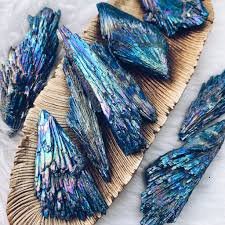
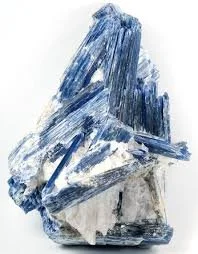
Labradorite — Mineral & Scientific Information
Ahh, Labradorite — flashy, mystical, and full of hidden depth.What it is
Labradorite is a feldspar mineral, specifically a calcium–sodium plagioclase feldspar. It is famous for its optical effect known as labradorescence, which creates flashes of iridescent color beneath the surface.
Chemical composition
Chemical formula: (Ca,Na)(Al,Si)₄O₈
Member of the plagioclase feldspar series
Crystal structure
Crystal system: triclinic
Typically forms in massive or granular structures rather than visible crystals
Color and appearance
Base color: gray, dark gray, black, or bluish
Labradorescence colors: blue, green, gold, yellow, orange, red, and violet
Opaque to translucent
Luster: vitreous to pearly
Physical properties
Hardness: 6–6.5 on the Mohs scale
Cleavage: two directions, good
Fracture: uneven to subconchoidal
Specific gravity: ~2.7
Formation
Labradorite forms in igneous rocks, particularly basalt, gabbro, and anorthosite. The labradorescence effect is caused by light interference within microscopic layers of feldspar.
Geographic sources
Canada (Labrador, Newfoundland)
Madagascar
Finland (spectrolite variety)
Russia
Australia
Uses and applications
Jewelry and cabochons
Decorative and architectural stone
Geological study of feldspar formation
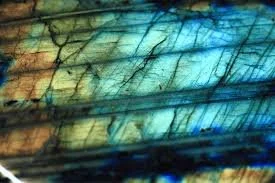
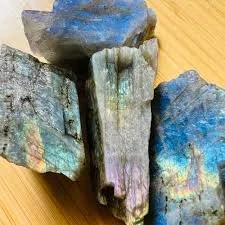
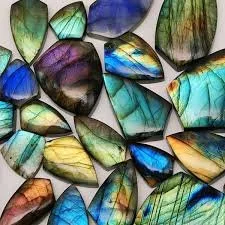
Labradorite — Metaphysical Properties & Fun Facts
🌌 Core Energy
Labradorite is known as a stone of transformation and magic. Its energy feels mysterious, protective, and awakening — like flipping a switch you didn’t know was there ✨
🛡️ Protection & Energy Shielding
Believed to protect the aura from energy drain 🧿
Helps block negativity while staying open ✋
Popular with empaths and sensitive people 💫
🧠 Intuition & Awareness
Strongly associated with the third eye 👁️
Believed to enhance intuition, insight, and psychic awareness 🔮
Encourages trust in inner guidance 🌙
🔥 Transformation & Growth
Said to support personal transformation 🌱
Helps break old patterns and habits 🔄
Encourages stepping into one’s authentic path 🚪
🎨 Creativity & Inspiration
Believed to spark imagination and creativity 🎨
Helps access subconscious ideas 💭
Often used by artists and writers ✍️
🧿 How People Work With Labradorite
Wear as jewelry for daily protection 📿
Meditate with it for intuition or shadow work 🧘♀️
Carry during periods of change or growth 🌒
Pair with grounding stones to balance its intensity 🪨
✨ Fun Facts
The flash is internal — not surface coating ✨
Spectrolite (from Finland) shows the full rainbow 🌈
Often looks dull until light hits it just right 👀
Inuit legends say the Northern Lights were trapped inside it 🌌
🔮 Overall Vibe
Labradorite is about magic, protection, and transformation 🌌
It doesn’t reveal everything at once — it shows you when you’re ready.
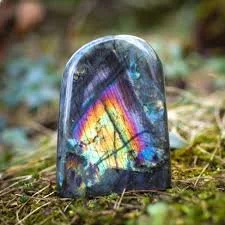
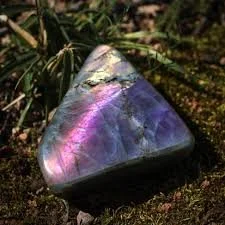
Lapis Lazuli — Mineral & Scientific Information
Lapis lazuli — ancient, royal, and unapologetically powerful.
What it is
Lapis lazuli is not a single mineral, but a metamorphic rock composed primarily of lazurite, with varying amounts of calcite, sodalite, and pyrite. Lazurite is what gives lapis its signature deep blue color.
Chemical composition
Main mineral: lazurite — (Na,Ca)₈(AlSiO₄)₆(S,SO₄,Cl)₂
Common accessory minerals:
-Calcite (CaCO₃)
-Pyrite (FeS₂)
-Sodalite (Na₈(AlSiO₄)₆Cl₂)
Crystal structure
Lazurite crystal system: isometric (cubic)
Lapis lazuli itself is massive, not crystalline
Color and appearance
Deep royal blue to violet-blue
Gold-colored pyrite flecks are common and desirable
White calcite veins may be present
Opaque
Luster: dull to vitreous when polished
Physical properties
Hardness: 5–5.5 on the Mohs scale
Cleavage: none (massive rock)
Fracture: uneven
Specific gravity: ~2.7–2.9
Formation
Lapis lazuli forms through contact metamorphism when limestone or marble interacts with magma. High sulfur content is key to forming lazurite.
Geographic sources
Afghanistan (Badakhshan — the most famous and prized source)
Chile
Russia
Pakistan
Myanmar
Uses and applications
Jewelry and beads
Decorative carvings
Inlay work
Historically ground into ultramarine pigment for art
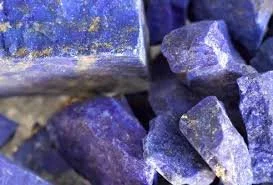
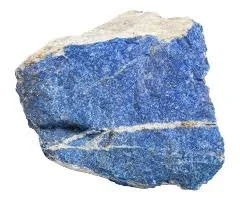
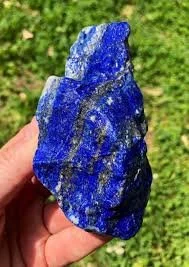
Lapis Lazuli — Metaphysical Properties & Fun Facts
💙 Core Energy
Lapis lazuli is known as a stone of truth, wisdom, and inner authority. Its energy feels regal, honest, and mentally expansive 👑
🗣️ Truth & Communication
Strongly linked to the throat chakra 🗣️
Believed to encourage honest, clear communication 💬
Helps speak truth with confidence and integrity 🛡️
🧠 Wisdom & Insight
Associated with the third eye 👁️
Said to enhance insight, intuition, and deep understanding 🔮
Encourages seeing beyond surface appearances 🧩
👑 Confidence & Inner Power
Historically linked to leadership and royalty 👑
Believed to strengthen self-expression and authority 💪
Helps step into one’s authentic voice 🚪
🌌 Spiritual Awareness
Used in meditation for self-knowledge and awareness 🧘♀️
Encourages alignment between mind and higher truth ✨
Supports introspection and inner clarity 🌙
🧿 How People Work With Lapis Lazuli
Wear near the throat for communication 📿
Meditate with it for insight or truth-seeking 🧘♀️
Use during journaling or creative expression ✍️
Pair with grounding stones to balance its intensity 🪨
✨ Fun Facts
Used in ancient Egypt for amulets and burial masks ⚱️
Cleopatra famously used powdered lapis as eyeshadow 👁️
Ultramarine pigment was once worth more than gold 🎨
The best lapis has deep blue color with minimal calcite 🤍
🔮 Overall Vibe
Lapis lazuli is about truth, wisdom, and authentic power 💙
It doesn’t whisper — it speaks clearly and boldly.
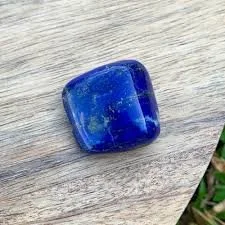
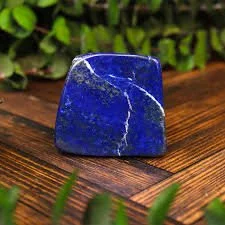
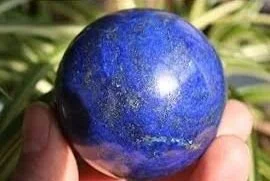
Larimar — Mineral & Scientific Information
Larimar is rare, soothing, and very ocean-coded.
What it is
Larimar is a rare blue variety of pectolite, a sodium calcium silicate mineral. While pectolite occurs worldwide, blue larimar is found only in the Dominican Republic, making it a true locality-specific gemstone.
Chemical composition
Chemical formula: NaCa₂Si₃O₈(OH)
The blue color is caused by copper substitution within the crystal structure
Crystal structure
Crystal system: triclinic
Typically forms in fibrous, radiating aggregates rather than distinct crystals
Color and appearance
Sky blue, turquoise blue, greenish-blue, to white
Often patterned with cloud-like or wave-like markings
Opaque to translucent
Luster: silky to vitreous when polished
Physical properties
Hardness: 4.5–5 on the Mohs scale
Cleavage: good in two directions
Fracture: uneven to fibrous
Specific gravity: ~2.7
Formation
Larimar forms in volcanic environments. Hot, mineral-rich fluids interact with basaltic rocks, crystallizing pectolite in cavities and fractures. Copper impurities give larimar its distinctive blue color.
Geographic sources
Dominican Republic (Barahona Province) — the only known source of gem-quality larimar
Uses and applications
Jewelry (especially cabochons)
Carvings and decorative pieces
Collector gemstones due to rarity
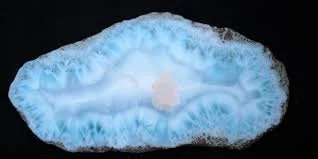
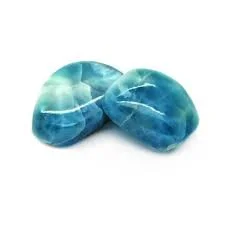
Larimar — Metaphysical Properties & Fun Facts
🌊 Core Energy
Larimar is known as a stone of calm, flow, and gentle communication. Its energy feels like warm ocean waves — soothing, rhythmic, and emotionally balancing 🐚
🗣️ Communication & Expression
Strongly associated with the throat chakra 🗣️
Encourages calm, compassionate communication 💬
Helps express emotions without tension or overwhelm 🌬️
😌 Emotional Soothing
Believed to reduce stress, anxiety, and emotional reactivity 🕊️
Encourages emotional release and flow 🌊
Helpful for people who hold tension in their voice or throat 💙
🌴 Peace & Inner Stillness
Said to bring a sense of peace and relaxation 🌺
Encourages acceptance and surrender to natural rhythms 🍃
Often used during meditation for calming the mind 🧘♀️
🌊 Feminine & Water Energy
Associated with water element and feminine energy 🌙
Encourages nurturing, intuition, and emotional intelligence 💞
Supports gentle personal transformation 🌱
🧿 How People Work With Larimar
Wear near the throat or heart 📿
Meditate with it during stress relief practices 🧘♀️
Use during difficult conversations 🗣️
Pair with grounding stones for balance 🪨
✨ Fun Facts
Named after the discoverer’s daughter (Larissa) + “mar” (sea) 🌊
Sometimes called the “Dolphin Stone” 🐬
Patterns resemble ocean foam or sky clouds ☁️
Its rarity makes it increasingly collectible 💎
🔮 Overall Vibe
Larimar is about calm communication, emotional flow, and peace 🌊
It doesn’t push or demand — it soothes and softens.
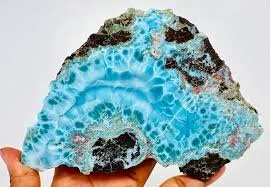
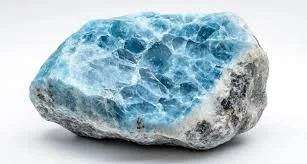
Lepidolite — Mineral & Scientific Information
Lepidolite is a lovely one — soft, shimmery, and very much a “gentle support” stone.
What it is
Lepidolite is a lithium-rich mica mineral in the phyllosilicate group. It is one of the most important natural sources of lithium and is easily recognized by its flaky structure and soft purple to pink coloration.
Chemical composition
Chemical formula: K(Li,Al)₃(Si,Al)₄O₁₀(F,OH)₂
Contains potassium, lithium, aluminum, silicon, oxygen, fluorine, and hydrogen
Crystal structure
Crystal system: monoclinic
Forms thin, platy, sheet-like crystals typical of mica
Often occurs in scaly or granular aggregates
Color and appearance
Lilac, lavender, pink, gray, or colorless
Pearly to vitreous luster
Transparent to translucent
Distinctive layered, flaky texture
Physical properties
Hardness: 2.5–4 on the Mohs scale
Cleavage: perfect in one direction (mica sheets)
Fracture: uneven
Specific gravity: ~2.8–2.9
Formation
Lepidolite forms in lithium-rich granite pegmatites, often alongside quartz, tourmaline, spodumene, and feldspar.
Geographic sources
Brazil
Madagascar
United States (California)
Russia
Zimbabwe
Uses and applications
Source of lithium
Jewelry (with care)
Decorative specimens
Industrial uses in ceramics and glass
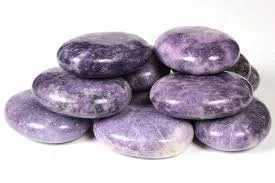
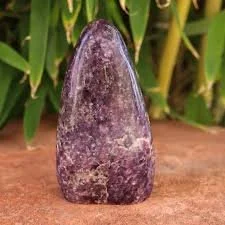
Lepidolite — Metaphysical Properties & Fun Facts
💜 Core Energy
Lepidolite is known as a stone of emotional balance and gentle transition. Its energy is soft, calming, and reassuring — like a quiet exhale 🌬️
😌 Stress Relief & Emotional Calm
Strongly associated with calming emotional overwhelm 🕊️
Believed to help soothe anxiety and tension 💭
Encourages emotional steadiness and calm thinking ⚖️
🌙 Emotional Healing & Release
Said to help release old emotional patterns 🔓
Supports letting go during times of change 🌱
Encourages acceptance and emotional resilience 💗
🧠 Mental Clarity & Balance
Believed to help balance thoughts and emotions 🧩
Encourages calm decision-making 🧠
Helpful during periods of mental fatigue or stress 🛋️
💫 Transition & Self-Care
Often associated with life transitions and personal growth 🌸
Encourages self-care and gentleness with oneself 🫶
Supports emotional boundaries and inner peace 🛡️
🧿 How People Work With Lepidolite
Carry or wear for emotional support 📿
Keep near the bed or workspace 🛏️
Use in meditation for calming and release 🧘♀️
Pair with grounding stones for stability 🪨
✨ Fun Facts
Contains lithium, which is associated with calming effects 🔋
Its name comes from the Greek lepidos, meaning “scale” 🐟
Can sparkle due to its mica layers ✨
Too soft for rough daily wear in jewelry ⚠️
🔮 Overall Vibe
Lepidolite is about calm, emotional balance, and gentle change 💜
It doesn’t rush healing — it supports it softly.
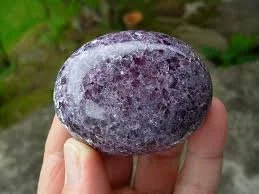
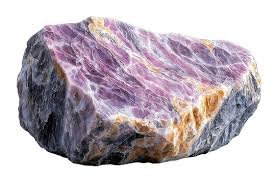
Magnesite — Mineral & Scientific Information
Magnesite is subtle, grounding, and often misunderstood.What it is
Magnesite is a magnesium carbonate mineral. It is an important industrial source of magnesium and is commonly found as massive, nodular material rather than well-formed crystals.
Chemical composition
Chemical formula: MgCO₃
Composed of magnesium, carbon, and oxygen
Crystal structure
Crystal system: trigonal (carbonate group)
Crystals are rare; usually massive or granular
Color and appearance
White, gray, yellowish, or brown
May show subtle veining
Opaque
Luster: dull to vitreous when polished
Physical properties
Hardness: 3.5–4.5 on the Mohs scale
Cleavage: perfect in three directions (rhombohedral)
Fracture: uneven
Specific gravity: ~3.0
Formation
Magnesite forms through alteration of magnesium-rich rocks or precipitation from magnesium-rich fluids. It can also form in sedimentary environments.
Geographic sources
Austria
China
Brazil
Australia
United States
Uses and applications
Source of magnesium
Refractory materials
Construction materials
Decorative stone and beads
Magnesite — Metaphysical Properties & Fun Facts
🤍 Core Energy
Magnesite is known as a stone of deep calm, grounding, and self-awareness. Its energy is quiet, stabilizing, and reflective — like still water 🌫️
😌 Relaxation & Stress Relief
Believed to help relax the nervous system 🕊️
Encourages calm thinking and emotional steadiness 🌬️
Helpful during stress, burnout, or overwhelm 🤍
🧠 Self-Reflection & Awareness
Said to support introspection and self-honesty 🪞
Encourages recognizing habits and patterns 🧩
Helps slow down reactive thinking 🐢
⚖️ Emotional Balance
Believed to help balance emotions and reduce tension ⚖️
Encourages patience and inner stability 🌱
Useful during emotional processing 🌊
🌙 Grounding & Sleep Support
Often associated with restful sleep 😴
Encourages mental quiet before bed 🌙
Helps ground scattered or anxious energy 🪨
🧿 How People Work With Magnesite
Carry or keep nearby for calming energy 📿
Use in meditation focused on grounding 🧘♀️
Keep near the bed for relaxation 🛏️
Pair with more active stones to soften intensity ⚡
✨ Fun Facts
Frequently dyed and sold as turquoise ❌
Often confused with howlite 🤍
Reacts weakly with acid when powdered 🧪
Named for its high magnesium content 🔬
🔮 Overall Vibe
Magnesite is about calm, grounding, and self-awareness 🤍
It doesn’t energize — it settles and centers.
Malachite — Mineral & Scientific Information
Ohhh, Malachite — bold, ancient, and not a gentle stone at all.What it is
Malachite is a copper carbonate hydroxide mineral known for its vivid green color and dramatic banded patterns. It is a secondary mineral that forms through the weathering and oxidation of copper ores.
Chemical composition
Chemical formula: Cu₂CO₃(OH)₂
Composed of copper, carbon, oxygen, and hydrogen
Crystal structure
Crystal system: monoclinic
Crystals are rare; typically occurs in fibrous, botryoidal, or massive forms
Color and appearance
Bright to deep green with banded, concentric, or swirling patterns
Opaque
Luster: silky to vitreous when polished
Physical properties
Hardness: 3.5–4 on the Mohs scale
Cleavage: perfect in one direction
Fracture: uneven
Specific gravity: ~3.6–4.0
Formation
Malachite forms in the oxidation zones of copper deposits, often alongside azurite, chrysocolla, and cuprite.
Geographic sources
Democratic Republic of Congo
Zambia
Russia
Australia
United States (Arizona)
Uses and applications
Jewelry and beads (with care)
Decorative carvings and inlay
Pigment (historically)
Copper ore indicator
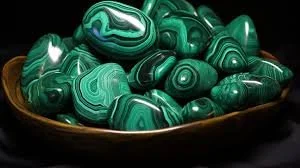
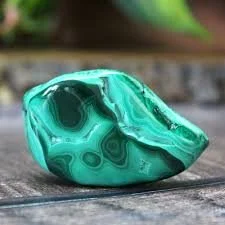
Malachite — Metaphysical Properties & Fun Facts
💚 Core Energy
Malachite is known as a stone of transformation and deep emotional truth. Its energy is intense, confrontational, and catalytic — it doesn’t tiptoe 🌪️
🔥 Transformation & Shadow Work
Believed to bring buried emotions to the surface 🔍
Encourages deep inner change and release 🔄
Often used during periods of major life transformation 🌋
🛡️ Protection & Energy Absorption
Traditionally worn as a protective stone 🧿
Said to absorb negative or heavy energy 🫧
Needs regular cleansing due to absorption 🔄
💔 Emotional Healing (Not Gentle)
Associated with the heart chakra 💚
Helps expose unhealthy patterns and emotional wounds 🪞
Encourages accountability and emotional honesty ⚖️
🧠 Awareness & Empowerment
Believed to increase self-awareness and personal power 💪
Encourages breaking cycles and reclaiming autonomy 🚪
Helps identify emotional triggers 🎯
🧿 How People Work With Malachite
Use during therapy, journaling, or shadow work ✍️
Meditate briefly rather than long sessions 🧘♀️
Pair with grounding or calming stones 🪨
Avoid sleeping with it if sensitive 😴⚠️
✨ Fun Facts
Toxic in dust or raw form — don’t ingest or inhale ❌
Ancient Egyptians used it for amulets and eye makeup 👁️
Polished malachite has no two identical patterns 🌀
Fake malachite often has overly regular stripes 🚫
🔮 Overall Vibe
Malachite is about truth, transformation, and emotional reckoning 💚
It doesn’t soothe — it changes.
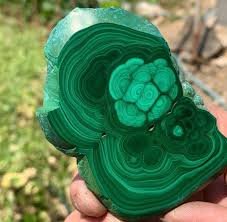
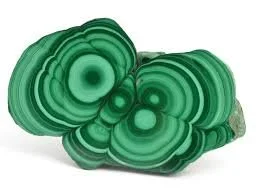
Marcasite — Mineral & Scientific Information
Marcasite is dramatic, historic, and a little misunderstood — sharp, metallic, and full of character.
What it is
Marcasite is an iron sulfide mineral with the same chemical formula as pyrite (FeS₂), but a different crystal structure. This structural difference gives marcasite very different physical behavior.
Chemical composition
Formula: FeS₂
Iron sulfide
Crystal structure
Crystal system: orthorhombic
Forms spear-shaped, tabular, or radiating crystals
Often occurs in cockscomb or fan-like clusters
Color and appearance
Pale brass-yellow to silvery metallic
Often lighter and whiter than pyrite
Opaque
Luster: metallic
Physical properties
Hardness: 6–6.5 on the Mohs scale
Brittle
Poor cleavage
Specific gravity: ~4.8–4.9
Stability note (important)
Marcasite is chemically unstable in humid conditions. It can oxidize, crumble, or produce sulfuric acid over time — a process known as marcasite decay.
Formation
Marcasite forms at low temperatures, often in:
-Sedimentary rocks
-Hydrothermal veins
-Fossil-bearing limestone and shale
-It typically forms in more acidic conditions than pyrite.
Geographic sources
United States
Germany
France
England
Czech Republic
Peru
Uses and applications
Historical jewelry (especially Victorian-era pieces)
Mineral specimens
Scientific study of sulfide minerals
Name origin
From the Arabic markaschita, historically used to describe pyrite-like minerals.
Marcasite — Metaphysical Properties & Fun Facts
⚔️✨ Core Energy
Marcasite is known as a stone of intellect, strategy, and mental precision. Its energy feels sharp, focused, and alert — like a blade of thought cutting through confusion
🧠 Mental Clarity & Focus
Encourages analytical thinking 🔍
Supports problem-solving and logic 🧩
Helps organize scattered thoughts 📐
🛡️ Protection & Boundaries
Often associated with psychic protection 🛡️
Helps deflect negative influences 🌑
Encourages strong energetic boundaries 🚧
🔥 Confidence & Presence
Encourages assertiveness 💪
Supports leadership and decisiveness 🎯
Helps stand firm in one’s position ⚖️
🌑 Shadow Work & Awareness
Aids in confronting hidden fears 🪞
Encourages honesty with oneself 🔎
Supports growth through awareness 🌱
🧿 How People Work With Marcasite
Use during study or strategic planning 📚
Keep near workspaces for mental focus 🖥️
Meditate briefly (not long sessions) 🧘♂️
Pair with grounding stones 🪨
✨ Fun Facts
Many “marcasite” jewelry pieces are actually pyrite 💍
Popular in Victorian mourning jewelry 🕯️
Can self-destruct if stored improperly ⚠️
Often found replacing fossils 🐚
🔮 Overall Vibe
Marcasite is about precision, awareness, and mental edge ⚔️
It’s not soft or soothing — it’s sharp and intentional.

Mookaite — Mineral & Scientific Information
Ooo, Mookaite — earthy, warm, and quietly powerful.What it is
Mookaite (also spelled mookite) is a variety of jasper, which is an opaque form of chalcedony (microcrystalline quartz, SiO₂). It is known for its rich, earthy color palette and originates from a specific region in Australia.
Chemical composition
Chemical formula: SiO₂
Contains mineral impurities such as iron oxides that create its red, yellow, brown, and cream colors
Crystal structure
Crystal system: trigonal (quartz family)
Microcrystalline structure with no visible crystals
Color and appearance
Red, mustard yellow, cream, white, brown, and purple tones
Often multi-colored with smooth, flowing patterns
Opaque
Luster: dull to vitreous when polished
Physical properties
Hardness: 6.5–7 on the Mohs scale
Cleavage: none
Fracture: conchoidal
Specific gravity: ~2.6
Formation
Mookaite formed from siliceous sediments deposited in ancient shallow seas. Over time, these sediments solidified into jasper rich in microfossils and mineral inclusions.
Geographic sources
Western Australia (near Mooka Creek) — the primary and defining source
Uses and applications
Jewelry and beads
Cabochons
Decorative carvings
Collector stone due to locality specificity
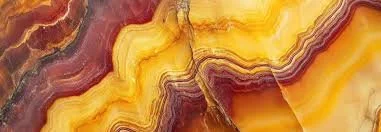
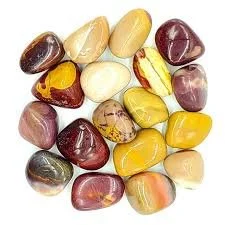
Mookaite — Metaphysical Properties & Fun Facts
🌍 Core Energy
Mookaite is known as a stone of grounding, vitality, and balanced decision-making. Its energy feels warm, steady, and supportive — like solid earth under your feet 🍂
🧭 Stability & Grounding
Believed to anchor energy and provide emotional stability 🪨
Helps stay centered during change ⚖️
Encourages confidence without rigidity 🌱
🔥 Vitality & Motivation
Said to support physical energy and stamina 💪
Encourages enthusiasm and life force 🔥
Helpful during periods of fatigue or low motivation 🌞
🧠 Decision-Making & Clarity
Encourages thoughtful, grounded choices 🧩
Helps balance intuition with logic ⚖️
Useful when facing big decisions or uncertainty 🛤️
🌊 Emotional Balance
Said to help regulate emotional highs and lows 🌊
Encourages emotional resilience and adaptability 🌾
Supports calm responses rather than reactive ones 🕊️
🧿 How People Work With Mookaite
Carry daily for grounding and vitality 📿
Meditate with it during times of change 🧘♀️
Use in goal-setting or planning sessions ✍️
Pair with higher-energy stones for balance ⚡
✨ Fun Facts
Named after Mooka Creek in Australia
Sometimes called “Australian Jasper” 🌍
Colors are completely natural — no dye needed 🎨
Often contains ancient microfossils 🦠
🔮 Overall Vibe
Mookaite is about grounded vitality and confident movement forward 🌍
It doesn’t rush or resist — it supports steady progress.
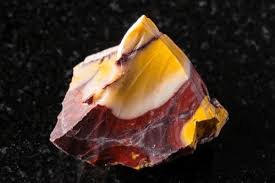
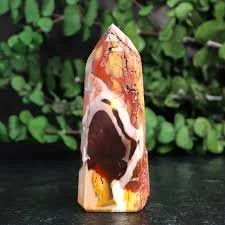
Moonstone — Mineral & Scientific Information
Moonstone is such a classic — soft, luminous, and quietly powerful.What it is
Moonstone is a variety of feldspar, most commonly belonging to the orthoclase or albite feldspar groups. It is famous for its optical effect called adularescence, a soft, glowing sheen that appears to float beneath the surface.
Chemical composition
Chemical formula: KAlSi₃O₈ (orthoclase) or NaAlSi₃O₈ (albite)
Member of the feldspar mineral family
Crystal structure
Crystal system: monoclinic
Typically occurs in massive or granular form rather than visible crystals
Color and appearance
Colorless, white, peach, gray, pink, green, or black
Adularescence appears as white, blue, or silvery glow
Transparent to translucent
Luster: vitreous to pearly
Physical properties
Hardness: 6–6.5 on the Mohs scale
Cleavage: two directions, good
Fracture: uneven to subconchoidal
Specific gravity: ~2.6
Formation
Moonstone forms in igneous rocks, particularly pegmatites, where slow cooling allows feldspar layers to form the structures responsible for adularescence.
Geographic sources
Sri Lanka
India
Madagascar
Myanmar
United States
Uses and applications
Jewelry (cabochons are most common)
Decorative stones
Mineral collections
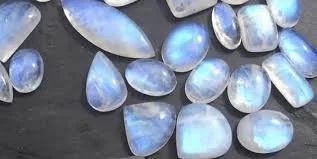
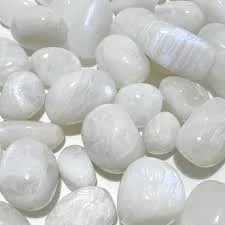
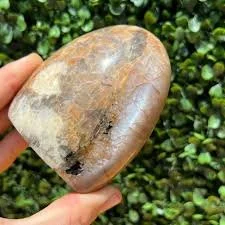
Moonstone — Metaphysical Properties & Fun Facts
🌙 Core Energy
Moonstone is known as a stone of intuition, cycles, and emotional balance. Its energy feels soft, reflective, and deeply connected to inner rhythms ✨
👁️ Intuition & Inner Awareness
Strongly associated with the third eye 👁️
Believed to enhance intuition and inner guidance 🔮
Encourages trust in subtle feelings and instincts 🌊
🌊 Emotional Balance
Said to soothe emotional stress and mood swings 🕊️
Encourages emotional flow rather than suppression 💧
Helpful during emotionally sensitive times 🤍
🌸 New Beginnings & Cycles
Often associated with new starts and transitions 🌱
Encourages acceptance of change and natural cycles 🔄
Symbolizes renewal and growth 🌼
💞 Feminine & Lunar Energy
Linked to feminine energy and lunar cycles 🌕
Encourages nurturing, compassion, and receptivity 💗
Supports emotional intelligence and empathy 🌙
🧿 How People Work With Moonstone
Wear as jewelry for emotional balance 📿
Meditate with it during reflection or intention-setting 🧘♀️
Carry during times of change 🌒
Pair with grounding stones to stay centered 🪨
✨ Fun Facts
The glow comes from light scattering between feldspar layers ✨
Blue flash moonstone is especially prized 💙
Ancient cultures believed moonstone was made of moonlight 🌕
Black moonstone has a more grounding feel 🖤
🔮 Overall Vibe
Moonstone is about intuition, balance, and gentle transformation 🌙
It doesn’t force change — it flows with it.
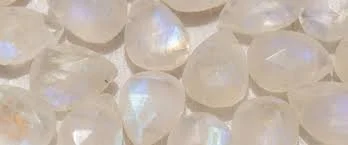
Morganite — Mineral & Scientific Information
Morganite is a beautiful one — soft, elegant, and emotionally rich.What it is
Morganite is the pink to peach variety of beryl, the same mineral family as emerald and aquamarine. It is valued for its delicate color and high clarity.
Chemical composition
Chemical formula: Be₃Al₂Si₆O₁₈
Trace amounts of manganese give morganite its pink coloration
Crystal structure
Crystal system: hexagonal
Forms prismatic crystals with hexagonal cross-sections
Color and appearance
Pale pink, peach, salmon, and light violet-pink
Transparent to translucent
Luster: vitreous
Often very clear compared to other beryls
Physical properties
Hardness: 7.5–8 on the Mohs scale
Cleavage: poor
Fracture: conchoidal
Specific gravity: ~2.7–2.9
Formation
Morganite forms in granite pegmatites, where slow cooling allows large, well-formed beryl crystals to grow.
Geographic sources
Brazil
Madagascar
Afghanistan
Mozambique
United States (California)
Uses and applications
Fine jewelry
Collector gemstones
Occasionally heat-treated to enhance pink color
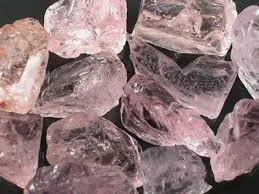
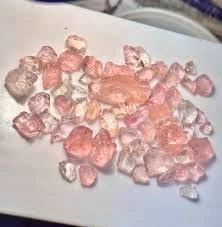
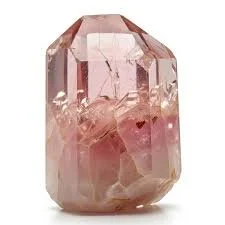
Morganite — Metaphysical Properties & Fun Facts
💗 Core Energy
Morganite is known as a stone of divine love, compassion, and emotional healing. Its energy is gentle but deeply supportive — loving without being overwhelming 🌸
💞 Heart Healing & Love
Strongly associated with the heart chakra 💗
Encourages unconditional love, forgiveness, and empathy 🤍
Helps soften emotional wounds and old heartbreak 💧
🕊️ Emotional Calm & Peace
Believed to reduce stress and emotional tension 🌬️
Encourages emotional clarity and gentle communication ⚖️
Helpful during conflict or emotional sensitivity 🌷
🌸 Self-Love & Worth
Said to support self-compassion and emotional boundaries 🌱
Encourages feeling worthy of love and kindness 💕
Helps release fear around vulnerability 🛡️
🌌 Spiritual Love & Alignment
Often linked to higher heart energy ✨
Encourages love aligned with wisdom and truth 🌙
Supports emotional growth without intensity 🌿
🧿 How People Work With Morganite
Wear near the heart for continuous gentle energy 📿
Meditate with it during self-love or forgiveness practices 🧘♀️
Use during relationship healing or emotional renewal 💞
Pair with grounding stones to balance softness 🪨
✨ Fun Facts
Named after financier and gem collector J.P. Morgan 👑
Often heat-treated to remove yellow tones 🔥
Pink beryl was once mistaken for rose quartz ❌
Popular in engagement rings for its soft romantic look 💍
🔮 Overall Vibe
Morganite is about love, gentleness, and emotional clarity 💗
It doesn’t demand — it invites.
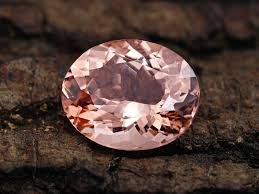
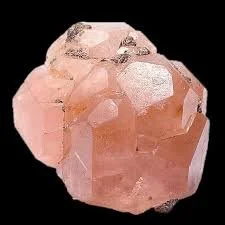
Nuummite — Mineral & Scientific Information
Nuummite is a deep-earth, ancient stone with a totally different vibe from the soft heart stones — powerful, mysterious, and grounding.What it is
Nuummite is a metamorphic rock, not a single mineral. It is composed primarily of anthophyllite and gedrite, which are amphibole minerals. Nuummite is considered one of the oldest rocks on Earth, dating back nearly 3 billion years.
Chemical composition
Mainly magnesium-iron silicate minerals (anthophyllite & gedrite)
Complex and variable composition due to its metamorphic origin
Crystal structure
Amphibole crystal systems (orthorhombic to monoclinic, depending on mineral)
Occurs as massive rock rather than distinct crystals
Color and appearance
Opaque
Dark black to charcoal gray
Displays iridescent flashes of gold, copper, blue, green, or silver when polished
Luster: submetallic to vitreous on polished surfaces
Physical properties
Hardness: ~5.5–6 on the Mohs scale
Cleavage: poor to indistinct
Fracture: uneven
Specific gravity: ~3.0–3.2
Formation
Nuummite formed through high-grade metamorphism of ancient volcanic rock. Extreme heat and pressure caused mineral layers to align, creating its distinctive shimmering effect.
Geographic sources
Greenland (near Nuuk — the original and most valued source)
Small deposits reported in Canada, Spain, and the United States (often debated in authenticity)
Uses and applications
Cabochons and carvings
Collector specimens
Occasionally used in jewelry, typically set protectively
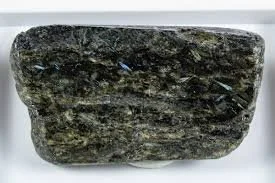
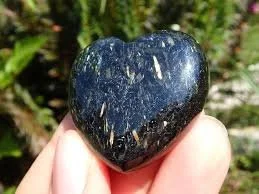
Nuummite — Metaphysical Properties & Fun Facts
🌑 Core Energy
Nuummite is known as a stone of deep protection, shadow work, and ancient wisdom. Its energy feels dense, grounding, and intensely introspective 🖤
🛡️ Protection & Shielding
Believed to create strong energetic protection 🧿
Helps block negative influences and psychic drain 🚫
Often used as a spiritual “shield” stone 🛡️
🕳️ Shadow Work & Inner Power
Encourages facing suppressed emotions and fears 🕯️
Supports deep self-reflection and transformation 🔥
Helps reclaim personal power hidden in the subconscious 🌘
🌍 Grounding & Stability
Strongly grounding and earth-anchoring 🪨
Helps stabilize emotions during intense inner work ⚖️
Useful when feeling scattered or overwhelmed 🌑
🧠 Wisdom & Personal Mastery
Said to enhance self-control and discipline 🧭
Encourages accountability and conscious choice 🧩
Supports spiritual growth through self-awareness 📜
🧿 How People Work With Nuummite
Use during deep meditation or shadow work 🧘♂️
Carry for energetic protection (not all day for everyone) 📿
Pair with lighter stones to balance intensity 🌙
Best used intentionally rather than casually ⚠️
✨ Fun Facts
Named after Nuuk, Greenland 🧊
Sometimes called the “Sorcerer’s Stone” 🪄
One of the oldest known stones used in metaphysical practice ⏳
Genuine Greenland nuummite is increasingly rare 💎
🔮 Overall Vibe
Nuummite is about inner strength, protection, and deep transformation 🌑
It doesn’t comfort — it empowers.
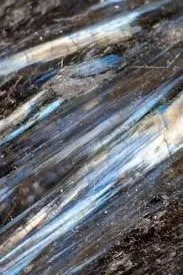
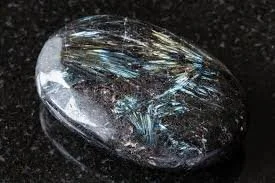
Obsidian — Mineral & Scientific Information
Obsidian is a classic power stone — raw, honest, and deeply grounding.What it is
Obsidian is volcanic glass, not a true mineral, because it lacks a crystalline structure. It forms when felsic lava cools so rapidly that atoms do not have time to arrange into crystals.
Chemical composition
Primarily silicon dioxide (SiO₂)
Contains small amounts of iron, magnesium, and other elements that affect color
Structure
Amorphous (non-crystalline)
Classified as a mineraloid rather than a mineral
Color and appearance
Typically black
Can also be brown, green, gray, or reddish
Variations include snowflake, rainbow, gold sheen, and mahogany obsidian
Opaque to translucent in thin edges
Luster: vitreous (glassy)
Physical properties
Hardness: ~5–5.5 on the Mohs scale
Cleavage: none
Fracture: conchoidal (very sharp edges)
Specific gravity: ~2.3–2.6
Formation
Obsidian forms from silica-rich lava that cools almost instantly, preventing crystal growth. This rapid quenching creates its smooth, glassy texture.
Geographic sources
Mexico
United States (Arizona, Oregon, California)
Iceland
Italy
Japan
Uses and applications
Jewelry and carvings
Cutting tools and weapons in ancient cultures
Surgical scalpels (due to ultra-sharp edges)
Decorative and collector pieces
Obsidian — Metaphysical Properties & Fun Facts
🖤 Core Energy
Obsidian is known as a stone of truth, protection, and deep grounding. Its energy is intense, direct, and unapologetically honest 🌑
🛡️ Protection & Shielding
Believed to absorb and block negative energy 🧿
Acts as a strong energetic shield 🛡️
Often used for grounding after emotional or spiritual work 🌍
🪞Truth & Shadow Work
Encourages self-reflection and truth-seeing 🪞
Helps uncover hidden patterns or suppressed emotions 🕳️
Supports shadow work and personal transformation 🔥
⚖️ Emotional Grounding
Helps stabilize intense emotions 🌊
Encourages emotional clarity rather than avoidance 🧠
Can feel intense — best used with intention ⚠️
🌋 Strength & Release
Helps release emotional blockages and old attachments 💥
Encourages resilience and inner strength 🧗♂️
Supports letting go of what no longer serves you 🍂
🧿 How People Work With Obsidian
Carry for protection and grounding 📿
Use during journaling or introspective meditation ✍️
Place near entryways for energetic protection 🚪
Pair with gentler stones to balance intensity 🌙
✨ Fun Facts
Obsidian blades are sharper than steel 🔪
Used by ancient civilizations like the Aztecs and Maya 🏺
Snowflake obsidian contains cristobalite crystals ❄️
Forms in seconds but lasts for millions of years ⏳
🔮 Overall Vibe
Obsidian is about truth, protection, and grounded power 🖤
It doesn’t sugarcoat — it reveals.
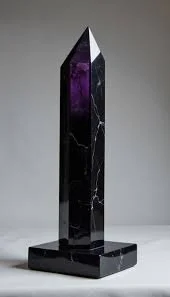
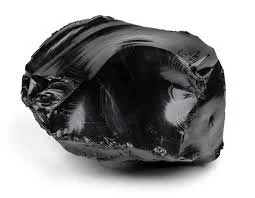
Onyx — Mineral & Scientific Information
Onyx is sleek, steady, and quietly powerful — a true classic.What it is
Onyx is a banded variety of chalcedony, which is microcrystalline quartz (SiO₂). True onyx is defined by its parallel banding, traditionally black and white, though many commercial onyx stones are dyed.
Chemical composition
Chemical formula: SiO₂
Member of the quartz family
Crystal structure
Crystal system: trigonal (quartz)
Microcrystalline, with crystals too small to see
Color and appearance
Typically black with white bands
Also occurs in brown, red, green, or gray banding
Opaque
Luster: waxy to vitreous when polished
Physical properties
Hardness: 6.5–7 on the Mohs scale
Cleavage: none
Fracture: conchoidal
Specific gravity: ~2.6
Formation
Onyx forms in volcanic cavities and sedimentary environments where silica-rich solutions deposit layers of chalcedony over time, creating its signature banding.
Geographic sources
Brazil
India
Madagascar
Mexico
United States
Uses and applications
Jewelry and beads
Cameos and carvings
Decorative stonework
Architectural inlays
Onyx — Metaphysical Properties & Fun Facts
🖤 Core Energy
Onyx is known as a stone of strength, grounding, and self-mastery. Its energy is calm, controlled, and stabilizing — less explosive than obsidian, more disciplined 🗿
🛡️ Protection & Stability
Believed to absorb negative energy 🧿
Helps create emotional and energetic boundaries 🛡️
Encourages grounded confidence 🌍
🧠 Focus & Discipline
Said to support concentration and mental clarity 🎯
Encourages perseverance and follow-through 🧗♀️
Helpful during long-term goals or difficult tasks 📚
⚖️ Emotional Balance
Helps stabilize intense emotions 🌊
Encourages calm decision-making 🧩
Supports emotional resilience during stress 🕊️
🌑 Inner Strength & Self-Control
Encourages personal responsibility and self-mastery 🧭
Helps release self-doubt and fear 💪
Associated with quiet, steady confidence 🖤
🧿 How People Work With Onyx
Wear for daily grounding and protection 📿
Use during focus-intensive work or study 📝
Pair with heart stones for emotional balance 💗
Keep near your workspace for stability 🖥️
✨ Fun Facts
True onyx has straight, parallel bands — not swirls 🧱
Many black onyx stones are dyed chalcedony 🎨
Used in ancient Roman cameos 🏛️
Often confused with obsidian (they’re very different!) ❌
🔮 Overall Vibe
Onyx is about steadiness, discipline, and quiet strength 🖤
It doesn’t confront — it grounds and fortifies.
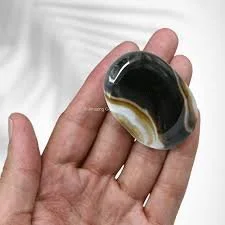
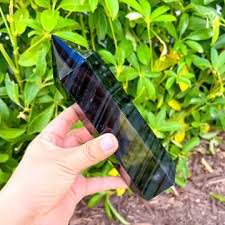
Opal — Mineral & Scientific Information
Opal is pure magic-in-stone form — complex, delicate, and endlessly fascinating.What it is
Opal is a mineraloid, not a true mineral, because it lacks a crystalline structure. It is composed of hydrated amorphous silica and is famous for its optical phenomenon called play-of-color.
Chemical composition
Chemical formula: SiO₂·nH₂O
Water content typically ranges from 3% to over 20%
Structure
Amorphous (non-crystalline)
Classified as a mineraloid
Color and appearance
Colorless, white, black, gray, blue, green, pink, yellow, orange, and red
Displays play-of-color due to light diffraction within silica spheres
Transparent to opaque
Luster: vitreous to resinous
Physical properties
Hardness: 5.5–6.5 on the Mohs scale
Cleavage: none
Fracture: conchoidal to uneven
Specific gravity: ~1.9–2.3
Formation
Opal forms when silica-rich water fills cracks and cavities in rock. As the water evaporates, silica spheres settle into a regular arrangement, producing play-of-color when conditions are right.
Geographic sources
Australia (dominant global source)
Ethiopia
Mexico
Brazil
United States
Uses and applications
Fine jewelry
Collector specimens
Decorative carvings
Gemstone inlay work
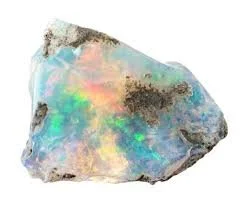
Opal — Metaphysical Properties & Fun Facts
🌈 Core Energy
Opal is known as a stone of amplification, creativity, and emotional expression. Its energy reflects whatever you bring to it — magnifying feelings, thoughts, and intentions ✨
🎨 Creativity & Inspiration
Strongly associated with artistic expression 🎭
Encourages originality and imagination 🌟
Helps break creative blocks 🧠💥
💗 Emotional Amplification
Intensifies emotions — both joyful and challenging 🌊
Encourages emotional honesty and release 🕊️
Best used when emotionally grounded ⚖️
🔮 Intuition & Spiritual Insight
Believed to enhance intuition and psychic awareness 👁️
Supports dream work and inner exploration 🌙
Encourages connection to subtle energies ✨
🦋 Transformation & Authenticity
Encourages self-expression and authenticity 🦋
Helps release fear of being seen or judged 🎭
Supports personal transformation 🌱
🧿 How People Work With Opal
Wear during creative or expressive work 📿
Meditate with intention and grounding 🧘♀️
Pair with grounding stones to stabilize energy 🪨
Set clear intentions before use 📝
✨ Fun Facts
Ancient Romans believed opal combined the beauty of all gemstones 🏛️
Australia produces over 90% of the world’s opals 🇦🇺
Opal is October’s birthstone 🎂
Opals contain water — they can dry out if not cared for 💧
🔮 Overall Vibe
Opal is about expression, reflection, and emotional depth 🌈
It doesn’t hide anything — it reveals everything in color.
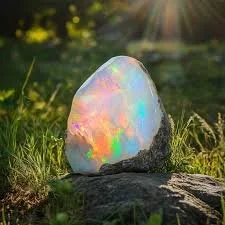
Peridot — Mineral & Scientific Information
Peridot is bright, ancient, and surprisingly fiery for such a fresh green stone.What it is
Peridot is the gem-quality variety of olivine, a magnesium iron silicate mineral. Unlike most gemstones, peridot’s green color is inherent to its chemical composition, not caused by trace impurities.
Chemical composition
Chemical formula: (Mg,Fe)₂SiO₄
The ratio of magnesium to iron controls color intensity
Crystal structure
Crystal system: orthorhombic
Typically forms short prismatic or granular crystals
Color and appearance
Yellow-green to olive-green
Transparent to translucent
Luster: vitreous
Color remains consistent under different lighting
Physical properties
Hardness: 6.5–7 on the Mohs scale
Cleavage: poor
Fracture: conchoidal to uneven
Specific gravity: ~3.3–3.4
Formation
Peridot forms deep in the Earth’s mantle and is brought to the surface through volcanic activity. It can also be found in meteorites, making it one of the few gemstones with extraterrestrial origins.
Geographic sources
United States (Arizona)
China
Myanmar
Pakistan
Egypt
Uses and applications
Fine and commercial jewelry
Collector specimens
Historically used as decorative gemstone in ancient cultures
Peridot — Metaphysical Properties & Fun Facts
💚 Core Energy
Peridot is known as a stone of renewal, vitality, and emotional cleansing. Its energy feels light, refreshing, and uplifting — like a deep breath of fresh air 🌿
🌱 Renewal & Growth
Encourages personal growth and fresh starts 🌱
Helps release old emotional patterns 🍃
Supports forward momentum and change 🚀
💥 Emotional Cleansing
Said to clear emotional baggage and resentment 🧹
Encourages forgiveness and emotional lightness 🤍
Helps release jealousy or bitterness 🌊
🔥 Confidence & Empowerment
Encourages self-worth and confidence 💪
Supports standing in your own power 🌟
Helps dissolve self-doubt and insecurity 🧠
☀️ Joy & Positivity
Associated with happiness and optimism 🌞
Encourages openness and enthusiasm 😄
Helps shift perspective toward hope 🌈
🧿 How People Work With Peridot
Wear daily for positivity and renewal 📿
Meditate with it during transitions 🧘♀️
Use when setting goals or intentions 🌟
Pair with grounding stones for balance 🪨
✨ Fun Facts
Known as the “evening emerald” due to its glow under lamplight 🕯️
Used in ancient Egyptian jewelry 🏺
Found in meteorites called pallasites ☄️
August’s birthstone 🎂
🔮 Overall Vibe
Peridot is about lightness, renewal, and joyful forward movement 💚
It doesn’t linger — it lifts.
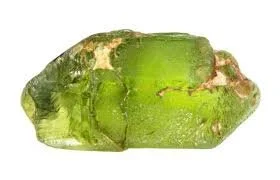
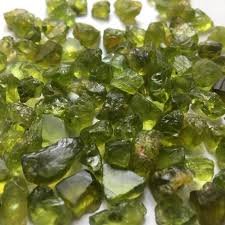
Petrified Palm Root — Mineral & Scientific Information
Ooo, petrified palm root is a great one — ancient, grounding, and surprisingly intricate.What it is
Petrified palm root is a type of fossilized plant material, not a true mineral. It forms when the roots of ancient palm trees are gradually replaced by silica-rich minerals, turning organic tissue into stone while preserving internal structure.
Chemical composition
Primarily silicon dioxide (SiO₂)
Often classified as a form of chalcedony or jasper
May contain iron oxides and other mineral inclusions
Structure
Microcrystalline quartz structure
Preserves the fibrous, cellular patterns of palm root tissue
Opaque
Color and appearance
Brown, tan, cream, gray, black, or golden hues
Distinctive circular or dotted “rod” patterns
Often shows a spotted or honeycomb texture
Luster: dull to vitreous when polished
Physical properties
Hardness: ~6.5–7 on the Mohs scale
Cleavage: none
Fracture: conchoidal to uneven
Specific gravity: ~2.6
Formation
Petrified palm root formed millions of years ago when palm roots were buried by sediment. Silica-rich groundwater slowly replaced organic material cell by cell, preserving the internal structure while converting it into stone.
Geographic sources
Indonesia (primary source)
Texas (United States)
Other tropical regions with ancient palm forests
Uses and applications
Cabochons and beads
Decorative carvings
Collector specimens
Jewelry with earthy, organic patterns
Petrified Palm Root — Metaphysical Properties & Fun Facts
🌴 Core Energy
Petrified palm root is known as a stone of grounding, resilience, and ancestral connection. Its energy feels steady, ancient, and deeply rooted 🌍
🪨 Grounding & Stability
Strong grounding energy that connects to Earth wisdom 🌍
Encourages emotional stability and calm ⚖️
Helpful during periods of stress or change 🌾
🌱 Resilience & Growth
Symbolizes endurance through time 🌳
Encourages patience and steady progress 🐢
Supports growth built on strong foundations 🧱
🧬 Ancestral & Earth Connection
Said to support connection to ancestral or past-life wisdom 🕯️
Encourages respect for cycles of life and time ⏳
Deepens awareness of natural rhythms 🌊
🧠 Balance & Perspective
Helps bring long-term perspective to challenges 🧩
Encourages grounded decision-making 🧭
Reduces emotional overwhelm 🌬️
🧿 How People Work With Petrified Palm Root
Use during grounding meditation 🧘♀️
Carry for stability and patience 📿
Place in home or workspace for calm, rooted energy 🏡
Pair with higher-energy stones for balance ⚡
✨ Fun Facts
Technically a fossil, not just a stone 🦴
Patterns reflect ancient palm root structures 🌴
Sometimes called fossil palm or palmwood ❌ (not the same as petrified palm wood)
Each piece is millions of years old ⏳
🔮 Overall Vibe
Petrified palm root is about deep roots, patience, and timeless stability 🌍
It doesn’t rush — it endures.
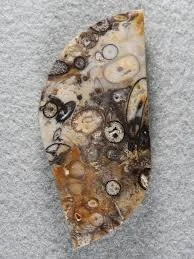
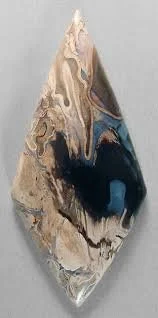
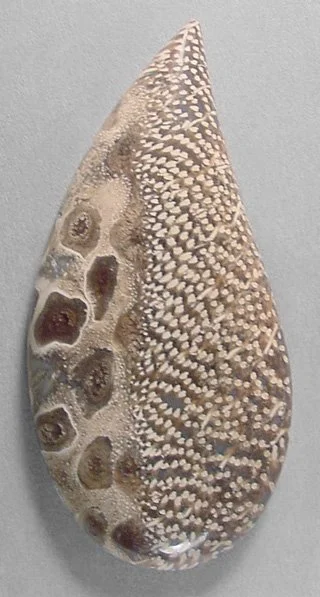
Petrified Wood — Mineral & Scientific Information
Petrified wood is a classic earth stone — ancient, steady, and quietly awe-inspiring.What it is
Petrified wood is a type of fossil, formed when ancient trees are buried by sediment and gradually replaced by minerals. While it retains the original wood structure, the organic material is replaced primarily by silica, turning the wood into stone.
Chemical composition
Primarily silicon dioxide (SiO₂)
Often classified as chalcedony, jasper, or opalized silica
Trace minerals (iron, manganese, carbon) influence color
Structure
Microcrystalline quartz structure
Preserves original wood grain, rings, and cellular detail
Opaque
Color and appearance
Brown, tan, red, yellow, gray, black, white, and multicolored
Wood grain patterns, knots, and growth rings visible
Luster: dull to vitreous when polished
Physical properties
Hardness: ~6.5–7 on the Mohs scale
Cleavage: none
Fracture: conchoidal to uneven
Specific gravity: ~2.3–2.6
Formation
Petrified wood forms through permineralization. After burial, mineral-rich groundwater slowly replaces organic wood tissue cell by cell, preserving structure while converting it into stone over millions of years.
Geographic sources
United States (Arizona, Utah)
Indonesia
Madagascar
Argentina
Australia
Uses and applications
Decorative slabs and carvings
Jewelry and cabochons
Educational specimens
Collector pieces
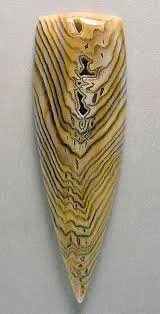
Petrified Wood — Metaphysical Properties & Fun Facts
🌳 Core Energy
Petrified wood is known as a stone of grounding, patience, and ancestral wisdom. Its energy feels steady, reassuring, and deeply connected to Earth’s long memory 🌍
🪨 Grounding & Stability
Strong grounding energy that anchors emotions 🌍
Helps bring calm during stress or uncertainty ⚖️
Encourages feeling safe and supported 🛖
⏳ Patience & Endurance
Symbolizes slow growth and resilience 🐢
Encourages long-term thinking and persistence 🧱
Helps release the urge to rush outcomes 🍂
🧬 Ancestral & Past Wisdom
Said to connect to ancestral or Earth wisdom 🕯️
Encourages respect for life cycles and time ⏳
Supports reflection on personal roots 🌱
🧠 Balance & Perspective
Helps see challenges from a broader viewpoint 🧩
Encourages grounded, thoughtful decisions 🧭
Reduces emotional overwhelm 🌬️
🧿 How People Work With Petrified Wood
Meditate with it for grounding 🧘♀️
Keep in home or workspace for stability 🏡
Carry during times of change or transition 📿
Pair with higher-energy stones for balance ⚡
✨ Fun Facts
Can preserve microscopic wood cell details 🔬
Some specimens are over 200 million years old 🦖
Arizona’s Petrified Forest is a national park
Often mistaken for regular wood — but it’s stone solid 🪨
🔮 Overall Vibe
Petrified wood is about steadiness, patience, and deep-rooted strength 🌳
It reminds you that lasting growth takes time — and that’s okay.
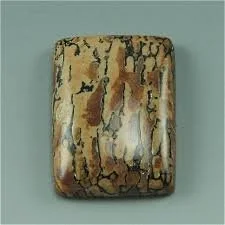
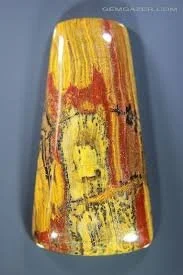
Pietersite — Mineral & Scientific Information
Pietersite is dramatic, stormy, and powerful — often called the tempest stone.What it is
Pietersite is a brecciated variety of chalcedony containing fibrous amphibole minerals, primarily crocidolite (and sometimes riebeckite), that have been silicified. It is closely related to tiger’s eye and hawk’s eye but differs in structure.
Chemical composition
Base material: silicon dioxide (SiO₂)
Fibrous inclusions of crocidolite (silicified)
Iron content contributes to gold and red tones
Crystal structure
Trigonal (quartz family)
Microcrystalline structure
Occurs as massive material rather than crystals
Color and appearance
Blue, gold, red, brown, black, and gray
Chaotic, swirling patterns rather than straight bands
Strong chatoyancy (silky, flashing effect)
Opaque
Luster: silky to vitreous when polished
Physical properties
Hardness: ~6.5–7 on the Mohs scale
Cleavage: none
Fracture: conchoidal
Specific gravity: ~2.6–2.8
Formation
Pietersite formed when fibrous amphibole minerals were broken, distorted, and re-cemented by silica during intense geological activity. This brecciation gives pietersite its storm-like appearance.
Geographic sources
Namibia (primary and most valued source)
China (more recently discovered)
Uses and applications
Cabochons and beads
Jewelry and pendants
Collector stones
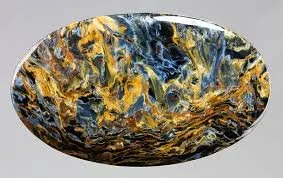
Pietersite — Metaphysical Properties & Fun Facts
🌪️ Core Energy
Pietersite is known as a stone of transformation, clarity, and inner vision. Its energy feels intense and dynamic — like standing in the eye of a storm 🌩️
🧠 Mental Clarity & Focus
Said to cut through confusion and mental fog ⚡
Encourages sharp thinking and insight 🧩
Helpful during complex problem-solving 🧠
👁️ Intuition & Vision
Strongly associated with the third eye 👁️
Enhances intuitive perception and inner guidance 🔮
Supports visionary thinking and awareness 🌌
🔥 Transformation & Change
Encourages release of old beliefs and patterns 💥
Supports courage during major life shifts 🛤️
Helps integrate chaos into clarity 🌈
🛡️ Confidence & Personal Power
Encourages standing in your truth 💪
Helps overcome fear and self-doubt 🦁
Supports assertive, grounded action ⚖️
🧿 How People Work With Pietersite
Meditate with intention and grounding 🧘♀️
Use during times of rapid change 🌪️
Pair with grounding stones like hematite or onyx 🪨
Best used consciously due to intensity ⚠️
✨ Fun Facts
Named after Sid Pieters, who discovered it in Namibia 🇳🇦
Often called the “Tempest Stone” 🌩️
Pattern chaos distinguishes it from tiger’s eye 🌀
Each piece looks like a frozen storm 🌪️
🔮 Overall Vibe
Pietersite is about clarity through chaos and empowered transformation 🌪️
It doesn’t calm the storm — it teaches you how to stand in it.
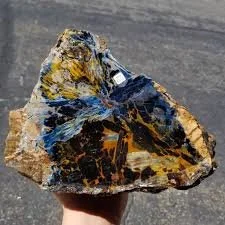
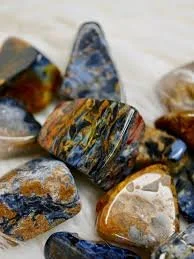
Prehnite — Mineral & Scientific Information
Prehnite has such a gentle but wise energy — calm, clear, and quietly protective.What it is
Prehnite is a calcium aluminum silicate mineral often found lining cavities in volcanic rock. It is sometimes mistaken for jade due to its color, but it is a distinct mineral species.
Chemical composition
Chemical formula: Ca₂Al₂Si₃O₁₀(OH)₂
Crystal structure
Crystal system: orthorhombic
Typically forms botryoidal (grape-like), globular, or stalactitic masses
Rarely found as distinct crystals
Color and appearance
Pale green, yellow-green, apple green, or gray
Translucent to transparent
Often has a soft, waxy or pearly luster
Physical properties
Hardness: 6–6.5 on the Mohs scale
Cleavage: poor
Fracture: uneven to subconchoidal
Specific gravity: ~2.8–2.9
Formation
Prehnite forms as a secondary mineral in low-grade metamorphic and hydrothermal environments, commonly associated with zeolites in basalt cavities.
Geographic sources
Australia
South Africa
Mali
China
United States
Uses and applications
Jewelry (cabochons and beads)
Collector specimens
Decorative stones
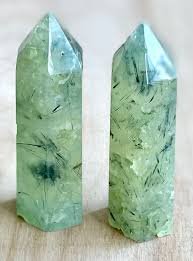
Prehnite — Metaphysical Properties & Fun Facts
💚 Core Energy
Prehnite is known as a stone of unconditional love, intuition, and gentle protection. Its energy feels calm, nurturing, and quietly empowering 🌿
💞 Heart & Emotional Healing
Strongly associated with the heart chakra 💗
Encourages compassion, forgiveness, and emotional healing 🤍
Helps release emotional clutter 🧹
👁️ Intuition & Inner Knowing
Believed to enhance intuitive awareness 👁️
Helps connect heart and mind 🧠💚
Encourages trusting your inner guidance 🔮
🛡️ Gentle Protection
Said to create a calm, protective energetic field 🛡️
Helps maintain emotional boundaries 🌫️
Protective without being heavy or intense 🌱
🧘♀️ Peace & Organization
Encourages calm, centered states 🕊️
Helps with decluttering — emotionally and physically 📦
Supports mindfulness and intentional living 🌸
🧿 How People Work With Prehnite
Meditate with it for heart-centered awareness 🧘♀️
Keep near bed or altar for peaceful energy 🌙
Wear for gentle emotional support 📿
Pair with grounding stones for balance 🪨
✨ Fun Facts
One of the first minerals to be named after a person (Colonel Hendrik von Prehn) 🏷️
Often found alongside zeolites 🧬
Sometimes called the “Healer’s Stone” 🌿
Can resemble jade but is softer 💎
🔮 Overall Vibe
Prehnite is about calm intuition, love, and gentle protection 💚
It doesn’t demand attention — it quietly supports.
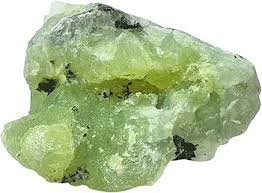
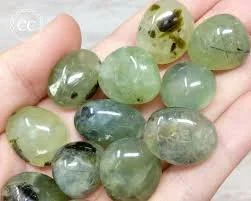
Prophecy Stone — Mineral & Scientific Information
Prophecy Stone is intense, ancient, and deeply mystical — very much a work-with-intention kind of stone.What it is
Prophecy Stone is a pseudomorph composed primarily of limonite and hematite, formed after the complete replacement of marcasite or pyrite crystals. It is not a single mineral, but a naturally altered mineral form.
Chemical composition
Iron oxides and hydroxides
Primarily FeO(OH) and Fe₂O₃
Composition reflects oxidation of iron-rich minerals
Crystal structure
Retains the external crystal shape of the original mineral (pseudomorphism)
Internal structure is amorphous to microcrystalline
Typically appears as nodular, spiky, or geometric forms
Color and appearance
Brown, reddish-brown, black, or rusty gold
Matte to earthy surface
Often asymmetrical or clustered
Opaque
Physical properties
Hardness: ~5–6 on the Mohs scale
Cleavage: none
Fracture: uneven
Specific gravity: ~3.5–4.0
Formation
Prophecy Stones formed when iron sulfide minerals underwent oxidation in desert environments. Over time, the original mineral dissolved and was replaced by iron oxides, preserving the external form while changing the internal chemistry.
Geographic sources
Egypt (White Desert) — primary and most recognized source
Uses and applications
Meditation and spiritual work
Collector specimens
Rarely used in jewelry due to fragile structure
Prophecy Stone — Metaphysical Properties & Fun Facts
🜃 Core Energy
Prophecy Stone is known as a stone of insight, awakening, and higher awareness. Its energy feels ancient, focused, and deeply inward — not flashy, but profound 🕯️
👁️ Intuition & Vision
Strongly associated with the third eye 👁️
Said to enhance intuitive perception and inner sight 🔮
Encourages clarity during meditation and reflection 🌌
🧠 Insight & Awareness
Helps access deep inner knowledge 📜
Encourages self-honesty and awareness 🪞
Supports seeing beyond surface-level understanding 🌫️➡️✨
🌌 Spiritual Awakening
Often used during spiritual study or initiation work 🧘♂️
Encourages alignment with higher purpose 🌠
Supports transformation through awareness 🐍
🌍 Grounded Mysticism
Despite its spiritual focus, it remains grounding 🪨
Helps integrate insights into daily life ⚖️
Prevents spiritual overwhelm 🌿
🧿 How People Work With Prophecy Stone
Meditate with it in quiet, intentional settings 🧘♀️
Use during journaling or insight work ✍️
Pair with grounding stones like hematite or obsidian 🪨
Best used in short, focused sessions ⚠️
✨ Fun Facts
Found almost exclusively in Egypt
Often forms in spiky or star-like shapes ✴️
Sometimes associated with ancient wisdom traditions 📜
Each piece is naturally sculpted by time and oxidation ⏳
🔮 Overall Vibe
Prophecy Stone is about seeing clearly, awakening awareness, and grounded insight
It doesn’t predict the future — it helps you understand the present more deeply.
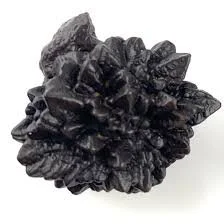
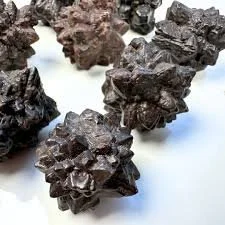
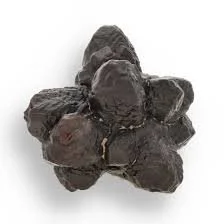
Pyrite — Mineral & Scientific Information
Pyrite is bold, brilliant, and deceptively simple — way more than “fool’s gold.”What it is
Pyrite is an iron sulfide mineral and one of the most common sulfide minerals on Earth. Its metallic luster and brassy yellow color often cause it to be mistaken for gold.
Chemical composition
Chemical formula: FeS₂
Iron disulfide
Crystal structure
Crystal system: isometric (cubic)
Common crystal forms include cubes, octahedrons, and pyritohedrons
Also occurs massive or granular
Color and appearance
Pale brass-yellow to gold
Opaque
Strong metallic luster
Often forms sharp, well-defined crystals
Physical properties
Hardness: 6–6.5 on the Mohs scale
Cleavage: none
Fracture: uneven to conchoidal
Specific gravity: ~4.9–5.2
Formation
Pyrite forms in a wide range of environments, including sedimentary, metamorphic, and igneous settings. It commonly develops in hydrothermal veins, coal beds, and as a replacement mineral.
Geographic sources
Spain
Peru
Italy
China
United States
Uses and applications
Source of sulfur and sulfuric acid
Educational and collector specimens
Jewelry and decorative objects (with care)
Historically used for fire-starting
Pyrite — Metaphysical Properties & Fun Facts
💛 Core Energy
Pyrite is known as a stone of confidence, protection, and manifestation. Its energy feels bold, energizing, and empowering — like flipping on a spotlight 🌟
💪 Confidence & Personal Power
Encourages self-confidence and assertiveness 🦁
Helps overcome fear and self-doubt 🚀
Supports stepping into leadership roles 👑
🛡️ Protection & Shielding
Believed to shield against negative energy 🧿
Helps block emotional and environmental stress 🛡️
Often used as a protective talisman 🪙
💰 Abundance & Manifestation
Strongly associated with wealth and abundance 💰
Encourages practical action toward goals 🧠➡️🏆
Supports manifestation rooted in effort 🌱
🧠 Focus & Motivation
Helps sharpen focus and mental clarity 🎯
Encourages persistence and productivity 📈
Great for work, study, or creative projects 📝
🧿 How People Work With Pyrite
Place on desk or workspace for motivation 🖥️
Carry for confidence and protection 📿
Use in goal-setting or manifestation practices ✍️
Pair with grounding stones for balance 🪨
✨ Fun Facts
Nicknamed “Fool’s Gold” 🤡💛
Pyrite sparks when struck against steel 🔥
Ancient cultures used it to start fires 🏺
Forms perfect natural cubes 📦
🔮 Overall Vibe
Pyrite is about confidence, action, and empowered manifestation 💛
It doesn’t promise success — it pushes you to earn it.
Quartz — Mineral & Scientific Information
Quartz is the backbone of the mineral world — simple chemistry, endless variety, and surprisingly powerful.What it is
Quartz is one of the most abundant minerals on Earth, composed of silicon and oxygen. It forms the foundation of many rocks and appears in a wide range of crystal shapes and colors.
Chemical composition
Chemical formula: SiO₂
Silicon dioxide
Crystal structure
Crystal system: trigonal
Typically forms hexagonal prismatic crystals with pyramidal terminations
Can also occur in massive or cryptocrystalline forms
Color and appearance
Colorless (clear quartz) or colored by impurities, inclusions, or radiation
Transparent to opaque
Luster: vitreous
Physical properties
Hardness: 7 on the Mohs scale
No cleavage
Fracture: conchoidal
Specific gravity: ~2.65
Electrical & optical properties
Piezoelectric (generates electrical charge under pressure)
Pyroelectric (can develop charge when heated)
Optically active (rotates polarized light)
Formation
Quartz forms in igneous, metamorphic, and sedimentary environments, making it one of the most geologically versatile minerals. It commonly crystallizes from silica-rich fluids.
Major varieties
Macrocrystalline: clear quartz, amethyst, citrine, smoky quartz, rose quartz
Cryptocrystalline (chalcedony): agate, jasper, onyx, chert
Geographic distribution
Found worldwide on every continent.
Uses and applications
Jewelry and gemstones
Electronics (oscillators, watches, radios)
Glassmaking and ceramics
Construction and industrial abrasives
Quartz — Metaphysical Properties & Fun Facts
🔮✨ Core Energy
Quartz is known as the master amplifier. Its energy is neutral, adaptable, and responsive — it takes on intention easily and strengthens whatever it’s paired with ✨
🧠 Clarity & Focus
Encourages mental clarity and awareness 💡
Helps organize thoughts and intentions 📐
Often used in meditation and manifestation 🧘♀️
⚡ Energy Amplification
Said to amplify energy, thoughts, and other crystals ⚡
Used to boost the effects of surrounding stones 🪨✨
Common in grids and energy layouts 🔺
🌈 Versatility
Works with all chakras depending on intention 🌈
Adaptable to nearly any spiritual practice 🛠️
Acts as a neutral support stone ⚖️
🛡️ Cleansing & Balance
Believed to help clear energetic blockages 🧹
Encourages balance between mind, body, and spirit 🧠❤️🪨
Often used to reset or “recharge” energy 🔄
🧿 How People Work With Quartz
Meditate with a clear quartz point 🎯
Use in crystal grids 🔺
Pair with intention setting and affirmations ✍️
Keep in workspaces or sacred spaces 🏡
✨ Fun Facts
Ancient cultures thought quartz was eternal ice ❄️
Quartz crystals are used in watches to keep time ⏱️
Most “clear crystal balls” are quartz 🔮
Nearly every crystal type you love is a form of quartz 🪨
🔮 Overall Vibe
Quartz is about clarity, amplification, and alignment ✨
It doesn’t choose a path — it strengthens yours.
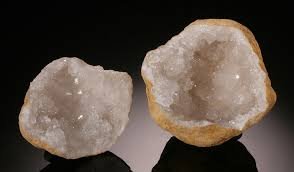
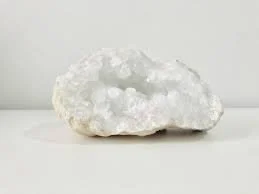
Rainbow Moonstone — Mineral & Scientific Information
Rainbow moonstone is luminous, mystical, and a little misunderstood — it’s a favorite for intuition work.What it is
Rainbow moonstone is not true moonstone (orthoclase feldspar). It is actually a variety of labradorite, belonging to the plagioclase feldspar group. It is called “moonstone” in the gem trade because of its similar glow.
Chemical composition
Chemical formula: (Na,Ca)(Al,Si)₄O₈
Member of the plagioclase feldspar series
Crystal structure
Crystal system: triclinic
Occurs as massive or tabular crystals
Color and appearance
Base color: white to transparent
Displays blue, rainbow, or multicolored flashes
Transparent to translucent
Luster: vitreous to pearly
Physical properties
Hardness: 6–6.5 on the Mohs scale
Cleavage: two directions, good
Fracture: uneven
Specific gravity: ~2.7
Formation
Rainbow moonstone forms in igneous rocks, particularly pegmatites. Its flashes are caused by light interference within internal feldspar layers.
Geographic sources
India (primary source)
Sri Lanka
Madagascar
Tanzania
Uses and applications
Jewelry (cabochons and faceted stones)
Decorative stones
Collector specimens
Rainbow Moonstone — Metaphysical Properties & Fun Facts
🌈🌙 Core Energy
Rainbow moonstone is known as a stone of intuition, protection, and spiritual insight. Its energy feels luminous, uplifting, and gently transformative ✨
👁️ Intuition & Psychic Awareness
Strongly associated with the third eye 👁️
Believed to enhance intuition and psychic perception 🔮
Supports dream work and inner vision 🌙
🛡️ Spiritual Protection
Said to create a protective energetic field 🌫️
Helps shield the aura during spiritual work 🧿
Often used by empaths for energetic boundaries 💠
🌊 Emotional Balance
Helps soothe emotional stress 🕊️
Encourages emotional awareness without overwhelm ⚖️
Supports calm during transitions 🌱
🌟 Transformation & Growth
Encourages embracing change 🦋
Helps reveal inner truth and purpose ✨
Supports spiritual growth and awakening 🌌
🧿 How People Work With Rainbow Moonstone
Wear for daily intuitive support 📿
Meditate with it during reflection or dream work 🧘♀️
Carry during new beginnings 🌒
Pair with grounding stones for balance 🪨
✨ Fun Facts
Despite the name, it’s actually labradorite 🤯
Blue flash pieces are most prized 💙
Often confused with white labradorite ❌
Popular for intuitive and protective jewelry 💍
🔮 Overall Vibe
Rainbow moonstone is about light, intuition, and gentle protection 🌈🌙
It doesn’t shout — it glows.
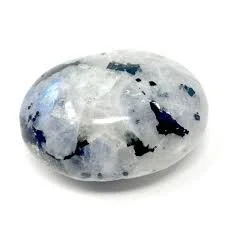
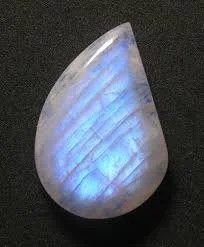
Rhodochrosite — Mineral & Scientific Information
Rhodochrosite is tender, powerful, and deeply emotional — a true heart-healing stone.What it is
Rhodochrosite is a manganese carbonate mineral known for its distinctive pink to rose-red coloring and banded patterns. It is valued both as a gemstone and a collector mineral.
Chemical composition
Chemical formula: MnCO₃
Manganese carbonate
Crystal structure
Crystal system: trigonal
Commonly forms rhombohedral crystals
Often occurs in massive, banded, or stalactitic forms
Color and appearance
Pink, rose, red, or reddish-brown
Frequently banded with white or lighter pink layers
Transparent to opaque
Luster: vitreous to pearly
Physical properties
Hardness: 3.5–4 on the Mohs scale
Cleavage: perfect in three directions
Fracture: uneven
Specific gravity: ~3.5–3.7
Formation
Rhodochrosite forms in hydrothermal veins, often associated with silver, lead, and copper deposits. It can also develop as stalactites in manganese-rich environments.
Geographic sources
Argentina
Peru
South Africa
United States (Colorado)
Romania
Uses and applications
Jewelry (cabochons; requires careful handling)
Collector specimens
Ornamental carvings
Rhodochrosite — Metaphysical Properties & Fun Facts
💗 Core Energy
Rhodochrosite is known as a stone of deep emotional healing, self-love, and compassion. Its energy feels warm, nurturing, and emotionally honest 🌸
💞 Heart Healing & Emotional Release
Strongly associated with the heart chakra 💗
Encourages healing of emotional wounds and past trauma 🕊️
Supports forgiveness — of others and yourself 🤍
🌊 Emotional Awareness
Helps bring buried emotions to the surface 🌊
Encourages healthy emotional expression 🗣️
Supports emotional growth through awareness 🌱
🌸 Self-Love & Inner Child Healing
Encourages nurturing the inner child 🧸
Helps release self-criticism and shame 🌼
Supports emotional safety and acceptance 🛡️
🕊️ Compassion & Connection
Encourages empathy and loving relationships 💞
Helps open the heart to joy and trust 🌈
Supports emotional intimacy 💑
🧿 How People Work With Rhodochrosite
Meditate with it during emotional healing 🧘♀️
Wear near the heart for gentle support 📿
Journal while working with it ✍️
Pair with grounding stones for emotional balance 🪨
✨ Fun Facts
Name means “rose-colored” in Greek 🌹
Argentina’s national gemstone
Often forms stunning pink stalactites 😍
Much softer than quartz — handle gently ⚠️
🔮 Overall Vibe
Rhodochrosite is about healing the heart and embracing emotional truth 💗
It doesn’t bypass pain — it helps you process it with compassion.
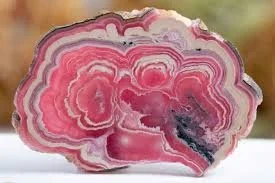
Rhodonite — Mineral & Scientific Information
Rhodonite is a strong heart stone — less soft and floaty, more grounded emotional resilience.What it is
Rhodonite is a manganese inosilicate mineral known for its pink coloration and contrasting black manganese oxide veining. It is commonly used as both a gemstone and an ornamental stone.
Chemical composition
Chemical formula: MnSiO₃
Manganese silicate
Crystal structure
Crystal system: triclinic
Usually occurs in massive form
Well-formed crystals are rare
Color and appearance
Pink to rose-red
Black or brown veining from manganese oxides
Opaque to translucent
Luster: vitreous to pearly
Physical properties
Hardness: 5.5–6.5 on the Mohs scale
Cleavage: good in two directions
Fracture: uneven
Specific gravity: ~3.4–3.7
Formation
Rhodonite forms in metamorphic environments, often associated with manganese-rich deposits. It can also occur in hydrothermal veins.
Geographic sources
Russia
Australia
South Africa
Peru
United States
Uses and applications
Jewelry and cabochons
Beads and carvings
Decorative objects
Collector specimens
Rhodonite — Metaphysical Properties & Fun Facts
💗🪨 Core Energy
Rhodonite is known as a stone of emotional balance, forgiveness, and grounded heart healing. Its energy feels steady and supportive — like emotional armor with a soft lining 🛡️💞
💞 Heart Healing with Strength
Associated with the heart chakra 💗
Helps heal emotional wounds without overwhelm 🧩
Encourages emotional resilience rather than avoidance 💪
⚖️ Emotional Balance
Helps stabilize emotional extremes 🌊
Encourages calm responses instead of reactive ones 🕊️
Supports thoughtful emotional processing 🧠
🤝 Forgiveness & Compassion
Encourages forgiveness of self and others 🤍
Helps release resentment and anger 🔓
Supports compassionate understanding 💞
🛠️ Grounded Action
Helps turn emotional insight into action 🧭
Encourages problem-solving over rumination 🧠➡️🛠️
Useful during relationship repair 🌱
🧿 How People Work With Rhodonite
Carry daily for emotional stability 📿
Use during conflict resolution or healing work 🧘♀️
Keep nearby during stressful conversations 🗣️
Pair with gentler heart stones for balance 🌸
✨ Fun Facts
Name comes from the Greek rhodon (“rose”) 🌹
Often mistaken for rhodochrosite (but much tougher!) 💥
The black veins are oxidized manganese 🖤
Russia once used it for large decorative objects 🏛️
🔮 Overall Vibe
Rhodonite is about healing with strength and emotional maturity 💗
It doesn’t just soothe — it stabilizes.
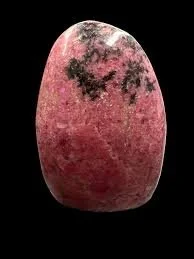
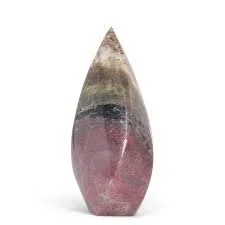
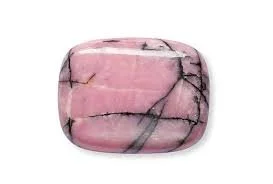
Rose Quartz — Mineral & Scientific Information
Rose quartz is the classic heart stone — gentle, steady, and deeply comforting.What it is
Rose quartz is a pink variety of quartz (silicon dioxide). It is one of the most common and recognizable gemstone varieties, valued for its soft color and translucency.
Chemical composition
Chemical formula: SiO₂
Silicon dioxide
Crystal structure
Crystal system: trigonal
Typically found in massive form rather than well-formed crystals
Color and appearance
Pale pink to deep rose
Color caused by trace amounts of titanium, iron, or manganese, and sometimes microscopic fibrous inclusions
Translucent to opaque
Luster: vitreous
Physical properties
Hardness: 7 on the Mohs scale
No cleavage
Fracture: conchoidal
Specific gravity: ~2.65
Formation
Rose quartz forms in pegmatites and hydrothermal veins, often growing in large masses rather than distinct crystals.
Geographic sources
Brazil
Madagascar
South Africa
India
United States
Uses and applications
Jewelry (beads, cabochons, carvings)
Decorative objects
Collector specimens
Industrial quartz uses (shared with other quartz varieties)
Rose Quartz — Metaphysical Properties & Fun Facts
💗 Core Energy
Rose quartz is known as the stone of unconditional love, compassion, and emotional comfort. Its energy is soft, steady, and deeply reassuring 🌸
💞 Heart Chakra Healing
Strongly associated with the heart chakra 💗
Encourages emotional openness and vulnerability 🕊️
Supports healing from emotional pain and grief 🌊
🌷 Self-Love & Acceptance
Encourages self-compassion and inner peace 🤍
Helps release self-criticism and emotional tension 🌿
Often used for inner child and self-worth work 🧸
💑 Relationships & Connection
Supports romantic love, friendships, and family bonds 💞
Encourages empathy, trust, and emotional harmony 🤝
Often placed in bedrooms or shared spaces 🛏️
🕊️ Emotional Calm
Helps soothe stress and emotional overwhelm 🌬️
Encourages gentle emotional processing rather than suppression 🌙
Often used for sleep support and emotional safety 😴
🧿 How People Work With Rose Quartz
Wear close to the heart 📿
Meditate with it during emotional healing 🧘♀️
Place near the bed or in living spaces 🏡
Pair with grounding stones for balance 🪨
✨ Fun Facts
Used in jewelry as far back as 7000 BCE 🕰️
Ancient cultures associated it with love goddesses 💘
Rare “star rose quartz” can show asterism ⭐
Color can fade with prolonged sun exposure ☀️⚠️
🔮 Overall Vibe
Rose quartz is about love that feels safe 💗
It doesn’t push transformation — it wraps you in acceptance.
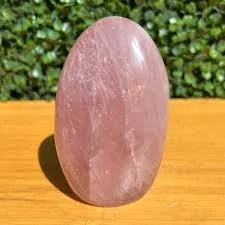
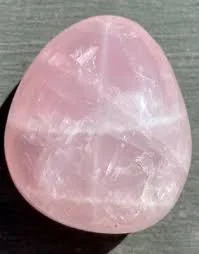
Ruby — Mineral & Scientific Information
Ruby is bold, intense, and powerful — the kind of stone that doesn’t whisper, it radiates.What it is
Ruby is a red variety of corundum, one of the hardest natural minerals on Earth. It is prized as a gemstone for its durability, rarity, and vivid color.
Chemical composition
Chemical formula: Al₂O₃
Aluminum oxide
Red color caused by trace amounts of chromium
Crystal structure
Crystal system: trigonal
Typically forms prismatic or barrel-shaped crystals
Color and appearance
Red to deep crimson
Color saturation is key to value
Transparent to opaque
Luster: vitreous
Physical properties
Hardness: 9 on the Mohs scale
No cleavage
Fracture: conchoidal to uneven
Specific gravity: ~4.0
Optical properties
Strong pleochroism (can appear different shades of red)
Fluoresces under UV light due to chromium
Some rubies show asterism (“star rubies”) when cut en cabochon
Formation
Ruby forms in metamorphic rocks (marble) and igneous environments (basalt), requiring aluminum-rich, silica-poor conditions.
Geographic sources
Myanmar (Burma)
Thailand
Sri Lanka
Mozambique
Madagascar
Uses and applications
Fine jewelry
Abrasives (industrial corundum)
Laser technology (synthetic ruby crystals)
Ruby — Metaphysical Properties & Fun Facts
🔥❤️ Core Energy
Ruby is known as a stone of vitality, passion, courage, and life force energy. Its vibe is intense, motivating, and unapologetically alive 🔥
❤️ Root & Heart Power
Connects the root chakra (survival, vitality) 🛡️
Energizes the heart chakra with passion and strength 💗
Encourages grounded confidence and emotional intensity 🌋
🔥 Motivation & Life Force
Boosts energy, drive, and enthusiasm ⚡
Encourages action over hesitation 🚀
Supports perseverance during challenges 💪
🦁 Courage & Protection
Traditionally used as a stone of warriors and leaders 🗡️
Said to protect against fear and emotional depletion 🛡️
Encourages standing in personal power 🦁
💘 Love & Passion
Associated with deep love, desire, and devotion ❤️
Encourages emotional honesty and intensity 💞
Strengthens commitment and loyalty 🤝
🧿 How People Work With Ruby
Wear for confidence and vitality 💍
Use during goal-setting or manifestation work 🎯
Pair with grounding stones to balance intensity 🪨
Meditate with intention and clarity 🧘♀️
✨ Fun Facts
Ancient cultures believed rubies contained an inner flame 🔥
Ruby is the birthstone for July 🎂
“Pigeon blood” rubies are among the most valuable gems 💎
Synthetic rubies were used in the first lasers 🔬
🔮 Overall Vibe
Ruby is about living fully and boldly ❤️🔥
It doesn’t soothe — it ignites.
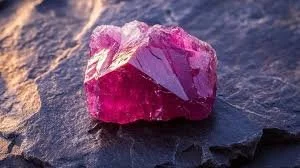
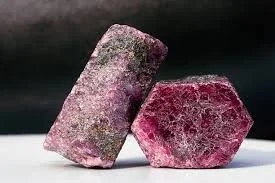
Satin Spar — Mineral & Scientific Information
Satin spar is soft, luminous, and often mistaken for something else — gentle in both look and energy.What it is (important clarification)
Satin spar is not a separate mineral species. It is a fibrous habit of gypsum (CaSO₄·2H₂O). Many pieces sold as “selenite” are actually satin spar.
Chemical composition
Formula: CaSO₄·2H₂O
Calcium sulfate dihydrate
Crystal structure
Crystal system: monoclinic
Occurs in long, parallel fibrous crystals
Fibers create strong chatoyancy (silky sheen)
Color and appearance
White, translucent, sometimes peach or honey-toned
Silky, satin-like luster
Strong cat’s-eye or glowing effect when polished
Physical properties
Hardness: 2 on the Mohs scale
Very soft; scratches easily
One good cleavage
Specific gravity: ~2.3
Formation
Forms in evaporite environments where sulfate-rich waters evaporate, allowing gypsum to crystallize in fibrous masses.
Geographic sources
Mexico (largest commercial source)
Morocco
United States
Spain
Uses and applications
Decorative carvings and wands
Metaphysical tools
Educational mineral specimens
Not recommended for high-wear jewelry
Care note
Satin spar is water-soluble over time and should never be submerged or cleaned with water.
Satin Spar — Metaphysical Properties & Fun Facts
✨🤍 Core Energy
Satin spar is known as a stone of cleansing, peace, and gentle clarity. Its energy feels soft, calming, and luminous — like moonlight through a veil 🌙
🧹 Cleansing & Clearing
Said to clear stagnant energy 🌀
Often used to cleanse other crystals ✨
Encourages energetic reset 🌬️
🕊️ Calm & Emotional Soothing
Promotes peace and relaxation 😌
Helps quiet mental noise 🧠
Supports restful sleep 🛏️
🌙 Intuition & Awareness
Associated with higher awareness 👁️
Encourages mindfulness and presence 🧘♀️
Supports meditation and reflection 🕯️
🛡️ Gentle Protection
Creates a soft, protective energy 🤍
Encourages emotional safety 🫶
Helps maintain calm boundaries 🌾
🧿 How People Work With Satin Spar
Place in rooms to maintain calm energy 🏡
Use wands to “sweep” energy ✨
Meditate with it for relaxation 🧘♂️
Keep near the bed or altar 🌙
✨ Fun Facts
Often mislabeled as selenite 🔍
One of the softest commonly sold crystals ⚠️
Glows dramatically under light 🔦
Used symbolically for purification across cultures 🕊️
🔮 Overall Vibe
Satin spar is about quiet clarity and gentle cleansing 🤍
It doesn’t push — it softly clears.
Selenite — Mineral & Scientific Information
Selenite is all about clarity, light, and calm — a high-vibration stone with a very distinct presence.What it is
Selenite is a crystalline variety of gypsum, a soft sulfate mineral composed of calcium sulfate dihydrate. Despite the name, it does not contain selenium.
Chemical composition
Chemical formula: CaSO₄·2H₂O
Calcium sulfate dihydrate
Crystal structure
Crystal system: monoclinic
Commonly forms long, transparent to translucent prismatic crystals
Can also occur in tabular or fibrous forms (satin spar)
Color and appearance
Colorless, white, or slightly pearly
Transparent to translucent
Luster: vitreous to silky
Often shows internal striations or layered growth
Physical properties
Hardness: 2 on the Mohs scale
Perfect cleavage in one direction
Very soft; can be scratched with a fingernail
Specific gravity: ~2.3
Formation
Selenite forms through evaporation of saline waters in sedimentary environments such as evaporite deposits. Large crystals can grow in stable conditions over long periods.
Geographic sources
Mexico
Morocco
United States
Spain
Greece
Uses and applications
Decorative and ornamental pieces
Educational mineral specimens
Occasionally used in plaster and cement (as gypsum)
Selenite — Metaphysical Properties & Fun Facts
🤍✨ Core Energy
Selenite is known as a stone of clarity, cleansing, and high spiritual vibration. Its energy feels light, peaceful, and expansive — like a deep exhale for the mind 🌬️
🧠 Mental Clarity & Calm
Said to clear mental fog and confusion 💭➡️✨
Encourages calm thinking and focus 🕊️
Supports meditation and mindfulness 🧘♀️
👑 Crown Chakra Activation
Strongly associated with the crown chakra 👑
Encourages spiritual awareness and insight 🌌
Often used to connect with higher guidance 🔮
🧼 Energy Cleansing
Believed to cleanse stagnant or heavy energy 🌊
Commonly used to cleanse other crystals 🪨✨
Associated with clearing emotional residue 🕯️
🛡️ Peace & Protection
Said to create a peaceful, protective atmosphere 🛡️
Often placed in homes or sacred spaces 🏡
Encourages emotional neutrality and balance ⚖️
🧿 How People Work With Selenite
Place in meditation or sleep spaces 🛏️
Use as a wand for energy work ✨
Pair with grounding stones for balance 🪨
Keep near entrances to refresh energy 🚪
✨ Fun Facts
Named after Selene, the Greek moon goddess 🌙
Dissolves in water — never cleanse it that way! 🚫💧
“Satin spar” is often sold as selenite (same mineral, different form) 🧵
Some crystals grow to massive sizes (like in Mexico’s giant crystal cave!) 🏔️
🔮 Overall Vibe
Selenite is about clarity without effort 🤍
It doesn’t push or pull — it clears and lifts.
Smoky Quartz — Mineral & Scientific Information
Smoky quartz is grounding, protective, and quietly powerful — the kind of stone that stabilizes rather than overwhelms.What it is
Smoky quartz is a brown to gray variety of quartz (silicon dioxide). Its coloration is the result of natural radiation interacting with trace aluminum within the crystal structure.
Chemical composition
Chemical formula: SiO₂
Silicon dioxide
Crystal structure
Crystal system: trigonal
Commonly forms hexagonal prismatic crystals with pyramidal terminations
Color and appearance
Light smoky gray to deep brown or nearly black
Transparent to translucent
Color intensity varies with radiation exposure
Luster: vitreous
Physical properties
Hardness: 7 on the Mohs scale
No cleavage
Fracture: conchoidal
Specific gravity: ~2.65
Optical properties
Color can fade with prolonged exposure to strong sunlight or heat
Artificial irradiation can deepen color in treated stones
Formation
Smoky quartz forms in igneous and metamorphic environments, particularly in granites and pegmatites where quartz crystals grow slowly and can be exposed to natural radiation.
Geographic sources
Brazil
Switzerland
Madagascar
Scotland
United States
Uses and applications
Jewelry
Collector crystals and points
Decorative carvings
Optical and industrial quartz applications
Smoky Quartz — Metaphysical Properties & Fun Facts
🌫️🪨 Core Energy
Smoky quartz is known as a stone of grounding, protection, and emotional detox. Its energy feels steady, anchoring, and quietly reassuring 🌍
🛡️ Grounding & Stability
Strongly associated with the root chakra 🛡️
Helps anchor scattered or anxious energy ⚓
Encourages feeling safe and present in the body 🌱
🧹 Emotional & Energetic Clearing
Said to absorb and neutralize negative energy 🧹
Helps release stress, fear, and emotional buildup 🌫️➡️✨
Supports emotional resilience during change 🔄
🧠 Mental Clarity Under Pressure
Helps with focus during stressful situations 🧠
Encourages practical thinking over emotional overload 📐
Useful during work, travel, or transitions 🚶♀️
🕊️ Letting Go
Encourages release of what no longer serves 🔓
Supports grief processing and emotional closure 🤍
Helps move forward without carrying emotional weight 🧳
🧿 How People Work With Smoky Quartz
Carry daily for grounding 📿
Meditate with it during stress or overwhelm 🧘♀️
Place near electronics or workspaces 💻
Pair with lighter stones to balance energy ✨🪨
✨ Fun Facts
Scotland’s national gemstone 🏴
Very dark smoky quartz is sometimes called “morion” 🌑
Color can be lightened with heat ☀️
One of the best grounding stones for sensitive people 🌍
🔮 Overall Vibe
Smoky quartz is about stability, release, and quiet strength 🪨
It doesn’t absorb you — it anchors you.
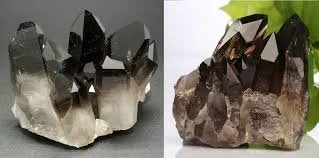
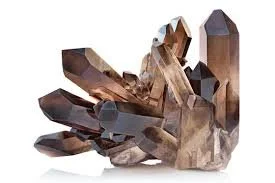
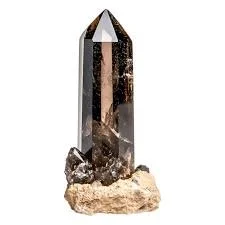
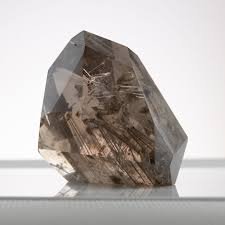
Sodalite — Mineral & Scientific Information
Sodalite is cool, steady, and mentally clarifying — a thinker’s stone with a calm, collected vibe.What it is
Sodalite is a tectosilicate mineral belonging to the feldspathoid group. It is known for its deep blue color and frequent white veining.
Chemical composition
Formula: Na₈(Al₆Si₆O₂₄)Cl₂
Sodium aluminum silicate with chlorine
Crystal structure
Crystal system: cubic
Usually occurs in massive or granular form
Well-formed crystals are rare
Color and appearance
Royal blue to deep navy
Often mottled with white calcite veins
Opaque
Luster: vitreous to greasy
Physical properties
Hardness: 5.5–6 on the Mohs scale
Poor cleavage
Specific gravity: ~2.2–2.3
Formation
Sodalite forms in alkaline igneous rocks, especially nepheline syenites and phonolites. It often forms alongside nepheline, feldspar, and cancrinite.
Geographic sources
Canada (Ontario — major source)
Brazil
Namibia
Russia
Greenland
Uses and applications
Decorative stone and carvings
Jewelry (low-wear pieces)
Architectural stone
Collector specimens
Special property
Some sodalite varieties are tenebrescent, temporarily changing color under UV light.
Name origin
Named for its high sodium content.
Sodalite — Metaphysical Properties & Fun Facts
🧠💙 Core Energy
Sodalite is known as a stone of logic, truth, and mental clarity. Its energy feels calm and rational — like taking a deep breath and organizing your thoughts 📘
🗣️ Communication & Truth
Linked to the throat chakra 🗣️
Encourages honest, thoughtful communication 💬
Helps express ideas clearly 🧩
🧠 Logic & Focus
Supports analytical thinking 🔍
Encourages rational decision-making ⚖️
Helps quiet emotional overreaction 🌬️
🤝 Harmony & Understanding
Encourages cooperation and trust 🤍
Supports group communication 🧑🤝🧑
Helps balance emotions with logic ⚖️
🔮 Intuition with Reason
Bridges intuition and intellect 👁️🧠
Encourages insight without fantasy ✨
Supports grounded spiritual exploration 🪨
🧿 How People Work With Sodalite
Use during study or problem-solving 📚
Keep at workspaces or classrooms 🖥️
Meditate for clarity and truth 🧘♀️
Pair with expressive stones for balance ⚡
✨ Fun Facts
Often mistaken for lapis lazuli 🔵
Named after sodium 🧂
Some pieces glow or change color under UV 🔦
Popular with students and thinkers 🎓
🔮 Overall Vibe
Sodalite is about clear thinking and honest expression 💙
It steadies the mind and quiets emotional noise.
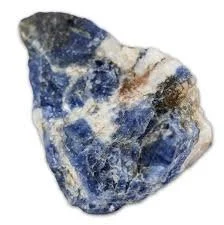
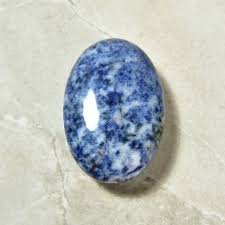
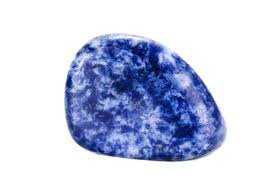
Spinel — Mineral & Scientific Information
Spinel is one of the most underappreciated gemstones — tough, brilliant, and historically mistaken for something else.What it is
Spinel is an oxide mineral that forms a large mineral group, but gem-quality spinel refers mainly to magnesium aluminum oxide.
Chemical composition
Formula: MgAl₂O₄
Magnesium aluminum oxide
Trace elements (iron, chromium, cobalt) produce color variations
Crystal structure
Crystal system: cubic (isometric)
Typically forms octahedral crystals
Isometric symmetry gives spinel excellent brilliance
Color and appearance
Colors include red, pink, blue, purple, orange, gray, black, and colorless
Transparent to opaque
Luster: vitreous
Red spinel historically confused with ruby
Physical properties
Hardness: 8 on the Mohs scale
No cleavage
Conchoidal fracture
Specific gravity: ~3.5–3.6
Formation
Spinel forms in metamorphic rocks (marble, gneiss) and igneous environments, often alongside corundum (ruby and sapphire).
Geographic sources
Myanmar (Burma)
Sri Lanka
Tanzania
Vietnam
Afghanistan
Madagascar
Uses and applications
Fine jewelry
Collector gemstones
Synthetic spinel used in optics and technology
Historical note
Some famous “rubies” in royal crowns — including the Black Prince’s Ruby — are actually spinel
Spinel — Metaphysical Properties & Fun Facts
🔥💎 Core Energy
Spinel is known as a stone of renewal, resilience, and revitalization. Its energy feels strong and steady — empowering without being overwhelming ⚡
🔄 Renewal & Recovery
Encourages rejuvenation after stress 🌱
Supports physical and emotional recovery 💪
Helps restore motivation 🔥
🛡️ Strength & Resilience
Encourages perseverance 🧱
Helps bounce back from challenges 🔄
Supports emotional endurance ❤️🔥
🎯 Focus & Drive
Enhances determination and follow-through 🎯
Encourages productive action 🚀
Helps overcome burnout 🧠
🌈 Color Energies
Red spinel ❤️ → vitality and passion
Pink spinel 🌸 → emotional healing and love
Blue spinel 💙 → clarity and calm focus
Black spinel 🖤 → grounding and protection
🧿 How People Work With Spinel
Wear for strength and motivation 💍
Use during periods of recovery or transition 🔄
Meditate on renewal and confidence 🧘♂️
Pair with calming stones for balance ⚖️
✨ Fun Facts
Spinel is harder than quartz 💎
Often untreated and naturally vibrant 🌈
Historically mistaken for ruby 👑
One of the most durable colored gemstones 🛡️
🔮 Overall Vibe
Spinel is about strength that restores rather than drains 🔥
It fuels you without burning you out.
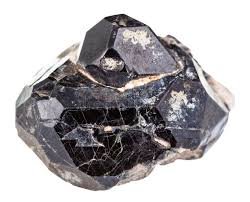
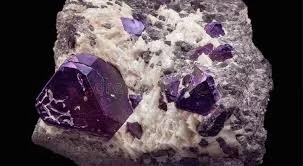
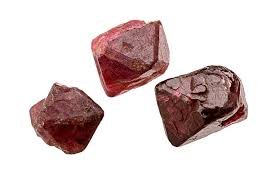
Sunstone — Mineral & Scientific Information
Sunstone is warm, bright, and quietly powerful — like bottled sunlight with a grounded sparkle.What it is
Sunstone is a feldspar gemstone, most commonly a variety of plagioclase feldspar (oligoclase), though some sunstones are potassium feldspar. It is best known for its metallic sparkle called aventurescence.
Chemical composition
Plagioclase formula range: (Na,Ca)(Al,Si)₄O₈
Potassium feldspar variety: KAlSi₃O₈
Sparkle caused by microscopic platelets of copper, hematite, or goethite
Crystal structure
Crystal system: triclinic (plagioclase) or monoclinic (K-feldspar)
Typically occurs in massive form; crystals are rare
Color and appearance
Orange, peach, red, golden brown, pink, sometimes green
Transparent to translucent
Luster: vitreous
Distinct glittering or shimmering effect when light hits inclusions
Physical properties
Hardness: ~6–6.5 on the Mohs scale
Two cleavages at nearly 90° (feldspar trait)
Specific gravity: ~2.6
Formation
Sunstone forms in igneous rocks, where copper- or iron-bearing inclusions crystallize within feldspar as it cools.
Geographic sources
United States (Oregon — famous copper sunstone)
India
Norway
Canada
Tanzania
Uses and applications
Jewelry
Cabochons and beads
Collector stones
Oregon sunstone is an official U.S. state gemstone
Name origin
Named for its warm colors and sun-like sparkle.
Sunstone — Metaphysical Properties & Fun Facts
☀️✨ Core Energy
Sunstone is known as a stone of joy, confidence, and personal power. Its energy feels uplifting, warm, and encouraging — like sunlight breaking through clouds 🌤️
🔥 Confidence & Empowerment
Encourages self-worth 💪
Helps step out of self-doubt 🚶♂️
Supports leadership and independence 👑
😊 Joy & Positivity
Lifts mood and optimism 😄
Encourages enthusiasm and creativity 🎨
Helps dispel heaviness or gloom 🌈
🧠 Motivation & Action
Sparks motivation and forward momentum 🚀
Encourages saying “yes” to opportunities 🎯
Helps turn ideas into action 🛠️
🌈 Balance & Vitality
Associated with life force energy ⚡
Encourages emotional warmth ❤️
Balances giving and receiving 🤝
🧿 How People Work With Sunstone
Wear to boost confidence 💍
Use during goal-setting or new beginnings 📝
Meditate on joy and self-empowerment 🧘♀️
Pair with grounding stones to stay balanced 🪨
✨ Fun Facts
Oregon sunstone contains real copper ✨
Aventurescence is caused by flat inclusions 🔍
Sometimes confused with peach moonstone 🌙
Sparkle changes as the stone is moved 🌞
🔮 Overall Vibe
Sunstone is about owning your light and sharing it freely ☀️
It energizes without overwhelming.
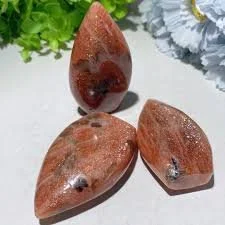
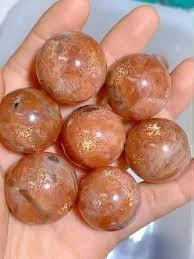
Super 7 (Melody’s Stone) — Mineral & Scientific Information
Super 7 is intense, complex, and kind of legendary in crystal circles — a “many-in-one” stone with both geological intrigue and metaphysical hype.What it is (important clarification)
Super 7 is not a single mineral. It is a trade name for quartz that contains a combination of mineral inclusions traditionally listed as seven species:
Amethyst
Clear quartz
Smoky quartz
Rutile
Cacoxenite
Goethite
Lepidocrocite
Not every Super 7 specimen contains all seven inclusions; the name refers to the idealized combination.
Chemical composition
Host crystal: quartz (SiO₂)
Inclusions: iron oxides/hydroxides, phosphates, and rutile (TiO₂)
Crystal structure
Quartz crystal system: trigonal
Inclusions occur as needles, sprays, flakes, or clouds trapped during growth
Color and appearance
Purple (amethyst zones), clear, smoky, reddish-brown, gold, or black inclusions
Transparent to translucent
Luster: vitreous
Highly variable internal patterns
Physical properties
Hardness: 7 (quartz)
No cleavage
Conchoidal fracture
Specific gravity: ~2.65
Formation
Forms when quartz crystallizes in iron- and titanium-rich hydrothermal environments, trapping multiple mineral phases during growth.
Geographic sources
Brazil (primary and often exclusive commercial source)
Uses and applications
Collector crystals
Jewelry and cabochons
Metaphysical tools
Geological study of complex inclusion environments
Name origin
Also called Melody’s Stone, popularized by crystal author Melody in the early 2000s.
Super 7 — Metaphysical Properties & Fun Facts
🌈🔮 Core Energy
Super 7 is known as a stone of alignment, spiritual activation, and amplified awareness. Its energy feels intense and layered — like multiple frequencies playing at once 🎶
🌌 Chakra & Energy Alignment
Said to activate all chakras 🌈
Encourages energetic balance and flow 🌀
Helps integrate mind, body, and spirit ⚖️
🧠 Awareness & Insight
Enhances intuition and perception 👁️
Encourages deep self-understanding 🔍
Supports inner exploration 🧘♀️
🔥 Amplification & Transformation
Quartz base amplifies intention ⚡
Encourages spiritual growth and change 🔄
Helps release energetic blockages 🧲
🛡️ Protection & Resilience
Often used as a protective stone 🛡️
Helps maintain energetic boundaries 🚧
Encourages emotional strength 💪
🧿 How People Work With Super 7
Deep meditation and spiritual work 🧘♂️
Chakra balancing sessions 🌈
Keep during personal transformation periods 🔄
Pair with grounding stones to avoid overwhelm 🪨
✨ Fun Facts
Not all Super 7 stones contain all seven minerals 🔍
Each specimen looks wildly different 🎨
Highly sought after despite being quartz-based 💎
Often debated between collectors and scientists 🧪🔮
🔮 Overall Vibe
Super 7 is about integration and awakening 🌌
It’s not subtle — it’s layered and powerful.
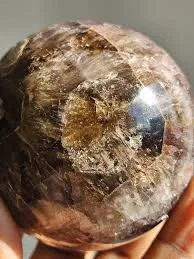
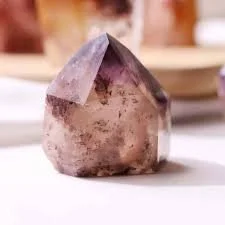
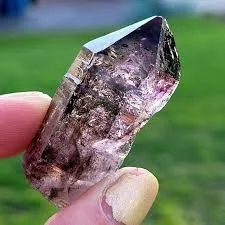
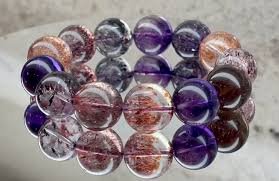
Tanzanite — Mineral & Scientific Information
Tanzanite is elegant, rare, and quietly intense — a gemstone with both geological uniqueness and a deeply reflective vibe.What it is
Tanzanite is the blue to violet variety of the mineral zoisite. It is one of the few gemstones found in only one place on Earth.
Chemical composition
Formula: Ca₂Al₃(SiO₄)₃(OH)
Calcium aluminum silicate
Trace vanadium causes the blue-violet coloration
Crystal structure
Crystal system: orthorhombic
Typically forms prismatic crystals
Color and appearance
Blue, violet, or blue-violet
Strong pleochroism (shows different colors from different angles: blue, violet, burgundy)
Transparent to translucent
Luster: vitreous
Physical properties
Hardness: 6–6.5 on the Mohs scale
One perfect cleavage (can split if struck)
Specific gravity: ~3.35
Formation
Tanzanite formed through regional metamorphism under rare geological conditions involving heat, pressure, and vanadium-rich fluids.
Geographic source
Merelani Hills, near Mount Kilimanjaro, Tanzania
(The only known commercial source)
Uses and applications
Fine jewelry (protective settings recommended)
Collector gemstones
Investment stones
Treatment note
Most tanzanite on the market is heat-treated to enhance blue coloration; this is stable and accepted.
Name origin
Named by Tiffany & Co. in 1968 to highlight its Tanzanian origin.
Tanzanite — Metaphysical Properties & Fun Facts
💙💜 Core Energy
Tanzanite is known as a stone of higher awareness, transformation, and calm insight. Its energy feels refined and expansive — thoughtful rather than flashy 🌌
🧠 Intuition & Awareness
Enhances intuition and perception 👁️
Encourages seeing situations from new angles 🔄
Supports deep inner reflection 🧘♀️
🗣️ Communication & Truth
Connects the throat chakra with higher awareness 🗣️✨
Encourages calm, thoughtful expression 💬
Helps articulate complex thoughts 🧩
🌌 Spiritual Growth
Associated with higher consciousness 🌠
Encourages mindful transformation 🌱
Supports meditation and insight work 🧘♂️
⚖️ Emotional Balance
Helps soothe emotional overwhelm 🌬️
Encourages patience and composure 😌
Supports emotional clarity 💎
🧿 How People Work With Tanzanite
Wear during times of change 💍
Meditate for insight and calm awareness 🧘♀️
Use for journaling or reflection 📓
Pair with grounding stones for balance 🪨
✨ Fun Facts
One of the newest gemstones on the market 🆕
Changes color depending on light and angle 🔄
December birthstone 🎂
Estimated supply may be depleted within decades ⏳
🔮 Overall Vibe
Tanzanite is about quiet transformation and elevated perspective 💙💜
It doesn’t rush — it deepens.
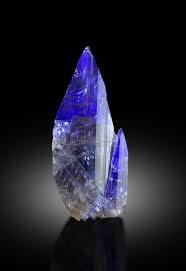
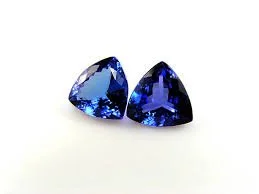
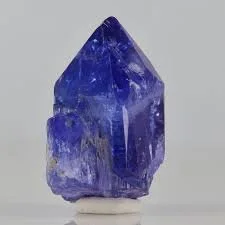
Tiger’s Eye — Mineral & Scientific Information
Tiger’s Eye is bold, protective, and grounded — a stone that feels like steady confidence with a watchful edge.What it is
Tiger’s Eye is a variety of quartz that forms through a replacement process involving fibrous minerals, most commonly crocidolite (a blue asbestos mineral).
Chemical composition
Formula: SiO₂
Quartz with iron oxide inclusions
Crystal structure
Crystal system: trigonal (quartz)
Microcrystalline to cryptocrystalline structure
Color and appearance
Golden brown to reddish brown, sometimes blue or green varieties
Exhibits chatoyancy (a silky, moving band of light often called the “cat’s eye” effect)
Opaque to translucent
Luster: silky to vitreous
Physical properties
Hardness: 6.5–7 on the Mohs scale
No cleavage
Conchoidal fracture
Specific gravity: ~2.64–2.71
Formation process
Tiger’s Eye forms when fibrous crocidolite is gradually replaced by silica while retaining its fibrous structure. Iron oxidation during this process creates the golden-brown color.
Varieties
Golden Tiger’s Eye – classic form
Red Tiger’s Eye – enhanced oxidation or heat-treated
Blue Tiger’s Eye (Hawk’s Eye) – less oxidized, more bluish-gray
Geographic sources
South Africa (primary source)
Australia
India
Namibia
United States
Uses and applications
Jewelry and beads
Carvings and cabochons
Decorative stone
Tiger’s Eye — Metaphysical Properties & Fun Facts
🟤🟡 Core Energy
Tiger’s Eye is known as a stone of courage, protection, and grounded confidence — steady, warm, and empowering 🐅
🛡️ Protection & Grounding
Traditionally used as a protective talisman 🧿
Helps ground scattered energy 🌍
Encourages emotional stability ⚖️
🔥 Confidence & Motivation
Boosts self-confidence and personal power 💪
Encourages decisive action 🚀
Supports leadership energy 👑
🧠 Focus & Clarity
Helps cut through self-doubt ✂️
Supports practical thinking and problem-solving 🧩
Balances logic with intuition ⚡
💰 Prosperity & Willpower
Often linked to abundance and success 💰
Encourages persistence and discipline 🏗️
Supports goal-setting and follow-through 🎯
🧘 Chakra Associations
Solar Plexus ☀️ (confidence, willpower)
Root 🌱 (grounding and stability)
🧿 How People Work With Tiger’s Eye
Carry for confidence and protection 🪙
Wear during challenging conversations or decisions 💍
Use in workspaces for focus and drive 🖥️
Pair with grounding stones like hematite or smoky quartz 🪨
✨ Fun Facts
Used by Roman soldiers for courage in battle 🏛️
The shimmering effect looks like a moving eye 👁️
Naturally fibrous structure creates its signature glow ✨
Often mistaken for gold at a glance 👀
🔮 Overall Vibe
Tiger’s Eye is calm strength, not loud power 🐅
It doesn’t push — it steadies you.
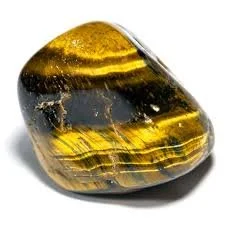
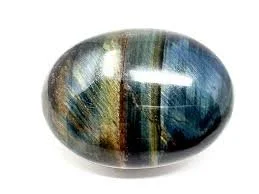
Topaz — Mineral & Scientific Information
Topaz is clear, versatile, and surprisingly complex — a gemstone that ranges from delicate calm to electric brilliance.What it is
Topaz is a silicate mineral that forms in igneous rocks, especially granite and rhyolite, and in hydrothermal veins.
Chemical composition
Formula: Al₂SiO₄(F,OH)₂
Aluminum fluoro-hydroxyl silicate
Crystal structure
Crystal system: orthorhombic
Typically forms elongated prismatic crystals with striations
Color and appearance
Naturally colorless, yellow, golden, brown, pink, blue, green
Blue topaz is most common commercially but is typically treated
Transparent with a vitreous luster
Physical properties
Hardness: 8 on the Mohs scale
Perfect cleavage in one direction (can split if struck)
Specific gravity: ~3.49–3.57
Formation
Topaz forms from fluorine-rich vapors in late-stage igneous processes and from hydrothermal fluids.
Geographic sources
Brazil (largest producer)
Russia
Pakistan
Sri Lanka
Nigeria
United States (Utah, Colorado, Texas)
Uses and applications
Fine and commercial jewelry
Collector crystals
Industrial abrasives (limited use)
Treatment note
Most blue, pink, and some yellow topaz on the market are irradiated and/or heat-treated. These treatments are stable and industry-accepted.
Name origin
Possibly derived from the Greek Topazios, an island in the Red Sea, or from Sanskrit tapas, meaning “fire.”
Topaz — Metaphysical Properties & Fun Facts
💎 Core Energy
Topaz is known as a stone of clarity, truth, and amplification — whatever you bring to it, it tends to sharpen ✨
🧠 Mental Clarity & Focus
Clears mental fog ☁️➡️☀️
Enhances concentration and learning 📘
Encourages honest self-reflection 🔍
🗣️ Communication & Truth
Supports clear, confident expression 💬
Encourages truth spoken with kindness 💙
Helpful for teaching, writing, and public speaking 🎤
🔥 Motivation & Manifestation
Amplifies intentions and goals 🚀
Encourages confidence in personal direction 🧭
Supports perseverance and self-belief 💪
💛 Emotional Balance
Soothes emotional extremes ⚖️
Encourages optimism and openness 🌼
Helps release old patterns 🗝️
🌈 Color-Based Vibes
Blue Topaz – calm communication and clarity 🌊
Golden/Imperial Topaz – confidence, abundance, leadership ☀️
Pink Topaz – compassion and emotional healing 💗
Clear Topaz – amplification and intention-setting 🔮
🧿 How People Work With Topaz
Meditate for clarity and direction 🧘♀️
Wear during important conversations or presentations 💍
Use for goal-setting or manifestation rituals 📓
Pair with grounding stones to balance its amplifying energy 🪨
✨ Fun Facts
One of the hardest common gemstones (Mohs 8) 💎
Often confused historically with other yellow gems 🤔
November birthstone 🎂
Imperial Topaz is one of the most valuable varieties 👑
🔮 Overall Vibe
Topaz is clear intention made brighter ✨
Not loud — just unmistakably focused.
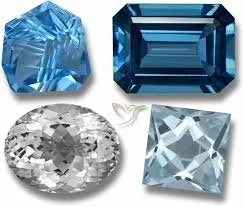
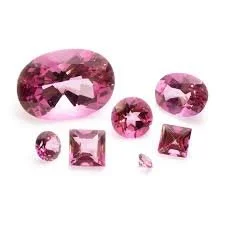
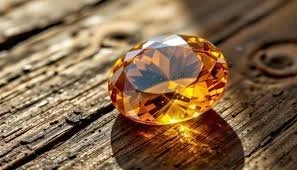
Tourmaline — Mineral & Scientific Information
Tourmaline is wildly diverse, electrically fascinating, and full of personality — it’s basically the shape-shifter of the mineral world.What it is
Tourmaline is not a single mineral but a complex group of boron silicate minerals with varying chemical compositions. This complexity is why it comes in so many colors.
Chemical composition
General formula:
(Ca,Na)(Al,Fe,Li,Mg,Mn)₃Al₆(BO₃)₃Si₆O₁₈(OH)₄
Different elements substituted into this structure create different varieties.
Major varieties
Schorl – black, iron-rich (most common)
Elbaite – lithium-rich, brightly colored (gem-quality)
Dravite – brown, magnesium-rich
Liddicoatite – rare, multicolored
Crystal structure
Crystal system: trigonal
Forms long, vertically striated prismatic crystals
Color and appearance
Almost every color: black, green, pink, red, blue, yellow, brown, colorless
May show multiple colors in a single crystal
Transparent to opaque
Luster: vitreous
Physical properties
Hardness: 7–7.5 on the Mohs scale
No cleavage
Conchoidal to uneven fracture
Specific gravity: ~3.0–3.3
Unique physical behavior
Piezoelectric and pyroelectric: generates electrical charge when heated, cooled, or stressed
Formation
Tourmaline forms in pegmatites, metamorphic rocks, and hydrothermal veins, often in boron-rich environments.
Geographic sources
Brazil
Afghanistan
Pakistan
Madagascar
Mozambique
United States (California, Maine)
Uses and applications
Jewelry and carvings
Industrial pressure sensors and electronic components
Mineral specimens
Treatment note
Some tourmalines are heat-treated to improve color; many are untreated.
Tourmaline — Metaphysical Properties & Fun Facts
🌈 Core Energy
Tourmaline is known as a stone of protection, balance, and energetic alignment — adaptable, responsive, and deeply grounding ⚖️
🛡️ Protection & Cleansing
Absorbs and deflects negative energy 🧿
Creates energetic boundaries 🚧
Commonly used for grounding and shielding 🌍
🧠 Balance & Integration
Helps align mind, body, and emotions 🔄
Encourages adaptability during change 🌱
Supports emotional resilience 💪
🧲 Energy Flow
Said to help move stagnant energy 🔋
Encourages energetic circulation 🌬️
Often used in body-energy practices 🧘
🎨 Color-Based Meanings
Black (Schorl) – grounding, protection 🖤
Green – healing, vitality 💚
Pink / Red – love, compassion 💗
Blue (Indicolite) – calm communication 💙
Watermelon – emotional balance & heart healing 🍉
Yellow – confidence and creativity 💛
🧿 How People Work With Tourmaline
Place near electronics for grounding energy 🖥️
Wear for emotional balance and protection 💍
Use in meditation for alignment 🧘♀️
Pair with quartz to amplify effects 🔮
✨ Fun Facts
One crystal can contain multiple colors naturally 🌈
Ancient people thought it attracted ash because of its electric properties ⚡
Tourmaline name comes from a Sri Lankan word meaning “mixed gemstones” 📜Watermelon tourmaline slices look like tiny fruit cross-sections 🍉
🔮 Overall Vibe
Tourmaline is organized chaos turned into harmony 🌈
Protective, adaptable, and surprisingly electric ⚡
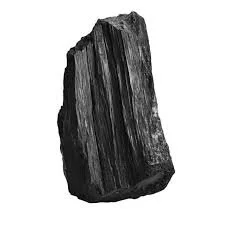
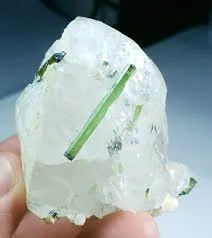
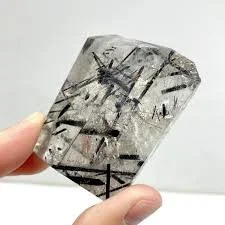
Turquoise — Mineral & Scientific Information
Turquoise is ancient, protective, and deeply human — one of the first gemstones ever cherished.What it is
Turquoise is a hydrated copper aluminum phosphate mineral. Unlike many gems, it forms at low temperatures through the action of groundwater.
Chemical composition
Formula: CuAl₆(PO₄)₄(OH)₈·4H₂O
Crystal structure
Crystal system: triclinic
Crystals are extremely rare; turquoise usually occurs in massive or nodular form
Color and appearance
Blue to greenish-blue
Color depends on copper (blue) and iron (green) content
Often shows dark veining called matrix
Opaque to slightly translucent
Luster: waxy to dull
Physical properties
Hardness: 5–6 on the Mohs scale
Porous and relatively soft
No cleavage
Specific gravity: ~2.6–2.9
Formation
Turquoise forms in arid climates where copper-rich groundwater reacts with aluminum- and phosphorus-bearing minerals.
Geographic sources
Iran (historic high-quality stones)
United States (Arizona, Nevada, New Mexico)
China
Mexico
Egypt
Uses and applications
Jewelry, beads, cabochons
Inlay work
Decorative and ceremonial objects
Treatment note
Many turquoise stones are stabilized (impregnated with resin) to improve durability. Some are dyed or reconstructed — untreated natural turquoise is rarer and more valuable.
Name origin
From the French turquois, meaning “Turkish,” referencing trade routes rather than origin.
Turquoise — Metaphysical Properties & Fun Facts
💙🟢 Core Energy
Turquoise is known as a stone of protection, wisdom, and heartfelt communication — steady, ancestral, and calming 🛡️
🧿 Protection & Travel
Used for centuries as a protective talisman 🛡️
Believed to guard travelers on long journeys 🧭
Associated with safety and good fortune 🌍
🗣️ Communication & Truth
Supports honest, compassionate expression 💬
Helps bridge heart and voice 💙➡️🗣️
Encourages speaking from lived wisdom 📖
🌿 Healing & Balance
Traditionally associated with physical and emotional healing 🌱
Encourages harmony between mind, body, and spirit ⚖️
Soothing during stress or emotional overload 🌬️
🌈 Cultural & Spiritual Significance
Sacred stone in Native American, Persian, Egyptian, and Tibetan traditions 🏺
Often symbolized sky, water, and life itself ☁️💧
|Used in ceremonies, amulets, and sacred art 🪶
🧿 How People Work With Turquoise
Wear as a protective amulet 💍
Use in meditation for calm communication 🧘♀️
Place near the throat chakra for expression 🔵
Pair with grounding stones for stability 🪨
✨ Fun Facts
One of the oldest gemstones known to humanity ⏳
Color can change slightly over time due to oils and light 🌤️
Matrix patterns make every stone unique 🎨
December birthstone 🎂
🔮 Overall Vibe
Turquoise is ancient calm and lived wisdom 💙
Protective without being heavy — grounding without being dull.
Unakite — Mineral & Scientific Information
Unakite is earthy, gentle, and quietly powerful — a stone that feels like slow healing and steady growth.What it is
Unakite is not a single mineral but a metamorphic rock composed primarily of epidote, pink feldspar (orthoclase), and quartz.
Rock type
Metamorphosed granite
Coarse-grained
Mineral composition
Epidote (green)
Orthoclase feldspar (pink)
Quartz (clear to gray)
Crystal structure
Unakite does not have a single crystal structure due to being a rock aggregate
Individual minerals retain their own crystal systems
Color and appearance
Green and pink mottled appearance
Opaque
Luster: dull to vitreous (depending on polish)
Physical properties
Hardness: ~6–7 on the Mohs scale
No cleavage (as a rock)
Uneven fracture
Durable enough for jewelry and carvings
Formation
Unakite forms when granite undergoes hydrothermal metamorphism, causing feldspar to partially alter into epidote.
Geographic sources
United States (North Carolina, Virginia, Georgia)
South Africa
Brazil
China
Uses and applications
Beads and cabochons
Carvings and decorative stone
Lapidary work
Name origin
Named after the Unaka Mountains in the southeastern United States.
Unakite — Metaphysical Properties & Fun Facts
💗💚 Core Energy
Unakite is known as a stone of emotional healing, balance, and gentle transformation — slow, supportive, and grounding 🌱
💞 Emotional Healing
Helps release old emotional patterns 🗝️
Encourages forgiveness and compassion 💕
Supports recovery from emotional stress 🌿
⚖️ Balance & Integration
Balances heart and mind 💗🧠
Encourages harmony between past and present ⏳
Helps stabilize emotional swings 🌊
🌱 Growth & Renewal
Associated with steady personal growth 🌳
Encourages patience and trust in the process 🐢
Supports long-term healing journeys 🛤️
🧘 Chakra Associations
Heart chakra 💚
Root chakra 🌍 (gentle grounding)
🧿 How People Work With Unakite
Meditate for emotional clarity 🧘♀️
Use during therapy or journaling 📓
Carry during periods of change 🪨
Pair with calming stones like rose quartz or lepidolite 💎
✨ Fun Facts
Often mistaken for jasper (but it’s a metamorphic rock) 🤓
Popular in worry stones and palm stones 🤲
Colors symbolize emotional balance (pink + green) 🎨
Sometimes associated with past-life healing 🔄
🔮 Overall Vibe
Unakite is slow healing that actually sticks 💗💚
Not dramatic — just deeply supportive.
Variscite — Mineral & Scientific Information
Variscite is calm, rare, and quietly beautiful — often mistaken for turquoise but with its own softer, earthier presence.What it is
Variscite is a hydrated aluminum phosphate mineral that forms as a secondary mineral through chemical weathering.
Chemical composition
Formula: AlPO₄·2H₂O
Crystal structure
Crystal system: orthorhombic
Crystals are rare; usually occurs in massive or nodular form
Color and appearance
Green to bluish-green, sometimes yellow-green
Color caused by trace chromium
Often shows spiderweb-like matrix patterns
Opaque to slightly translucent
Luster: waxy to vitreous when polished
Physical properties
Hardness: 3.5–4.5 on the Mohs scale
Relatively soft and porous
No cleavage
Specific gravity: ~2.4–2.6
Formation
Variscite forms in near-surface environments where phosphate-rich solutions react with aluminum-bearing rocks.
Geographic sources
United States (Utah, Nevada)
Germany (historic Variscia region)
Australia
Brazil
Poland
Uses and applications
Cabochons and beads
Decorative stone
Collector specimens
Treatment note
Some variscite is stabilized due to its softness. It is sometimes mislabeled or sold as turquoise.
Name origin
Named after Variscia, a historical region in Germany.
Variscite — Metaphysical Properties & Fun Facts
💚 Core Energy
Variscite is known as a stone of inner peace, emotional clarity, and gentle self-understanding — soothing, introspective, and grounding 🌿
🧘 Calm & Emotional Balance
Encourages tranquility and patience 🌬️
Helps soothe anxious or racing thoughts 🧠
Supports emotional clarity and self-awareness 🔍
💞 Heart-Centered Healing
Opens and softens the heart chakra 💚
Encourages compassion toward self and others 🤍
Helpful for emotional release and reflection 💧
🧠 Insight & Perspective
Encourages honest self-evaluation 🪞
Helps recognize patterns and habits 🔄
Supports mindful decision-making 🧭
🌱 Growth & Renewal
Associated with personal growth and renewal 🌱
Encourages slow, sustainable change 🐢
Supports grounding during emotional transitions 🌍
🧿 How People Work With Variscite
Meditate for calm reflection 🧘♀️
Wear or carry during emotionally charged situations 💍
Use in journaling or therapy work 📓
Pair with grounding stones like smoky quartz 🪨
✨ Fun Facts
Often confused with turquoise because of similar colors 🤔
Much rarer than turquoise in gem quality 💎
Colors can resemble moss or fresh leaves 🌿
Popular among collectors who love subtle stones 🪴
🔮 Overall Vibe
Variscite is quiet clarity and emotional honesty 💚
Not flashy — just deeply centering.
Vesuvianite — Mineral & Scientific Information
Vesuvianite is a fascinating, complex crystal with volcanic origins and a surprisingly wide range of colors.What it is
Vesuvianite (also called idocrase) is a complex calcium aluminum silicate mineral that forms in metamorphic and contact metamorphic environments.
Chemical composition
Formula: Ca₁₀(Mg,Fe,Al)₂Al₄(SiO₄)₅(Si₂O₇)₂(OH,F)₄
Highly variable due to many substituting elements
Crystal structure
Crystal system: tetragonal
Crystals often prismatic or columnar; can also be massive or granular
Color and appearance
Common colors: green, brown, yellow, blue, purple, pink, and colorless
Often green and mistaken for peridot or grossular garnet
Transparent to translucent
Luster: vitreous
Physical properties
Hardness: 6.5 on the Mohs scale
Cleavage: poor to indistinct
Fracture: uneven to conchoidal
Specific gravity: ~3.3–3.4
Formation
Vesuvianite forms mainly in skarns and metamorphosed limestones, especially where hot magma intrudes carbonate rocks. It can also occur in contact metamorphic zones around volcanoes.
Geographic sources
Italy (Mount Vesuvius—type locality)
Canada
United States
Pakistan
Russia
Kenya
Norway
Uses and applications
Collector mineral specimens
Faceted gemstones (rare, usually small)
Carvings and cabochons
Name origin
Named after Mount Vesuvius in Italy, where it was first identified in the 18th century.
Vesuvianite — Metaphysical Properties & Fun Facts
🌋 Core Energy
Vesuvianite is known as a stone of transformation, courage, and personal evolution — fiery, growth-oriented, and heart-centered 💚
🔥 Transformation & Growth
Encourages breaking old patterns 🔓
Supports personal change and evolution 🌱
Helps release fear of growth and the unknown 🚀
💚 Heart & Emotional Expansion
Linked to heart-centered healing 💞
Encourages compassion and emotional courage 🤍
Helps integrate emotional and spiritual growth 🧩
🧠 Mental & Spiritual Clarity
Aids in understanding complex emotions 🧠
Encourages insight into life lessons 🔮
Supports spiritual awakening and integration ✨
🌀 Chakra Associations
Heart chakra 💚
Solar plexus chakra 🌞
Crown chakra 👑 (in higher vibrational metaphysical lore)
🧿 How People Work With Vesuvianite
Meditate during periods of major life change 🧘♀️
Wear to encourage courage and self-growth 💍
Use in shadow work or emotional integration practices 🌑
Pair with peridot, grossular garnet, or moldavite for transformation energy 💫
✨ Fun Facts
Also called idocrase, meaning “mixed form” due to its complex crystal structure 🧪
Some specimens are gem-quality and rival emerald in beauty 💎
Can be pleochroic (shows different colors from different angles) 👀
Rare purple and blue vesuvianite are highly sought by collectors 🌈
🔮 Overall Vibe
Vesuvianite is volcanic change turned into crystal growth 🌋➡️💎
A powerful ally for evolution and heart-centered transformation.
Watermelon Tourmaline — Mineral & Scientific Information
Watermelon tourmaline is one of those gems that feels almost unreal — naturally colorful, perfectly symbolic, and genuinely rare.What it is
Watermelon tourmaline is a color-zoned variety of elbaite tourmaline, where a single crystal shows a pink or red core surrounded by a green outer layer, resembling a slice of watermelon.
Chemical composition
General tourmaline formula:
(Na,Ca)(Al,Li)₃Al₆(BO₃)₃Si₆O₁₈(OH)₄
Color zoning is caused by changes in trace elements during crystal growth:
-Manganese → pink/red
-Iron or chromium → green
Crystal structure
Crystal system: trigonal
Forms long, vertically striated prismatic crystals
Color zoning follows crystal growth patterns
Color and appearance
Pink or red center with green rim
Occasionally white or colorless zones between layers
Transparent to translucent
Luster: vitreous
Physical properties
Hardness: 7–7.5 on the Mohs scale
No cleavage
Conchoidal to uneven fracture
Specific gravity: ~3.0–3.2
Formation
Forms in lithium-rich granitic pegmatites. Changes in fluid chemistry during crystal growth cause distinct color zoning.
Geographic sources
Brazil (classic specimens)
Afghanistan
Pakistan
Madagascar
Mozambique
United States (Maine, California)
Uses and applications
Cabochons and slice cuts highlighting color zoning
Jewelry and collector stones
Mineral specimens
Treatment note
Watermelon tourmaline is usually untreated. Its natural color zoning is a key value factor.
Watermelon Tourmaline — Metaphysical Properties & Fun Facts
💗💚 Core Energy
Watermelon tourmaline is known as a stone of emotional balance, heart healing, and joyful integration — soft yet strengthening 🍉
💞 Heart Healing
Balances emotional extremes ⚖️
Encourages compassion and empathy 💕
Supports healing of emotional wounds 🌸
🧠 Mind–Heart Alignment
Bridges logic and emotion 💗🧠
Encourages self-acceptance 🤍
Helps process feelings without overwhelm 🌊
🌱 Joy & Renewal
Associated with emotional renewal and lightness 🌈
Encourages optimism and playful energy 😄
Supports healthy emotional boundaries 🛡️
🧘 Chakra Associations
Heart chakra 💚
Supports emotional grounding and flow 🌬️
🧿 How People Work With Watermelon Tourmaline
Meditate for emotional clarity and balance 🧘♀️
Wear to encourage compassion and openness 💍
Use in relationship healing work 🤝
Pair with grounding stones to stabilize emotional growth 🪨
✨ Fun Facts
The color pattern forms naturally, not layered or dyed 🌈
Sliced cross-sections look like actual watermelon 🍉
Highly prized by collectors 💎
One of the clearest visual metaphors in gemstones 🎨
🔮 Overall Vibe
Watermelon tourmaline is emotional harmony made visible 💗💚
Gentle, joyful, and deeply reassuring.
Wild Horse Magnesite — Mineral & Scientific Information
Wild Horse Magnesite is earthy, soft, and grounding — a stone that feels like open land and steady calm.What it is
Wild Horse Magnesite is a variety of magnesite (magnesium carbonate) that contains brown to black iron-rich matrix. Despite frequent mislabeling, it is not turquoise.
Chemical composition
Formula: MgCO₃
The darker veining comes from iron and manganese oxides
Crystal structure
Crystal system: trigonal
Crystals are rare; usually occurs in massive form
Color and appearance
Creamy white to beige base
Brown or black spiderweb-style matrix
Opaque
Luster: dull to waxy when polished
Physical properties
Hardness: 3.5–4.5 on the Mohs scale
Soft and porous
No cleavage
Specific gravity: ~3.0
Formation
Forms through alteration of magnesium-rich rocks, often in association with serpentine and ultramafic rocks.
Geographic source
Primarily found in Arizona, USA
(The “Wild Horse” name refers to the mine area)
Uses and applications
Cabochons and beads
Decorative stone
Lapidary and artisan jewelry
Treatment note
Often stabilized due to softness. Sometimes incorrectly sold as “white buffalo turquoise” or “white turquoise.”
Name origin
Named after the Wild Horse Mine area in Arizona.
Wild Horse Magnesite — Metaphysical Properties & Fun Facts
🤍🤎 Core Energy
Wild Horse Magnesite is known as a stone of grounding, patience, and emotional steadiness — quiet, comforting, and stabilizing 🌾
🌍 Grounding & Calm
Encourages a deep sense of grounding 🪨
Helps settle anxious or restless energy 🌬️
Supports emotional balance ⚖️
🧘 Stress Relief & Patience
Encourages calm responses over reactions 🐢
Supports emotional resilience 💪
Helps release tension held in the body 🫶
🧠 Emotional Awareness
Encourages self-reflection without judgment 🪞
Helps identify emotional patterns 🔄
Supports gentle emotional processing 🌿
🧿 How People Work With Wild Horse Magnesite
Carry during stressful periods 🧳
Use in meditation for grounding 🧘♀️
Wear for calming, steady energy 💍
Pair with protective stones like hematite or black tourmaline 🖤
✨ Fun Facts
Looks like a desert version of turquoise 🌵
Each piece has a unique matrix pattern 🎨
Popular in Southwestern-style jewelry 🏜️
Appreciated for its natural, unpolished aesthetic 🌾
🔮 Overall Vibe
Wild Horse Magnesite is quiet strength and desert calm 🤍🤎
Not flashy — just deeply grounding and reassuring.
Zoisite — Mineral & Scientific Information
Zoisite is transformative, surprisingly versatile, and quietly powerful — a mineral that shows up in both earthy greens and vivid gemstone blues.What it is
Zoisite is a calcium aluminum silicate mineral and a member of the epidote group. Several well-known gemstones are varieties of zoisite.
Chemical composition
Formula: Ca₂Al₃(SiO₄)₃(OH)
Crystal structure
Crystal system: orthorhombic
Crystals are typically prismatic or columnar
Color and appearance
Green, gray, brown, blue, violet
Can be transparent to opaque
Luster: vitreous to dull
Physical properties
Hardness: 6–6.5 on the Mohs scale
One perfect cleavage (care needed when cutting or wearing)
Specific gravity: ~3.1–3.4
Formation
Zoisite forms through regional metamorphism, often from aluminum-rich igneous rocks under high pressure and temperature.
Geographic sources
Tanzania
Austria
Kenya
Norway
United States
Major varieties
Tanzanite – blue to violet gem-quality zoisite
Thulite – pink, manganese-rich variety
Anyolite (Ruby Zoisite) – green zoisite with ruby inclusions
Uses and applications
Gemstones and carvings
Mineral specimens
Educational and collector stones
Name origin
Named after Sigmund Zois, an 18th-century Slovenian mineralogist.
Zoisite — Metaphysical Properties & Fun Facts
💚💙 Core Energy
Zoisite is known as a stone of transformation, growth, and constructive change — it doesn’t erase the old, it reshapes it 🌱
🔄 Transformation & Renewal
Encourages personal evolution 🦋
Helps move through life transitions 🌊
Supports rebuilding after change 🧱
🧠 Focus & Motivation
Enhances mental clarity and productivity 📌
Encourages goal-oriented thinking 🎯
Helps turn ideas into action ⚙️
❤️ Emotional Healing
Supports emotional recovery and resilience 💗
Encourages optimism after setbacks 🌤️
Helps integrate past experiences 🧩
🌈 Variety-Based Energies
Green Zoisite – growth, healing, vitality 🌿
Tanzanite – higher awareness and insight 💜
Thulite – joy, passion, emotional openness 🌸
Ruby Zoisite – heart + vitality + courage ❤️💚
🧘 Chakra Associations
Heart chakra 💚
Third eye (especially tanzanite) 👁️
🧿 How People Work With Zoisite
Meditate for transformation 🧘♀️
Use during periods of change or reinvention 🔄
Wear to encourage steady progress 💍
Pair with grounding stones for balance 🪨
✨ Fun Facts
One mineral family produces wildly different gemstones 🎨
Tanzanite is one of the rarest zoisite varieties 💎
Often overlooked despite its importance in gemology 👀
Ruby-in-zoisite creates dramatic natural contrasts 🔥
🔮 Overall Vibe
Zoisite is growth through change 🌱
Not chaotic — intentional, steady, and constructive.